

Parliament’s Select Committee on Youth and Sports is expected to invite officials of the Ghana Football Association (GFA) to discuss the Black Stars’ recent performances and the concerns surrounding the national team’s preparations, results and overall management. Corrections Policy
The planned engagement comes amid growing public concern about the Black Stars’ displays in recent international matches, with questions being raised about the team’s technical direction, player availability and the effectiveness of football administration in Ghana.
The committee’s engagement with the GFA is expected to provide an opportunity for lawmakers to seek explanations about the factors affecting the national team and the measures being considered to improve its performances.
The development follows a difficult period for the four-time African champions, whose recent results have increased scrutiny of the technical team and the football association responsible for managing the senior national side.
Ghana suffered a 2-0 defeat to Côte d’Ivoire in their opening 2027 Africa Cup of Nations qualifying match and also a 4-2 defeat to Gambia.
The result placed additional pressure on the team ahead of its subsequent Group C encounter with The Gambia. The Ghana News Agency reported the defeat as the Black Stars began their qualification campaign.
The team’s recent performances have prompted renewed discussions about squad selection, tactical organisation, player commitment and the need for a clear strategy to restore consistency.
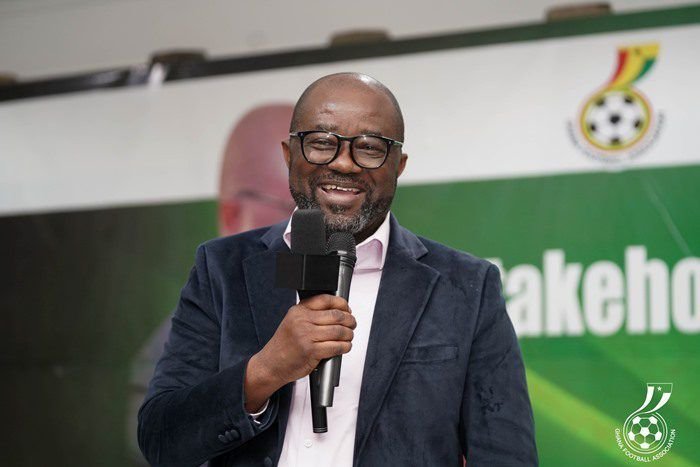
The GFA, led by President Kurt Okraku, is responsible for administering football in Ghana, including the organisation and management of the national teams.
Any engagement with Parliament could therefore focus on the association’s role in preparing the Black Stars, supporting the technical team and ensuring that the team has the resources needed to compete effectively. Editorial Ethics & Independence
One issue likely to attract attention is the availability of key players. Ahead of the AFCON qualifiers, several established players, including Mohammed Kudus, Antoine Semenyo, Thomas Partey, Jordan Ayew, Baba Rahman and Alidu Seidu, were unavailable because of injuries or personal reasons.
GFA President Kurt Okraku defended the withdrawals, urging the media not to exaggerate the situation.

He maintained that the absences should not automatically be attributed to the association or head coach Carlos Queiroz.
Nevertheless, the situation highlights the challenges facing the technical team as it seeks to build a competitive squad for the qualification campaign.
The ability to manage injuries, identify suitable replacements and maintain tactical cohesion will be important as Ghana pursues a place at the 2027 Africa Cup of Nations.
The committee’s proposed engagement would also come against the background of broader parliamentary scrutiny of Ghana’s football administration.
In September, the Minority in Parliament demanded a detailed account of the GH¢58 million allocated for Ghana’s participation in the 2026 FIFA World Cup.
The Minority called on the Sports and Recreation Ministry, the GFA and other institutions involved in the campaign to provide a breakdown of expenditure, including costs associated with flights, accommodation, transportation, training camps, logistics, catering, security and tickets.
Although the financial questions are distinct from the Black Stars’ recent performances, they form part of the wider debate about transparency, accountability and the use of public resources in football administration.
Ghana’s participation in major international competitions attracts significant public interest and financial support. Editorial Standards
Lawmakers and supporters consequently expect the institutions responsible for the national team to demonstrate how resources are used and how decisions contribute to the team’s development.
The return of Carlos Queiroz as head coach has also placed the focus on the team’s technical direction.
The Portuguese coach was reappointed in September after initially stepping down following Ghana’s 2026 World Cup campaign. His renewed appointment came ahead of the AFCON qualifying fixtures.
The committee’s engagement could give GFA officials an opportunity to explain the plans in place to improve the team’s performances, strengthen preparations and address concerns arising from recent matches.
However, the specific questions to be raised and any recommendations that may follow will depend on the committee’s proceedings.
For the Black Stars, attention will remain on the team’s ability to respond to disappointing results and build momentum in the AFCON qualifying campaign.
Ghana’s football supporters will be looking for improved performances, greater consistency and a clearer demonstration of progress.
The proposed parliamentary engagement is therefore expected to bring further attention to the relationship between football administration, technical planning and national-team performance.
Any lasting improvement, however, will depend on the actions taken by the GFA, the coaching staff, the players and the relevant sports authorities.
As discussions continue, the central issue will be how Ghana can translate scrutiny and public concern into practical measures that strengthen the Black Stars and support the long-term development of football in the country.