

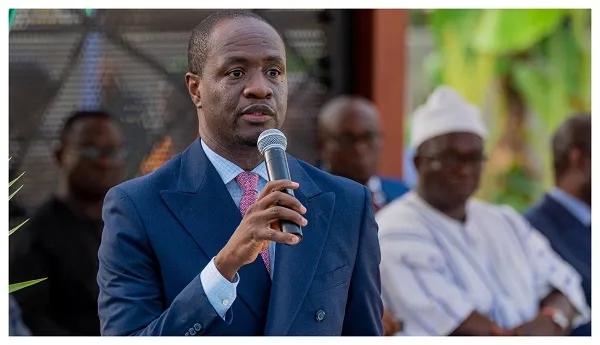
Former Head of Public Affairs at the Ghana Cocoa Board (COCOBOD), Fiifi Boafo, has questioned the government over its failure to deliver the promised GH¢6,000 cocoa producer price, asking why the amount was not paid to farmers between January and October. Editorial Ethics & Independence
His concerns come amid renewed debate over cocoa pricing following the government’s announcement of a new producer price of GH¢2,650 per 64-kilogramme bag for the 2026/2027 crop season.
The figure represents an increase of GH¢63 from the previous price of GH¢2,587 per bag, equivalent to a 2.4 per cent rise. The new rate took effect on September 25, 2026.
Mr Boafo’s question centres on the gap between expectations created by the government’s earlier commitment to improve cocoa farmers’ earnings and the amount they are currently receiving for their produce.
The GH¢6,000 figure has become a major reference point in discussions about cocoa pricing, with concerns about whether the government’s adjustments adequately reflect international market conditions and the financial challenges confronting farmers.
Questions Over the GH¢6,000 Promise
The former COCOBOD public affairs official has previously criticised the government’s cocoa pricing decisions, arguing that the announced increases have fallen short of expectations.
In August 2025, following the announcement of a producer price of GH¢3,228.75 per 64-kilogramme bag for the 2025/2026 season, Mr Boafo questioned why the government had not delivered on its earlier promise to pay farmers GH¢6,000.
He argued at the time that the commitment had created expectations among cocoa farmers and that the government needed to explain the difference between the promised amount and the price announced. Editorial Standards
His latest concerns revive the debate over the timing and implementation of the commitment, particularly as farmers assess the effect of successive price adjustments on their incomes.
However, the specific circumstances surrounding the January-to-October period referenced in his latest question would require further clarification to establish precisely which pricing decisions or payment arrangements he was addressing.
Government Announces GH¢2,650 Per Bag
The latest producer price announcement has intensified scrutiny of the government’s cocoa policy.
According to COCOBOD, the price for the 2026/2027 season has increased from GH¢41,392 to GH¢42,400 per tonne. This translates into GH¢2,650 for a standard 64-kilogramme bag.

The Ghana News Agency reported that the new price represents 71.18 per cent of the realised gross free-on-board (FOB) value of cocoa.
The pricing arrangement follows the enactment of the Ghana Cocoa Board Act, 2026 (Act 1182), which guarantees farmers a minimum of 70 per cent of the realised gross FOB value. Corrections Policy
COCOBOD has said the revised pricing framework is intended to improve returns to farmers while supporting the long-term sustainability of the cocoa industry.
The government has also highlighted productivity-enhancement programmes, including the provision of free fertiliser, hybrid cocoa seedlings and measures to control cocoa diseases and pests. These interventions are intended to reduce production costs and improve yields.
Nevertheless, the relatively small increase in the latest producer price has raised questions about whether the adjustment sufficiently addresses farmers’ expectations and operating costs.
Cocoa Pricing and COCOBOD’s Financial Challenges
The debate over the producer price is taking place against the background of financial difficulties within Ghana’s cocoa sector.
In a February 2026 briefing, the Ministry of Finance explained that falling international cocoa prices had made Ghanaian cocoa less competitive against supplies from other producing countries.
It also cited liquidity constraints that limited COCOBOD’s ability to purchase cocoa and hold stocks for strategic marketing decisions.
These challenges have complicated efforts to maintain attractive producer prices while ensuring that cocoa can be sold profitably on international markets. Privacy Policy & Terms
For farmers, however, the price paid at the farm gate remains a central concern because it directly affects the income available to support their households, pay farm labourers and purchase agricultural inputs.
A sustainable pricing arrangement must therefore balance farmers’ earnings with the costs of purchasing, financing, transporting and exporting cocoa.
Calls for Greater Transparency
Mr Boafo’s questions also highlight the importance of transparent communication about cocoa pricing.

Farmers and other industry stakeholders need clear explanations of how producer prices are calculated, how international market conditions influence local rates and what factors determine changes during a crop season.
Providing detailed information about the pricing formula, exchange-rate assumptions and expected revenue could help stakeholders assess whether announced prices reflect prevailing market conditions. Newscard
As Ghana moves through the 2026/2027 cocoa season, the government and COCOBOD face the challenge of managing the industry’s financial pressures while maintaining farmers’ confidence.
The central issue raised by Mr Boafo remains the gap between the GH¢6,000 price commitment and the amount currently being paid.
How the government explains that difference, and what measures it adopts to support cocoa farmers, will remain important points in the national debate over the future of Ghana’s cocoa industry.