

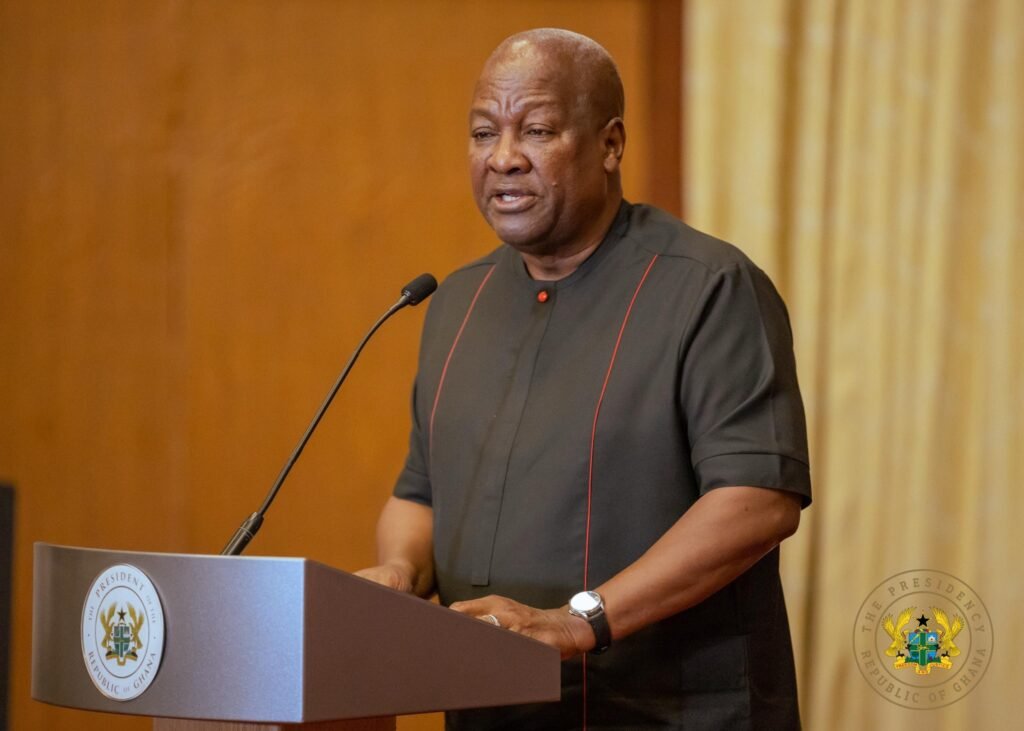
President John Dramani Mahama has reaffirmed his government’s commitment to working closely with traditional authorities, describing chiefs and traditional institutions as essential partners in promoting peace, strengthening social cohesion and advancing development across Ghana.
The President made the remarks in an address delivered on his behalf by Interior Minister Muntaka Mohammed-Mubarak at a ceremony in Sandema in the Upper East Region, marking the 20th anniversary of the passing of the late Nab Dr Ayieta Azantilow. Ownership & Funding

He urged traditional leaders to take a more active role in addressing challenges such as unemployment, social inequality, land and chieftaincy disputes, environmental degradation and threats to national security.
According to reports, Mahama said traditional institutions remained indispensable to national development because of their influence within communities and their longstanding responsibilities in preserving local customs, resolving disputes and promoting unity.
He maintained that government would continue collaborating with chiefs and other stakeholders on initiatives designed to improve living conditions, expand opportunities for young people and support sustainable development across the country.
Traditional leadership must go beyond preserving customs
Reflecting on the legacy of the late Nab Dr Ayieta Azantilow, the President said traditional leadership should not be limited to preserving cultural practices and exercising customary authority.

He noted that the late traditional ruler demonstrated how chiefs could use their positions to improve the social and economic circumstances of the people they served.
Nab Dr Ayieta Azantilow’s nearly 75 year reign was distinguished by contributions to education, healthcare, traditional governance and community development. Corrections Policy
His legacy, Mahama suggested, provides an example of how traditional institutions can influence progress beyond the boundaries of customary administration.
The President’s message places renewed emphasis on the role chiefs can play in identifying local development priorities, mobilising communities and supporting programmes intended to improve livelihoods.
Traditional authorities often maintain close relationships with residents and understand the specific challenges affecting their communities.
Their involvement can therefore help government institutions engage citizens more effectively and ensure development initiatives respond to local needs.
Chiefs urged to help tackle youth unemployment and drug abuse
Mahama also called on traditional authorities to work with government and other stakeholders to address the challenges confronting young people.

He specifically warned against the use of illicit drugs, describing substance abuse as a serious threat to the well being, future prospects and development of the country’s youth.
The President encouraged chiefs to guide young people towards responsible choices and support efforts to prevent drug abuse within their communities. Editorial Ethics & Independence
The appeal highlights the importance of community based responses to substance abuse. While law enforcement remains necessary, prevention also requires education, family support, mentorship and opportunities that help young people build productive lives.
Traditional leaders can contribute by supporting awareness campaigns, encouraging community engagement and working with relevant institutions to connect young people to education, skills training and employment opportunities.
Government seeks stronger cooperation with chiefs
The renewed commitment to collaboration also reflects Mahama’s broader position that traditional authorities should have a stronger voice in local governance and national development.

In September 2026, Insightghana reported on the President’s call for a stronger partnership between government and traditional rulers during a meeting with the Ahafo Regional House of Chiefs at the Jubilee House. Editorial Standards
On that occasion, Mahama argued that the country could not be governed by the executive alone and called for traditional authorities to participate more actively in the decentralised governance system.
He also encouraged chiefs to take a greater interest in the development of their districts and monitor the utilisation of resources allocated through the District Assemblies Common Fund.
The President indicated that traditional leaders should work closely with District Chief Executives to ensure development funds are used appropriately and deliver benefits to communities.
These remarks point to an approach that seeks to combine the authority and community influence of traditional institutions with the administrative responsibilities of local government.
Chiefs’ role in the fight against illegal mining
Environmental protection is another area where the government has sought stronger cooperation with traditional authorities.
In October 2026, Insightghana reported that Mahama had appealed to chiefs to support the government’s efforts to combat illegal mining, popularly known as galamsey.
During an engagement with the Western North Regional House of Chiefs, the President stressed that traditional leaders were important to the success of enforcement operations because of their close connections with communities where illegal mining takes place.
He also acknowledged that some anti illegal mining operations had faced resistance from residents and traditional authorities, creating difficulties for security personnel. Newscard
Mahama argued that cooperation from chiefs would help reduce confrontations, protect forest reserves and safeguard rivers and other water bodies.
He further stressed that enforcement efforts must be accompanied by alternative livelihood opportunities for people affected by restrictions on illegal mining activities.
The position illustrates how government-traditional authority cooperation can extend beyond cultural affairs to issues involving environmental protection, public safety and economic development.
A renewed call for unity in the Bulsa Traditional Area
At the Sandema commemoration, Mahama expressed hope that the event would strengthen unity among the chiefs and people of the Bulsa Traditional Area and inspire renewed commitment to the development of the Upper East Region.
The ceremony also featured the launch of a book honouring the late Nab Dr Ayieta Azantilow and recognising his contributions to traditional leadership and community advancement.
The President’s message reinforces the importance of maintaining constructive relationships between government institutions and traditional authorities.
However, the success of such partnerships will ultimately depend on practical cooperation, accountability and the ability to translate commitments into visible improvements in people’s lives. Privacy Policy & Terms
From addressing youth unemployment and drug abuse to resolving local disputes, protecting the environment and supporting community infrastructure, traditional leaders have an important role to play.
Mahama’s renewed assurance therefore places traditional authorities at the centre of the government’s broader development agenda, with an emphasis on working together to build safer, more inclusive and prosperous communities.