

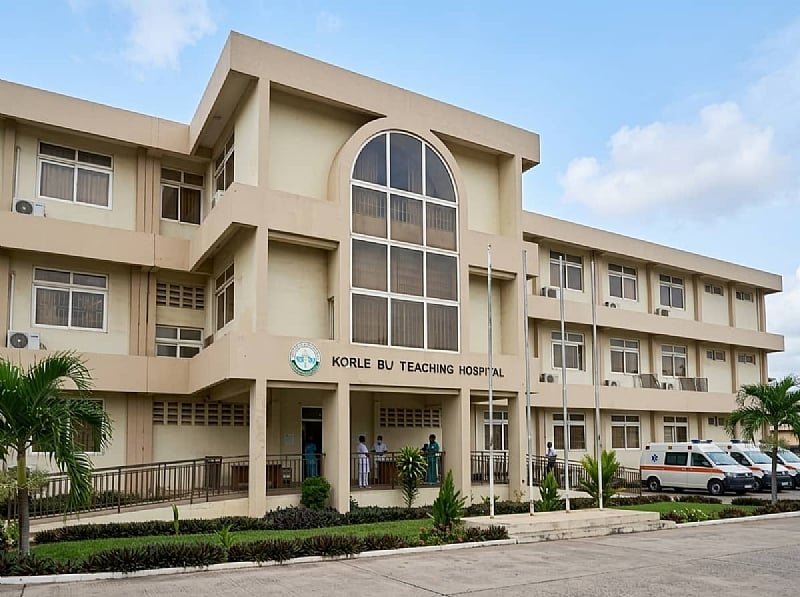
Management of the Korle Bu Teaching Hospital has appealed for the recruitment of additional doctors and nurses to strengthen emergency healthcare delivery, citing persistent staffing shortages and growing pressure on its Accident and Emergency Centre. Editorial Ethics & Independence
The hospital’s Chief Executive Officer, Dr Yakubu Seidu Adam, made the appeal during an engagement with Parliament’s Health Committee, highlighting the difficulties faced by the country’s leading referral hospital in managing the increasing number of patients requiring urgent medical attention.
Dr Adam explained that the hospital’s 64-bed Accident and Emergency Centre was struggling to accommodate accident victims and other emergency cases referred from different parts of Ghana.

The situation, he said, has placed considerable pressure on medical personnel and critical departments, including the Intensive Care Unit.
The appeal underscores the importance of ensuring that major referral hospitals have enough qualified personnel to respond to emergencies, particularly when patients require immediate assessment, stabilisation and specialised treatment.
Korle Bu plays a central role in Ghana’s healthcare system, receiving patients from Accra and other regions who require services that may not be readily available at smaller facilities.
Its position as a major referral centre means that the hospital must manage a broad range of conditions, from road traffic injuries to serious medical complications requiring urgent intervention.
However, the volume of referrals can create significant operational challenges when the available workforce and emergency facilities cannot keep pace with demand.
Dr Adam noted that although the hospital has a considerable number of doctors, many are medical trainees who eventually leave after completing their training.
This creates difficulties in maintaining a stable workforce capable of providing consistent support to emergency and intensive care services.
He explained that Korle Bu is also a teaching institution responsible for training future healthcare professionals.
While this function is essential to developing Ghana’s medical workforce, management believes that the hospital needs more permanent medical officers to complement trainees and sustain daily service delivery.
The chief executive indicated that the staffing concerns had already been communicated to the hospital’s Director of Human Resources and the Minister of Health.
His engagement with Parliament’s Health Committee provided another opportunity to draw attention to the need for additional personnel.
He also called for more nurses, whose responsibilities are central to monitoring patients, administering treatment, assisting doctors and ensuring that emergency cases receive appropriate attention.
In an emergency department, adequate staffing can influence how quickly patients are assessed, how effectively clinical teams coordinate treatment and how safely patients are monitored while awaiting further care.
A shortage of personnel can increase workloads and make it more difficult to maintain efficient patient flow.
The challenges facing Korle Bu also reflect wider concerns about the distribution of healthcare resources in Ghana.
Major teaching hospitals often receive referrals from facilities across the country because they have specialised expertise and diagnostic capabilities.
This can leave emergency departments under pressure, particularly when patients cannot be managed at the facilities closest to their communities. Editorial Standards
Earlier in 2026, the hospital’s Head of Accident and Emergency, Dr Henry Bulley, raised concerns about the growing number of patients attending the department and called for additional healthcare workers and expanded infrastructure.

His concerns highlighted the need to strengthen emergency services beyond the recruitment of personnel alone.
Alongside the appeal for more doctors and nurses, Korle Bu management has advocated the construction of a new Accident and Emergency Centre with a capacity of at least 200 beds.
The proposed facility is intended to provide additional space for treating patients and reduce congestion in the existing unit.
Nevertheless, Dr Adam has cautioned that a larger emergency centre would not automatically resolve the problem of overcrowding.

Efficient patient transfers to medical and surgical wards, timely discharges and effective coordination between departments are also necessary to ensure that beds remain available for incoming emergencies.
The combination of additional staff, expanded infrastructure and improved patient-flow systems could therefore provide a more sustainable response to the hospital’s challenges.
For Parliament and the Ministry of Health, the appeal raises important questions about workforce planning, recruitment funding and the allocation of medical professionals across public healthcare facilities.
Addressing these issues will require coordination between government, hospital management, training institutions and relevant health agencies.
Recruiting more permanent staff could improve continuity of care, reduce pressure on existing workers and strengthen the hospital’s capacity to respond to critical cases.
However, recruitment must be supported by adequate equipment, appropriate working conditions and systems that allow healthcare professionals to perform their duties effectively.
For patients and their families, the central concern is access to timely and dependable emergency treatment.
Delays in assessment, difficulties securing beds and pressure on healthcare personnel can add to the stress experienced during medical emergencies.
As discussions with Parliament’s Health Committee continue, Korle Bu’s management is seeking support to address its immediate staffing needs while pursuing longer-term improvements to emergency infrastructure. Corrections Policy
Ultimately, strengthening emergency care at Korle Bu will require a coordinated approach that combines adequate staffing, improved facilities and efficient patient management.
Meeting these needs could help the hospital provide more timely care while supporting its wider responsibility to serve as a national referral and medical training institution.