

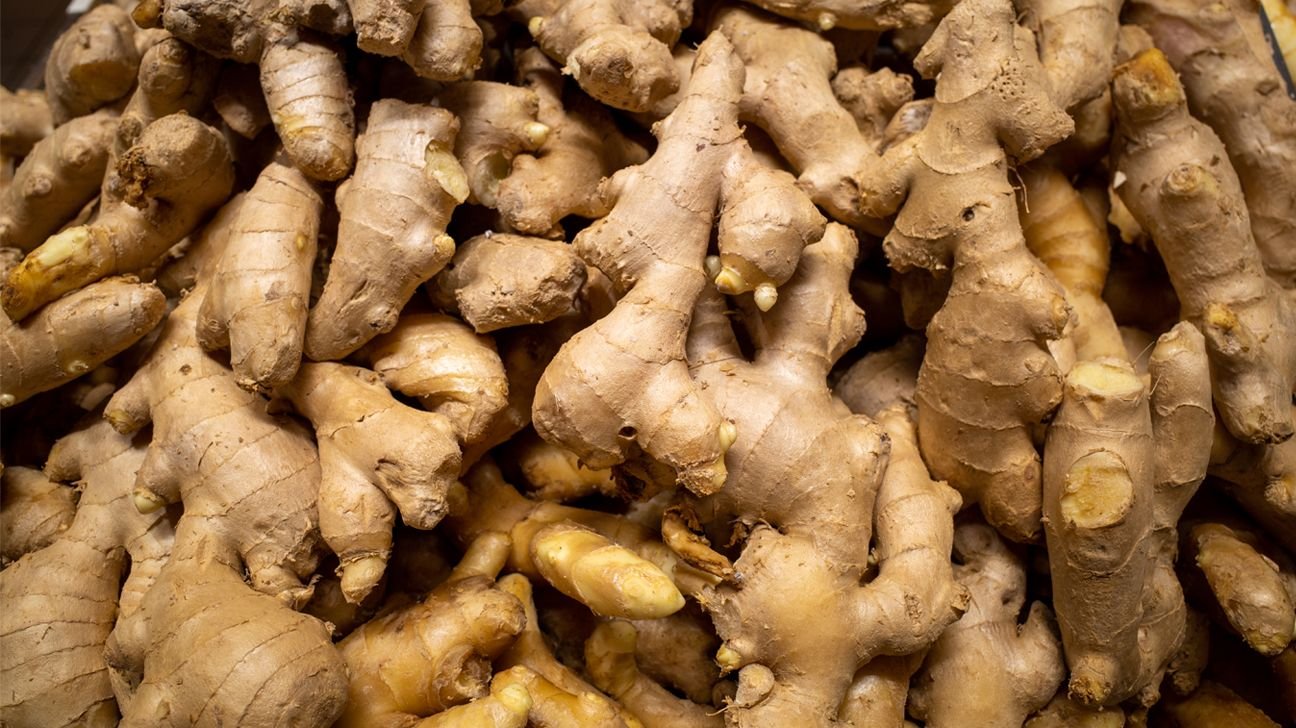
Ghanaian traders are increasingly turning to imported ginger from China and Morocco as shortages of locally produced supplies and persistently high prices continue to disrupt the domestic market. Corrections Policy
The shortage has placed pressure on traders and consumers, with the price of the popular spice remaining elevated following disease outbreaks that devastated ginger farms in recent years.
Traders say limited local supplies, growing demand from food and beverage manufacturers and exports to neighbouring countries have contributed to the situation.
According to a source, traders are relying on foreign supplies to keep their businesses operating while waiting for domestic production to recover.
The development has raised concerns about Ghana’s ability to meet local demand for a commodity widely used in homes, restaurants and food-processing businesses.
Akua Stella, a ginger trader, said the spice had become significantly more expensive, forcing traders to adjust their purchasing and selling practices.
She explained that ginger was increasingly being used in drinks, toffees and biscuits, while exports of locally grown supplies were adding pressure to the quantity available on the domestic market.
She disclosed that some sacks of ginger were selling for between GH¢4,500 and GH¢5,500, while others could cost as much as GH¢5,000 or more depending on prevailing market conditions. A bucket was reportedly selling for about GH¢400, while smaller quantities were also attracting high prices.
Although prices had fallen from a reported peak of GH¢8,000 per sack, the reductions have not been sufficient to restore affordability for many consumers and traders.
Disease outbreak weakens local production
The supply crisis has been linked to a disease outbreak that damaged ginger farms across Ghana, reducing the availability of locally grown produce.
Trader Nimatu Mustapha said the problem began about two years ago when a virus outbreak, as described by traders, destroyed crops on local farms. She said the latest harvest had not yet reached the market in sufficient quantities to ease the pressure on prices.
Scientific findings, however, point to bacterial wilt as a major cause of the production collapse.
Researchers at the Council for Scientific and Industrial Research (CSIR) reported in August 2026 that the disease had severely affected Ghana’s ginger output, leaving the country heavily dependent on imports.

The distinction matters because an effective recovery will require identifying the disease correctly and using appropriate agricultural interventions rather than relying on unverified remedies.
For farmers who lost their crops, the outbreak has also created financial uncertainty. Some may be reluctant to invest in new planting cycles without access to reliable planting materials, technical guidance and measures to reduce the risk of further losses.
High prices affect traders and consumers
The shortage is creating difficulties throughout the supply chain. Traders must spend more money to purchase stock, while consumers are reducing the quantities they buy because of the rising cost.
Irene Pokua, another trader, said a sack of ginger was selling for between GH¢5,000 and GH¢6,000. She observed that consumers were no longer buying as much as they previously did because of the high prices. Editorial Ethics & Independence
The pressure is also being felt in other parts of the country. In May 2026, the Ghana News Agency reported that consumers in Accra were struggling with the cost of ginger, with some buyers switching to smaller portions to manage household expenses.
Traders in the Oti Region similarly reported that expensive supplies were reducing patronage and squeezing profit margins.
Ginger is an important ingredient in Ghanaian cooking and is widely used in soups, stews, pepper sauces, teas and beverages.
Its use by food manufacturers means that prolonged shortages could also affect businesses that depend on consistent supplies for production.
Imports fill the supply gap
With local production struggling to meet demand, traders say supplies from China and Morocco are helping them maintain availability.

The growing reliance on imports highlights the vulnerability of Ghana’s domestic ginger supply chain when agricultural production is disrupted.
Imports can provide short-term relief by bringing additional supplies into the market. However, dependence on foreign producers also exposes local buyers to international prices, transportation costs, currency movements and possible disruptions in supply.
The challenge is particularly significant for Ghana as policymakers and agricultural researchers seek to strengthen domestic production and reduce dependence on imported food commodities.
Traders call for government intervention
Traders are urging the government to support farmers to revive ginger cultivation and improve the availability of locally grown produce.
Akua Stella said increased support for farmers would help restore domestic supplies, reduce the need for imports and eventually make ginger more affordable.
A sustainable response could include research into disease-resistant ginger varieties, access to certified disease-free planting materials, improved extension services and practical guidance on farm hygiene and disease prevention.
CSIR researchers have identified resistant varieties, clean planting materials, disease surveillance and integrated pest management as important elements of a ginger recovery strategy.
Financial assistance and stronger links between farmers, traders and processors could also encourage growers to return to production while helping ensure that harvested ginger reaches markets efficiently. Editorial Standards
For now, imported ginger is helping traders respond to the shortage, but it does not resolve the underlying production problem.
Ghana’s ability to stabilise prices over the longer term will depend largely on restoring local output and ensuring farmers can cultivate the crop reliably.
Until that recovery gathers momentum, traders and consumers are likely to remain exposed to high prices and limited supplies of a spice that has long been part of everyday life in Ghana.