

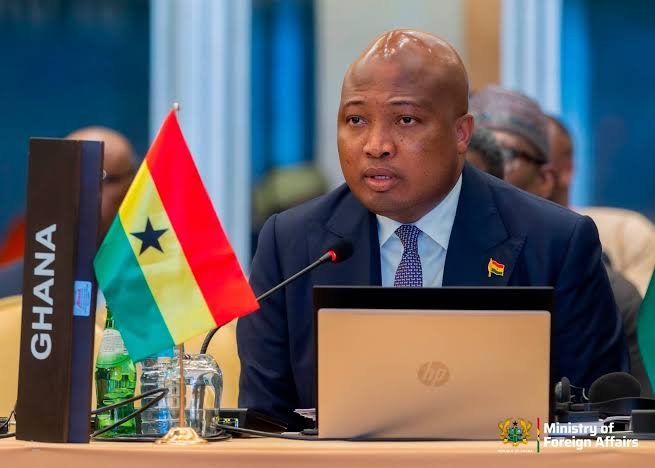
The African Union (AU) is expected to discuss xenophobic attacks against African nationals in South Africa at its summit in January 2027, Ghana’s Minister for Foreign Affairs, Samuel Okudzeto Ablakwa, has announced, following diplomatic efforts by the government to secure continental action on the issue. Corrections Policy
Mr. Ablakwa said the AU had agreed to place Ghana’s concerns on the agenda for consideration, raising hopes that the recurring attacks against foreign nationals could receive broader attention from African leaders.
“The African Union has promised to table our concerns for action. We still believe Africa can unite to win the war against poverty,” the Minister said.
The planned discussion follows Ghana’s formal protest against reports of intimidation, harassment and violence targeting Ghanaians and other foreign nationals in South Africa.
The government has argued that such incidents undermine African solidarity and threaten efforts to strengthen regional integration.
Ghana’s diplomatic response intensified in April 2026 when the Foreign Affairs Ministry summoned South Africa’s Acting High Commissioner to Ghana, Thando Dalamba, to convey its concerns about reports of attacks against foreign nationals.
During the engagement, Mr. Ablakwa called on South African authorities to take immediate and decisive measures to protect Ghanaian citizens and prevent further escalation.

The government also sought assurances that those responsible for criminal acts would be held accountable.
The Minister stressed that attacks against law-abiding residents and business owners were inconsistent with the principles of African unity and peaceful coexistence.
The issue has become a significant diplomatic concern because South Africa has historically benefited from solidarity across the continent during its struggle against apartheid.
Ghana, under its first President, Dr. Kwame Nkrumah, was among the countries that supported the campaign for South Africa’s liberation.
For Ghana, the reported attacks therefore raise questions about the protection of African nationals and the commitment of African states to the principles of Pan-Africanism.
Beyond the diplomatic implications, xenophobic violence can have serious economic consequences.
Foreign nationals operating businesses in affected communities may lose their investments, while those who feel unsafe may be forced to leave their homes and livelihoods behind.
Such developments can also weaken confidence in cross-border trade, employment and investment at a time when African governments are pursuing deeper economic cooperation through initiatives such as the African Continental Free Trade Area.
Ghana has maintained that the problem should not be treated solely as a bilateral disagreement between Accra and Pretoria. Editorial Standards
Instead, it believes the AU provides an appropriate platform for member states to discuss the underlying causes of xenophobia and develop coordinated measures to prevent future incidents.
In July 2026, the Presidency reported that AU Commission Chairperson Mahmoud Ali Youssouf had acknowledged the need to discuss the attacks at the next summit following engagements with President John Dramani Mahama.
The discussions reflected Ghana’s position that the issue should receive formal continental attention rather than be left unresolved.
The proposed January meeting could provide an opportunity for African leaders to examine the causes of anti-foreigner sentiment, strengthen protections for migrants and encourage accountability where criminal acts have occurred.
However, placing the matter on the agenda will not automatically end xenophobic attacks.
Any meaningful outcome will depend on the decisions adopted by member states, the willingness of national authorities to implement them and the effectiveness of measures designed to protect vulnerable communities.
South African authorities have previously indicated that they are monitoring tensions and taking steps to restore calm.
Ghana has continued to call for firm action against individuals responsible for violence, intimidation and destruction of property.
The situation has also had direct consequences for Ghanaian citizens living in South Africa.
In September 2026, Mr. Ablakwa disclosed that four Ghanaians had died amid xenophobic violence and related circumstances between April and July.

He said the government was pursuing diplomatic and legal avenues in response to the cases and seeking accountability from the relevant authorities.
The government also organised an evacuation exercise for vulnerable Ghanaians who wished to return home.
According to the Ghana News Agency, a total of 1,964 citizens were evacuated between May 27 and September 4, 2026, through chartered and commercial flights. Editorial Ethics & Independence
The evacuations highlighted the human cost of the crisis, particularly for people who had built their lives and businesses abroad but felt compelled to leave because of safety concerns.
For Ghana, the priority remains protecting its citizens while maintaining constructive diplomatic relations with South Africa.
The government has emphasised that its objections are directed at xenophobic conduct and the need for accountability, rather than hostility towards South Africa or its people.
The January 2027 AU summit will therefore be an important opportunity to move the discussion from diplomatic statements towards practical continental responses.
Possible areas for consideration include stronger monitoring of xenophobic incidents, cooperation between law-enforcement agencies, public education promoting tolerance and measures to ensure that perpetrators of violence face the law.
The summit could also encourage dialogue among African governments and communities to address the social and economic tensions that are sometimes used to justify hostility towards migrants. Newscard
Ultimately, the effectiveness of the AU’s intervention will be measured not simply by whether the issue is discussed, but by whether African citizens can live, work and conduct business across the continent without fear of being targeted because of their nationality.
Mr. Ablakwa’s announcement signals a diplomatic step forward for Ghana’s campaign to secure continental attention to xenophobia.
The challenge ahead will be turning that commitment into concrete action that protects African nationals and reinforces the principles of solidarity and shared prosperity.