

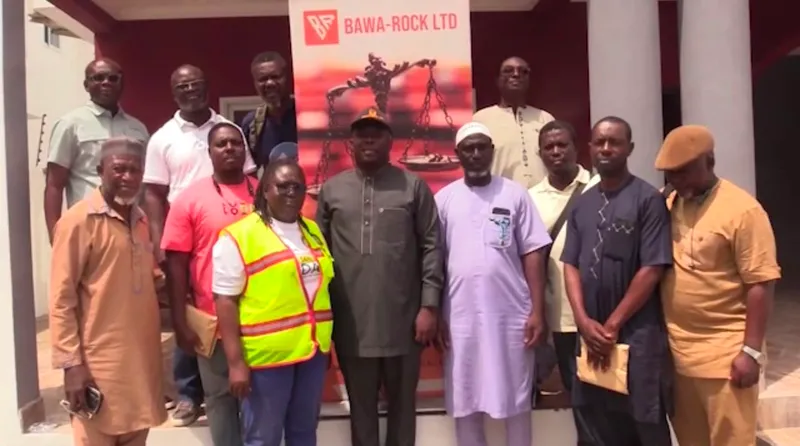
Eight poultry farmers in the Greater Accra Region whose businesses were severely affected by the devastating June 29 floods have received a combined GH¢700,000 in financial support from Bawa-Rock Limited. Editorial Standards
The intervention, presented to the affected farmers at Roman Ridge in Accra on September 17, is intended to help them recover from losses suffered when floodwaters destroyed birds, farm structures, equipment and other valuable assets.
Bawa-Rock Limited, a gold trading and mining company based in Obuasi, said the support forms part of its corporate social responsibility programme and is aimed at helping affected businesses rebuild and return to operation.
Presenting the funds on behalf of the company, Bawa-Rock’s Business Development Manager, Eric Addae Boateng, said the financial package was calculated to respond to losses suffered by the farmers, including the destruction of poultry birds, business capital and other valuables.
The assistance comes more than two months after torrential rains triggered widespread flooding across Accra and other parts of Greater Accra on June 29.
The disaster affected homes, businesses and public infrastructure, while several communities experienced severe disruption to economic activities.
The scale of the flooding also exposed the vulnerability of agricultural businesses operating in flood-prone areas. Poultry farms were among the enterprises that suffered significant losses, with floodwaters entering poultry houses and killing large numbers of birds.
In Dawhenya, for example, a poultry farmer reported losing almost his entire flock during the June 29 flooding, with only one bird surviving.
He subsequently appealed to the National Disaster Management Organisation and other institutions for assistance to rebuild his business. Corrections Policy
For the eight beneficiaries of the latest intervention, the GH¢700,000 support could provide an important starting point for restoring damaged farms and replacing lost productive assets.
Chairman of the Greater Accra Regional Association of Poultry Farmers, Titus Frederick Lutterodt, welcomed the intervention and expressed appreciation to Bawa-Rock for supporting farmers at a difficult period.
According to Lutterodt, the floods had not only destroyed birds and physical structures but had also affected the livelihoods and confidence of farmers who depended on poultry production for their income.

One of the beneficiaries, Shak Al-Mohammed of Shak Farms, also expressed gratitude for the intervention, describing the support as timely at a point when restarting operations appeared extremely difficult.
Another beneficiary, Abena Kyei, who has been involved in poultry and piggery farming since 1995, said the June floods destroyed tens of thousands of her birds.

She explained that the scale of the losses had left her deeply discouraged and considering whether to abandon farming.
Her experience highlights the broader economic consequences of extreme weather events for agricultural businesses.
Unlike some forms of commerce, poultry farming requires substantial upfront investment in birds, feed, housing, equipment, medication and labour. A major disaster can therefore wipe out several months of investment within a short period.
The June floods also renewed concerns about the need for stronger financial protection for livestock farmers.
In June, the West Africa Centre for the Protection of Animal Welfare called for the establishment of a national livestock and poultry insurance scheme to protect farmers against disasters including floods, fires, droughts and disease outbreaks.
The organisation argued that many poultry farmers lack insurance or sufficient savings to recover after major losses.
It recommended measures including emergency cash support, restocking with chicks, veterinary assistance, disinfectants and rehabilitation of damaged farm structures.
The call for stronger protection is particularly relevant as climate-related risks continue to create challenges for agricultural production.
Beyond immediate relief, farmers may require better drainage around farms, improved disaster preparedness, affordable insurance products and access to recovery financing. Newscard
The government had earlier announced broader flood relief measures following the June disaster.
President John Dramani Mahama directed the release of GH¢300 million from the Contingency Fund, with GH¢150 million earmarked for immediate relief and another GH¢150 million for flood mitigation measures.
While private-sector interventions such as Bawa-Rock’s GH¢700,000 contribution can provide immediate assistance, sustainable recovery will require longer-term measures to reduce the exposure of farms and other businesses to flooding.
For the affected poultry farmers, however, the latest support offers an opportunity to replace some lost assets, repair damaged facilities and begin rebuilding their operations.

The intervention also demonstrates how corporate social responsibility can complement public relief efforts when communities and businesses face the consequences of natural disasters.
As the beneficiaries work to restore their farms, the experience of the June floods serves as a reminder of the need to combine emergency assistance with long-term investment in resilient agricultural infrastructure, insurance and disaster preparedness. Editorial Ethics & Independence
For Ghana’s poultry industry, strengthening that resilience will be important not only for protecting farmers’ livelihoods but also for sustaining local food production and reducing the economic impact of future disasters.