

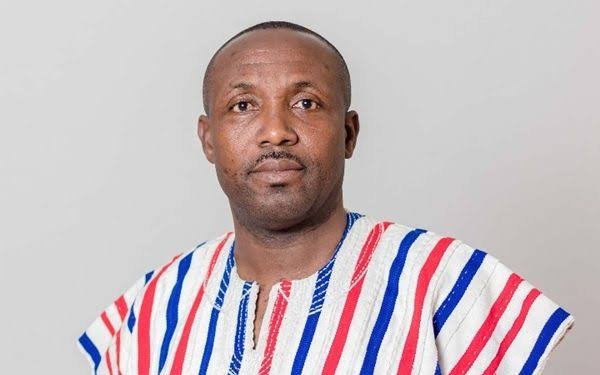
Former General Secretary of the New Patriotic Party (NPP), John Boadu, has been elected National Chairman of the opposition party, taking over at a crucial moment as the party begins efforts to reorganise its structures and prepare for the 2028 general election. Corrections Policy
Boadu secured 2,888 votes in the NPP’s National Delegates Conference held at the Baba Yara Sports Stadium in Kumasi on Saturday, October 3, 2026. He defeated former Energy Minister Boakye Kyerematen Agyarko, who polled 2,408 votes.
Former NPP National Chairman Paul Afoko obtained 790 votes, while former Greater Accra Regional Chairman Sammy Crabbe, whose name was listed as Samuel Kenneth Adolphus Ben Crabbe, received 41 votes.
Boadu’s victory returns an experienced party organiser to one of the NPP’s most influential leadership positions.
He previously served as the party’s General Secretary and has held several senior responsibilities within the NPP over the years.
His election comes after the NPP went through a highly competitive internal contest involving several prominent figures.
The national elections formed part of a broader effort to select a new executive team that will guide the party for the next four years.
In his acceptance remarks, Boadu called for unity among members and urged the party to move beyond the internal contest. Editorial Standards
“There must be no winners and losers, only one united NPP around one purpose,” he said, according to the Ghana News Agency.
He also outlined a rebuilding agenda focused on strengthening the party from the grassroots upward.
According to Boadu, the new leadership intends to improve the party’s constituency structures and build an organisation that listens more closely to its members and the electorate.
His message reflects the significant task facing the NPP following its defeat in the 2024 general election.
The party is now expected to strengthen its grassroots organisation, improve internal coordination and rebuild public confidence ahead of the next presidential and parliamentary elections.
Insight Ghana reported that Boadu told delegates that the party’s task was to build a “renewed NPP” that listens and consults more while working closely with regional executives, constituency structures, external branches and Members of Parliament. Editorial Ethics & Independence
The newly elected chairman also stressed that political success cannot be taken for granted. He said electoral victory must be earned through service, organisation, credibility and the trust of Ghanaians.

The leadership team accompanying Boadu includes several familiar faces and newly elected executives. Justin Frimpong Kodua retained his position as General Secretary after securing 4,486 votes.
Sylvester Tetteh polled 1,340, while Eugene Boakye Antwi and Dr Charles Dwamena obtained 162 and 129 votes respectively.
Daniel Nii Kwartei Titus-Glover was elected National Organiser with 2,964 votes, while Abanga Yakubu Fusani became National Youth Organiser after receiving 1,550 votes.
Mavis Hawa Koomson was elected National Women’s Organiser with 782 votes, defeating Safia Mohammed, who obtained 429 votes.
The party also elected Kojo Fosu Boadu, Henry Nana Boakye, Mustapha Abdul-Hamid and Nana Akomea as national vice chairpersons, while Alfred Kojo Thompson emerged National Treasurer. Dennis Edward Miracles Aboagye was elected National Communications Director unopposed.
The national executive elections reportedly involved more than 7,000 delegates and formed part of a conference that also considered constitutional amendments. The exercise lasted nearly 20 hours before the new leadership team was finalised.
For Boadu, the immediate challenge will be turning his campaign and acceptance promises into practical organisational reforms.
The NPP will need to maintain unity among competing factions, strengthen its constituency structures and improve communication with members and voters. Newscard

The new chairman will also have to work with the party’s presidential candidate, Dr Mahamudu Bawumia, Members of Parliament, regional executives and other stakeholders as the NPP develops its strategy for the 2028 elections.
Boadu’s election therefore represents more than a change in the party’s chairmanship. It places responsibility on an experienced political organiser to help lead the NPP through a period of rebuilding, internal consolidation and renewed engagement with Ghanaian voters.
As the new executives begin their four-year mandate, their ability to translate calls for unity, grassroots mobilisation and organisational reform into measurable action could shape the NPP’s prospects in its bid to return to power in 2028.