

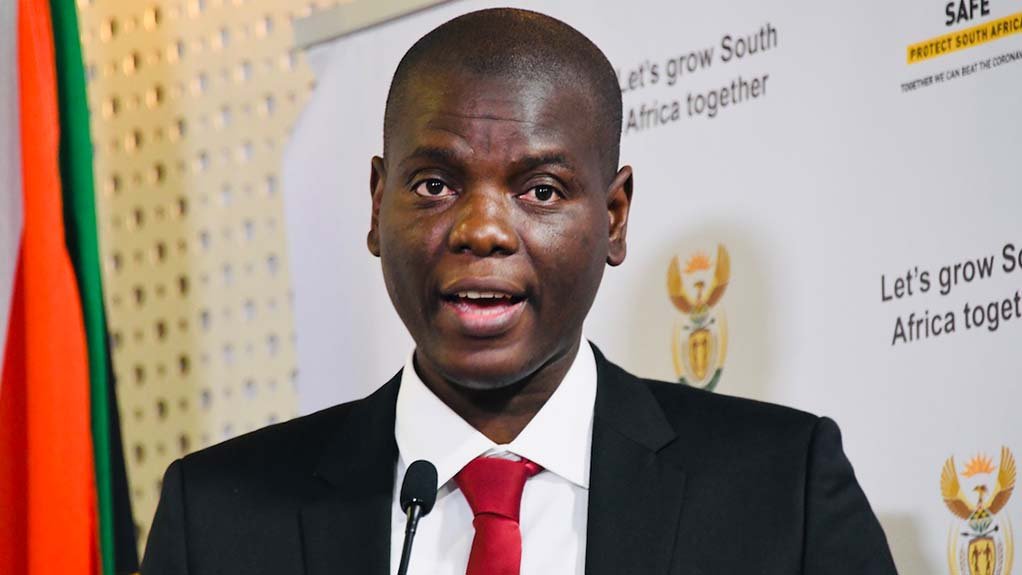
The South African government is considering compensation for Ghanaian traders and business owners who suffered losses during recent anti immigrant violence, although no final decision has been made, according to South Africa’s Minister of International Relations and Cooperation, Ronald Lamola. The development comes as diplomatic discussions continue between Ghana and South Africa following weeks of unrest that forced nearly 1,000 Ghanaians to return home.
Speaking in a radio interview with Accra-based Joy FM, Lamola acknowledged that compensation is among the issues currently under discussion within the South African government. However, he stressed that authorities are still investigating the circumstances surrounding the attacks and assessing individual cases before making any formal policy announcement.
“I can’t make a policy pronouncement that has not yet been confirmed,” Lamola said, adding that compensation remains one of the matters being considered as investigations proceed.

The issue gained prominence after Ghana formally demanded compensation for its citizens who lost businesses, homes, and other property during the violence. Ghana’s Foreign Affairs Minister, Samuel Okudzeto Ablakwa, has announced that the government is assembling legal and diplomatic mechanisms to pursue restitution for affected nationals. According to him, victims will be required to submit documentation proving ownership of businesses, properties, and other assets to support compensation claims.
Addressing returning evacuees at the Kotoka International Airport, Ablakwa assured them that the government would not limit its efforts to evacuation alone. He stated that authorities were determined to seek justice and financial compensation for citizens whose livelihoods had been disrupted by the attacks.
The violence triggered one of Ghana’s largest emergency evacuation exercises in recent years. Nearly 1,000 Ghanaians voluntarily registered to leave South Africa following reports of intimidation, attacks on foreign-owned businesses, and growing anti immigrant sentiment. The final group of evacuees arrived in Ghana on June 7, bringing the operation to a close.

Lamola maintained that South African law continues to protect the property rights of foreign nationals who legally own businesses and assets in the country. He urged affected individuals to engage through official diplomatic channels and work with the Ghana High Commission in Pretoria to address outstanding concerns.
The South African minister also revealed that approximately 74 percent of the first group of returning Ghanaians had overstayed their visas and had been declared undesirable persons under South African immigration laws. He indicated that immigration status would be one of the factors considered during the review of individual cases.
Despite disagreements over some aspects of the crisis, both governments have signaled a willingness to maintain diplomatic engagement. Lamola acknowledged that the events had strained relations between the two countries but expressed confidence that Ghana and South Africa would overcome the difficulties through dialogue and cooperation.

The controversy has also sparked wider discussions about migration, xenophobia, and the treatment of foreign nationals across Africa. Ghana has already indicated that it intends to raise the matter at the African Union, with President John Dramani Mahama expected to push for justice and compensation for affected citizens at upcoming continental meetings.
For now, compensation remains under consideration rather than confirmed policy. However, the willingness of South African authorities to discuss the issue marks a significant step in efforts to address the losses suffered by Ghanaian traders and restore confidence among affected communities.

“No Room for Xenophobia” – President Mahama Reaffirms Ghana’s Commitment to Regional Unity