

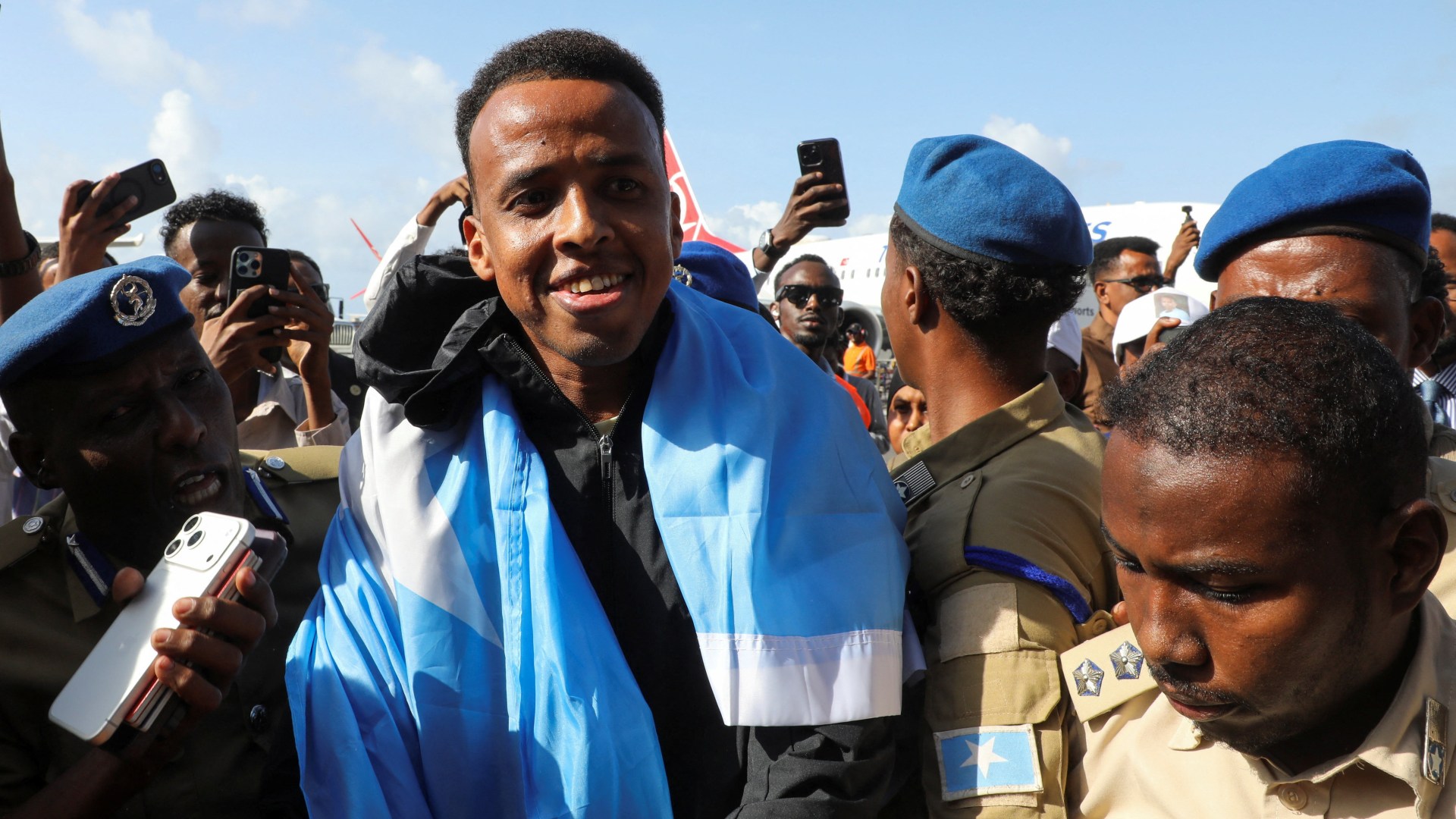
The United States has confirmed that Somali referee Omar Abdulkadir Artan was denied entry ahead of the 2026 FIFA World Cup due to alleged links to suspected terrorist organisations, according to reports from U.S. authorities and international media coverage.
The decision has sparked global debate, as Artan had been selected by FIFA as one of the officials for the tournament and was expected to become the first referee from Somalia to officiate at a World Cup.
According to U.S. Customs and Border Protection, Artan was deemed inadmissible after vetting checks at Miami International Airport, despite reportedly holding valid travel documentation. Officials cited “security concerns” and alleged associations with individuals linked to terror networks, though no detailed evidence has been publicly disclosed.

The case has drawn widespread attention because Artan is one of Africa’s most highly rated referees, having been named Africa’s best male referee in 2025. His exclusion means he will not participate in the tournament, which is set to be jointly hosted by the United States, Mexico, and Canada.
FIFA has confirmed that Artan is no longer eligible to officiate at the tournament, stating that immigration decisions are under the authority of host nations and outside its control. The governing body also acknowledged that referees must be physically present at centralized training bases in the United States, meaning his removal automatically disqualified him from participation in matches elsewhere.
The incident has triggered diplomatic and sporting reactions. Somali officials expressed disappointment and said they had made efforts to secure his participation, including issuing a diplomatic passport and engaging in discussions with relevant authorities.

Artan, who was briefly detained and later returned to Istanbul before heading home, has maintained that he has no involvement with any extremist networks and has expressed gratitude for the support he has received from FIFA and the Somali football community.
The controversy comes amid broader tightening of U.S. immigration policies, including restrictions affecting nationals from multiple countries under enhanced security screening measures linked to national security concerns.
Human rights advocates and sports commentators have raised questions about transparency and fairness in the decision, arguing that high profile sporting figures should be subject to clear and consistent vetting standards, especially during global events like the World Cup.
Supporters in Somalia have rallied behind Artan, with public gatherings and messages of solidarity highlighting his achievements and his role as an inspiration for young athletes in the country.
At the same time, some analysts note that the case underscores the complex intersection between international sport, immigration policy, and security enforcement, especially when global tournaments are hosted in countries with strict entry regulations.

The situation has also reignited discussion about FIFA’s ability to ensure inclusivity in its competitions when host nation policies can directly affect participation of officials, players, and staff.
As the World Cup approaches, the incident is expected to remain a point of contention, raising broader questions about fairness, global access, and the balance between security and sporting inclusion.