


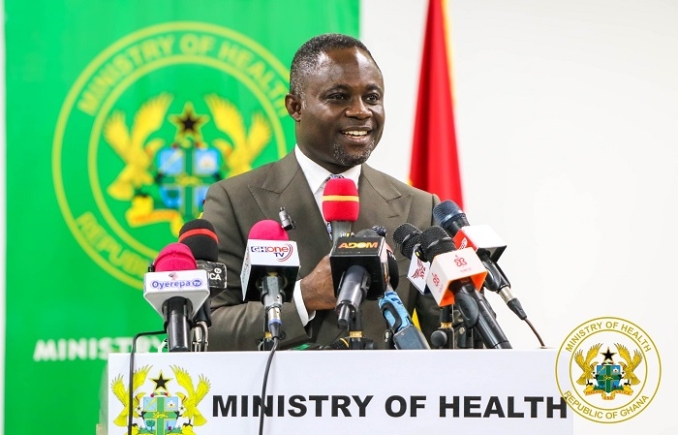
Minister for Health, Kwabena Mintah Akandoh, has announced that the government plans to recruit about 16,000 health workers in 2026 as part of a wide effort to strengthen the country’s healthcare system and improve service delivery across both urban and rural areas.
The recruitment drive forms part of a broader strategy to address staffing gaps in hospitals, clinics, and community health facilities nationwide, where shortages of doctors, nurses, and allied health professionals have continued to put pressure on service delivery.
According to the Health Minister, the move is aimed at ensuring that Ghana’s healthcare system is better equipped to handle rising patient demand, especially in underserved and rural communities where access to medical care remains limited. The recruitment is also expected to support ongoing government initiatives to expand primary healthcare services and reduce patient congestion at major hospitals.
The announcement comes at a time when Ghana’s health sector is undergoing several reforms focused on improving efficiency, expanding infrastructure, and increasing workforce capacity. Recent government data shows that thousands of health professionals have already been absorbed into the system in earlier recruitment phases, with additional deployments expected to be completed in the coming months.

Health officials say the 2026 recruitment plan will build on these efforts by bringing in new professionals across multiple categories, including nurses, midwives, medical officers, laboratory technicians, pharmacists, and public health officers. The aim is to ensure a more balanced distribution of staff across regions, particularly in hard to reach areas where healthcare delivery has historically been weaker.
The Minister has also indicated that the government is working on placement structures to ensure that newly recruited staff are deployed where they are most needed. Rural districts are expected to receive priority under the plan, in line with the government’s focus on strengthening community based healthcare delivery.
Beyond staffing, the initiative is part of a wider health sector investment agenda that includes improving infrastructure, expanding digital health systems, and enhancing emergency response capacity. Officials argue that increasing the number of trained personnel is essential to making these reforms effective.
Health sector experts have long warned that workforce shortages remain one of the biggest challenges facing Ghana’s healthcare system. Hospitals in major cities often experience overcrowding, while facilities in rural areas struggle with inadequate staffing, leading to delays in treatment and limited access to essential services.

The government’s recruitment plan is therefore seen as a key step toward addressing these imbalances, although analysts note that long term success will depend on retention strategies, working conditions, and continuous professional development opportunities for health workers.
The announcement has been welcomed in health policy circles, with many describing it as a necessary intervention to improve national health outcomes. However, concerns remain about funding, payroll management, and ensuring that recruitment processes are transparent and efficient.
As preparations for the 2026 recruitment continue, attention is expected to focus on how quickly the government can implement the plan and whether it will significantly improve access to healthcare services across the country.
Ghana health financing compact signals shift toward sustainable healthcare investment