

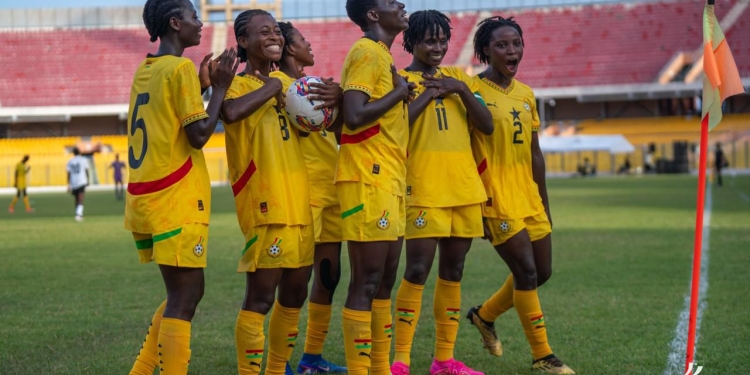
Ghana women’s national under-20 football team have been drawn into a demanding group at the upcoming FIFA U-20 Women’s World Cup, where they will compete against France, Ecuador and South Korea in what is expected to be one of the most competitive group stage matchups of the tournament.
The draw places Ghana in a difficult but highly valuable learning environment, as both opponents are widely recognised for their strong youth football systems and consistent performances at international level. France enters the competition as one of Europe’s most technically refined teams, with a history of producing elite women footballers who excel in both club and national team competitions. South Korea, meanwhile, is known for its discipline, tactical structure and high intensity pressing style, making them a difficult opponent for any side regardless of ranking.
For Ghana women’s national under-20 football team, the draw represents both a challenge and an opportunity. Ghana has built a reputation in African women’s football as a physically strong and resilient side capable of competing against top international opposition, but consistency and game management at critical moments remain key areas for improvement. Facing teams like France and South Korea will test the squad’s defensive organisation, tactical awareness and ability to transition quickly from defence to attack.

Football analysts often describe groups like this as “development defining,” especially for emerging football nations. According to multiple FIFA development assessments over recent youth tournaments, African teams that face elite European and Asian opposition at early stages often show improved tactical maturity in subsequent competitions. This is particularly important for Ghana, which continues to invest in women’s football development structures, youth academies and international exposure for young players.
The Black Princesses’ qualification itself reflects the steady progress of Ghana’s women’s football programme under the Ghana Football Association. In recent cycles, the team has produced standout performances in African qualifying tournaments, often relying on pace, individual brilliance and strong attacking transitions. However, at world stage level, the difference often lies in defensive discipline and decision making under pressure, areas that will be heavily tested against France and South Korea.
France’s youth women teams are widely regarded among the strongest in global football. Their development system integrates technical training from an early age, producing players who are comfortable in possession and capable of controlling the tempo of matches. South Korea also presents a unique challenge due to its high fitness standards and structured tactical approach, often forcing opponents into uncomfortable defensive situations through sustained pressure and rapid ball movement.
Coaches and technical experts familiar with youth international football note that Ghana’s success in this group will depend heavily on preparation and adaptability. The Black Princesses will need to balance defensive compactness with quick attacking transitions, while also maximising set piece opportunities, which often play a decisive role in tightly contested youth matches.

Historically, Ghana’s U 20 women’s team has shown that it can compete against stronger nations when fully focused and tactically disciplined. Previous World Cup appearances have included moments of strong performance against established footballing countries, though sustaining intensity across full matches has sometimes been a challenge. This current squad will be expected to build on those experiences and demonstrate greater maturity in game management.
The draw also highlights the growing competitiveness of women’s youth football globally. FIFA data from recent tournaments shows a narrowing gap between traditional powerhouses and emerging nations, as investment in women’s football continues to expand worldwide. African teams in particular have benefited from increased exposure, improved coaching standards and more structured youth competitions.
For Ghana, the group stage will not only determine progression in the tournament but also serve as a benchmark for the country’s long term development strategy in women’s football. Strong performances against France and South Korea could significantly boost player visibility and open pathways for professional opportunities in Europe and Asia.
Supporters of Ghana women’s national under-20 football team are expected to rally behind the team as they prepare for what will be a physically demanding and tactically challenging campaign. The expectation within Ghanaian football circles is not only to compete but to demonstrate clear progress in style of play, organisation and competitiveness at elite youth level.

As preparations begin, the focus will likely be on sharpening defensive coordination, improving passing efficiency under pressure and enhancing attacking finishing in transition moments. These areas are expected to determine how far Ghana can go in a group that features two highly disciplined and technically strong opponents.
Regardless of outcome, the experience of facing France and South Korea on the world stage is expected to play a crucial role in shaping the next generation of Ghanaian women footballers and strengthening the country’s long term ambitions in global women’s football.
Black Princesses edge Uganda to secure record 8th FIFA U-20 Women’s World Cup qualification