

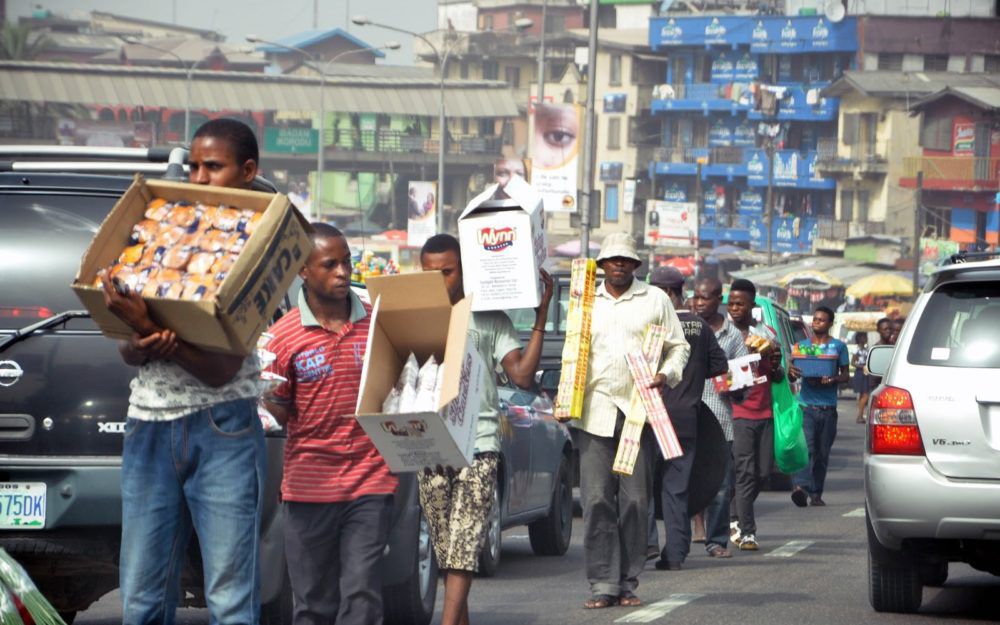
On any given Friday evening in Accra, two realities exist side by side. In East Legon and Airport Residential, restaurants with three-course menus and cocktails are packed with young professionals unwinding after a week at work. A few kilometres away, in Nima, Madina, or Ashaiman, families are calculating whether the money left in the house can cover both the evening meal and tomorrow morning’s trotro fare. Both groups are Ghanaian. Both are navigating the same economy. And increasingly, both are asking the same question: where exactly does self-care end and self-deception begin?
The “soft life” concept, imported from Nigerian social media and quickly adopted into Ghanaian pop culture, promises a particular vision of living well: brunch, travel, passive income, wellness routines, and the studied refusal to grind oneself into the ground. It is an aspiration, a rebellion against the inherited gospel of endless sacrifice that told previous generations to suffer now and enjoy later. For many young Ghanaians, the soft life is a statement that they will not wait. But against the backdrop of one of the most punishing economic stretches in Ghana’s recent history, the question of whether that aspiration is attainable, let alone responsible, has become genuinely contested.

The macro numbers tell a partial story. Headline inflation fell from 23.8% in December 2024 to 6.3% by November 2025, marking its lowest level since early 2019, reflecting a combination of currency appreciation, easing food prices, and restrictive monetary policy by the Bank of Ghana. Growth rebounded strongly to an estimated 5.7% in 2024 and accelerated further in the first half of 2025, reaching approximately 6.3% year-on-year. On paper, Ghana is recovering. In practice, the lived experience of most households tells a more complicated story.
In 2025, Ghana’s inflation rate came down sharply and the cedi held stronger than anyone expected. But for most households, the relief at the macro level has not fully translated to the market level yet. Prices are still elevated, even if they are no longer rising as fast. For everyday Ghanaians, whether workers, traders, young professionals, or parents, survival mode is still very much the operating system.
The gap between the headline and the reality is most visible in the details of daily spending. Despite Ghana’s inflation falling to a four-year low of 5.4% in December 2025, ordinary Ghanaians are still feeling the squeeze, from new Public Utilities Regulatory Commission utility tariff hikes to surging market rents in Makola and climbing school fees. Inflation for the utilities, gas, and other fuels category surged by 330 basis points to 12.6% year-on-year as the first quarter 2026 utility tariff hike ignited price momentum. At Makola No. 2 Market, traders revealed that rent stood at GH¢95,848 in 2024, increased to GH¢120,343 in 2025, and a newly proposed rent for 2026 stands at GH¢158,035, representing nearly a 58% increase over two years. Hundreds of traders staged a protest in February warning that the situation was becoming unsustainable.

For salaried workers, the arithmetic is equally punishing. Your financial reality is not determined by how much you earn. It is determined by the gap between income and the true cost of living. And in Ghana today, those costs are rising in ways that official inflation numbers do not fully capture. Your personal inflation rate, driven by rent, school fees, fuel, data costs, and food, could be significantly higher than the headline figure. That is why many people feel their money is disappearing even when they are told inflation is under control.
Labour market conditions remain a structural concern. The unemployment rate stood at approximately 14.5% in 2025, with youth unemployment exceeding 30% among individuals aged 15 to 24. Women are disproportionately affected, highlighting the urgency of employment-generating investments, particularly in agriculture, agro-processing, and services. Against this backdrop, the soft life is not merely a lifestyle preference. For many young Ghanaians, it is a form of resistance against a system that has consistently failed to reward effort with stability.

The cost of living in Accra sits somewhere between remarkably affordable and shockingly high, and the difference comes down entirely to the lifestyle choices made before signing the first lease. A one-bedroom apartment ranges from GH¢1,500 to GH¢12,000 depending on whether one lives in Dome or Cantonments. Street food costs GH¢15. Brunch in Osu costs GH¢150. The gap between local living and expat living is not gradual. It is a completely different financial universe. That divide, increasingly, mirrors the divide between the Ghanaian middle class and the affluent, a chasm that is widening even as social media presents a flattened, filtered version of prosperity.
The soft life debate in Ghana is not simply about spending habits. It touches something deeper: the relationship between aspiration and realism, between self-worth and self-preservation. A young woman spending GH¢200 on a spa treatment after a month of 60-hour weeks is not irresponsible. She is human. A graduate living with his parents and contributing to household expenses while applying for jobs is not failing. He is managing. The problem is not the desire for comfort. The problem is an economy that has made comfort a luxury and survival a full-time job.

The high cost of living for the ordinary Ghanaian is not just a temporary economic phase. It is a continuous challenge affecting Ghanaian households. As prices rise faster than incomes, Ghanaians are forced to adapt through heavy sacrifices, resilience, and constant adjustment. This is the reason the youth are increasingly frustrated, with many desperate to leave the country. Because no matter how hard one tries, it still looks like they are not doing enough.
What balance actually looks like, then, is not a single answer. It is not a monthly brunch budget or a savings percentage or a particular brand of sneakers. It is the willingness to be honest about which version of life you are actually living, to resist the social media pressure to perform prosperity, and to build something real within the constraints of a system that was not designed to make things easy. The soft life, at its best, is not decadence. It is dignity, the insistence that a person’s life should include some pleasure, some rest, some beauty, even amid genuine hardship. The question Ghana is really asking, beneath all the Instagram posts and the economic reports, is whether dignity is still affordable. The honest answer, for far too many people, is: barely.
Accra cost of living soars as the city ranks 8th most expensive in Africa