


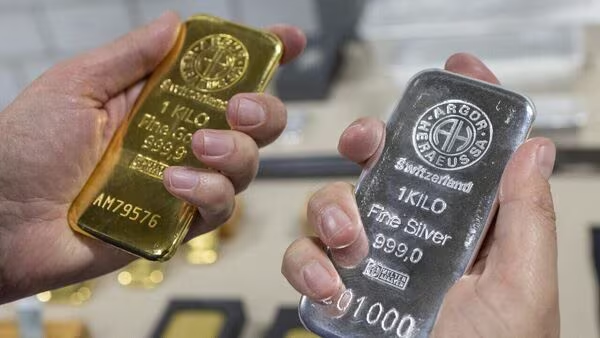
Precious metals investment outlook is rapidly shifting as gold and silver prices surged following reports of a possible easing in tensions between the United States and Iran, signaling how sensitive global markets remain to geopolitical developments. The rally reflects not just optimism around peace prospects, but also a broader recalibration of risk among investors navigating uncertain economic conditions.
The sudden price movement shows how commodities, particularly precious metals, continue to act as both reactive and strategic assets. Gold rose significantly while silver recorded even sharper gains, suggesting that investors are repositioning portfolios in anticipation of changes in currency strength, inflation expectations, and global stability.
Geopolitics and the precious metals investment outlook
The precious metals investment outlook is closely tied to geopolitical risk, and any sign of de-escalation in conflict tends to trigger immediate market responses. In this case, optimism around a potential agreement between the US and Iran has reduced immediate fears tied to oil supply disruptions and regional instability.
However, the reaction is more nuanced than a simple “peace equals lower gold prices” narrative. Instead, investors are weighing multiple variables at once. A softer US dollar, which typically accompanies easing geopolitical tensions, makes gold and silver cheaper for foreign buyers, thereby increasing demand. This dynamic helps explain why prices rose even as conflict concerns appeared to ease.
Why the precious metals investment outlook matters for businesses
For businesses, especially those involved in manufacturing, jewelry, and electronics, the precious metals investment outlook has direct cost implications. Rising prices of gold and silver increase input costs for industries that rely on these materials, potentially squeezing margins.
At the same time, mining companies and commodity traders benefit from higher prices, leading to increased revenues and potentially more investment in extraction and production. Financial institutions and asset managers also adjust their strategies, often increasing exposure to commodities during periods of volatility.
Additionally, fluctuations in precious metals influence currency markets and inflation expectations. Businesses operating internationally must therefore factor in these shifts when planning pricing strategies, procurement, and hedging mechanisms.
Household impact through the precious metals investment outlook
For households, the precious metals investment outlook plays a quieter but equally important role. Gold, in particular, is widely viewed as a store of value, especially in emerging markets and among individuals seeking protection against inflation or currency depreciation.
When gold prices rise, households that already hold gold assets, whether in jewelry or investment form, experience an increase in wealth. However, those looking to purchase gold, for example for weddings or savings, face higher costs.
Moreover, rising precious metal prices often signal broader economic uncertainty. This can influence consumer behavior, prompting more conservative spending and increased savings. In some cases, households may shift investments away from equities into safer assets like gold, affecting overall financial planning decisions.
Interest rates and the precious metals investment outlook
Another critical factor shaping the precious metals investment outlook is interest rate expectations. Gold and silver do not generate income, unlike bonds or savings accounts. When interest rates are high, investors tend to favor income-generating assets, reducing the appeal of precious metals.
However, current conditions present a mixed picture. Inflation concerns, partly driven by earlier spikes in energy prices, suggest that central banks may keep interest rates elevated. Yet, geopolitical uncertainty and currency fluctuations continue to support demand for gold and silver as hedging instruments.
This balancing act is why analysts remain cautious despite the recent rally. Price increases driven by short-term sentiment may not always translate into sustained long-term gains.
Market signals and future direction
Looking ahead, the precious metals investment outlook will depend on how geopolitical developments, monetary policy, and global growth trends evolve together. If a formal peace agreement materializes, markets may stabilize, potentially reducing the urgency for safe-haven investments.
However, structural uncertainties remain. Supply chain disruptions, shifting energy markets, and ongoing geopolitical rivalries mean that volatility is unlikely to disappear entirely. Precious metals will likely retain their role as strategic assets in diversified portfolios.
Ultimately, the precious metals investment outlook reflects more than just price movements; it captures the intersection of global politics, economic policy, and investor psychology. For businesses, it affects costs and strategic planning. For households, it influences savings behavior and financial security. As global conditions continue to evolve, gold and silver will remain central to how both institutions and individuals navigate uncertainty.
Read also: Zambia rejects US health aid conditions tied to critical minerals access