

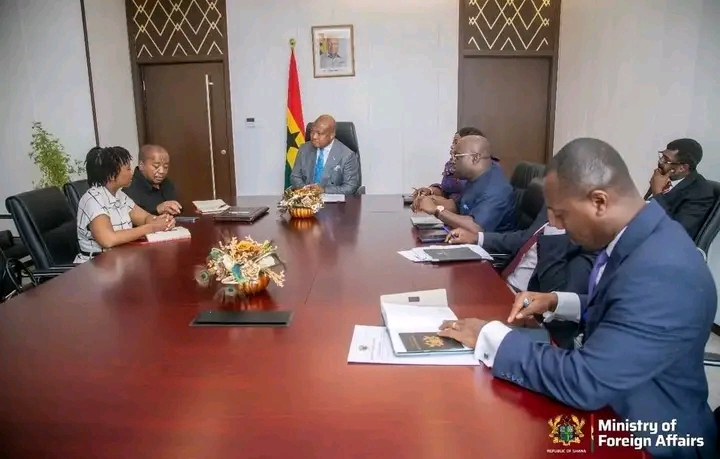
The Government of Ghana has summoned South Africa’s High Commissioner in Accra following reports of xenophobic attacks targeting Ghanaians and other foreign nationals, in a move that signals rising diplomatic concern over the safety of its citizens abroad.
The summons, initiated by the Ministry of Foreign Affairs led by Samuel Okudzeto Ablakwa, comes after disturbing videos circulated widely on social media showing incidents of harassment and intimidation against foreigners in parts of South Africa. According to officials, the footage prompted immediate diplomatic engagement between Accra and Pretoria as authorities sought clarity and assurances.
During the meeting, Ghana expressed what officials described as “strong dissatisfaction” with the reported incidents, stressing that the treatment of foreign nationals, particularly law abiding residents, is unacceptable and undermines the dignity and safety of affected individuals.

One of the incidents highlighted involved a Ghanaian resident in KwaZulu-Natal who was reportedly confronted by a group of individuals, asked to prove his legal status and told to leave the country. Ghanaian authorities warned that such actions risk escalating tensions and could lead to broader instability if not addressed swiftly.
The government further noted that while no fatalities have been recorded in the current wave of incidents, the situation remains concerning given the history of xenophobic violence in South Africa, which in previous years has resulted in deaths, injuries and destruction of property.
As part of its response, Ghana has lodged a formal protest and called on the South African government to take “immediate and decisive action” to protect foreign nationals. Officials emphasised that South Africa has a responsibility to ensure the safety of all residents within its borders, regardless of nationality, and to prevent further incidents.
The diplomatic engagement also involved calls for thorough investigations into the reported attacks and accountability for those responsible. Ghana is seeking firm assurances that measures will be put in place to prevent recurrence and maintain law and order.
In response, the South African High Commission acknowledged the concerns raised by Ghana and assured that authorities in Pretoria are actively working to address the situation. Law enforcement agencies, according to the envoy, are monitoring developments closely and taking steps to restore calm.
Separately, South African President Cyril Ramaphosa is expected to address the nation amid the growing concerns, with officials indicating that the address will focus on promoting coexistence and respect for the rights of all individuals living in the country.
Ghanaian authorities have also been working through diplomatic channels to support affected citizens. The country’s mission in South Africa, led by Benjamin Kofi Quashie, has been engaging directly with individuals involved in the incidents and providing consular assistance where necessary.

Officials confirmed that at least one of the individuals featured in the viral videos has been located and is receiving support, adding that no Ghanaian lives have been lost so far. The government has urged calm while investigations continue and diplomatic engagements unfold.
Beyond immediate safety concerns, the development has reignited broader discussions about xenophobia in South Africa and its impact on regional relations. Analysts note that such incidents, often linked to economic pressures and competition for jobs, have periodically strained ties between South Africa and other African nations.
Minister Ablakwa stressed that the attacks contradict the principles of African unity and solidarity, recalling Ghana’s historical support for South Africa during the anti apartheid struggle. He described the incidents as a “betrayal” of shared continental values and warned against allowing the actions of a few individuals to undermine longstanding relationships.
Despite the tensions, Ghana has ruled out any retaliatory actions and reaffirmed its commitment to peaceful engagement and diplomatic resolution. The government emphasised that South Africans living in Ghana remain safe and protected, highlighting the country’s tradition of hospitality and stability.
The situation remains fluid, with both governments expected to continue high level discussions in the coming days. As diplomatic channels remain active, the focus will be on ensuring the safety of affected individuals, restoring confidence and preventing further escalation.
Ghanaians No Longer Need Traditional Visas to Travel to Morocco – Okudzeto Ablakwa