

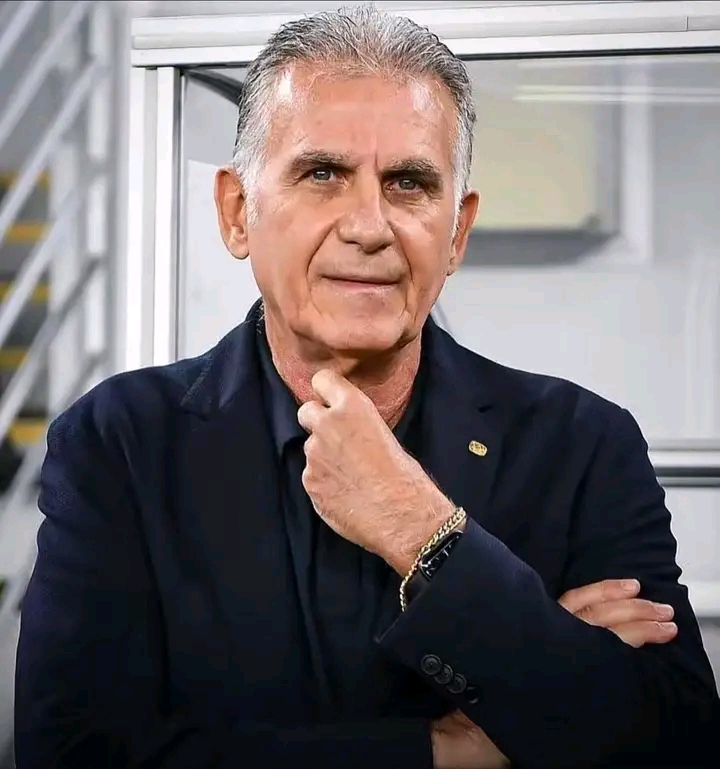
Newly appointed Black Stars head coach Carlos Queiroz has moved quickly to maintain continuity within Ghana’s national team setup, retaining three key members of the existing technical team as preparations intensify for the 2026 FIFA World Cup.
The decision reflects a strategic balance between introducing fresh ideas and preserving institutional knowledge, as Ghana looks to mount a competitive campaign on football’s biggest stage. According to reports, the retained staff are part of a broader backroom structure that had already been strengthened during the previous coaching era, ensuring that the team does not lose critical experience at a pivotal moment.

Queiroz, who was officially appointed by the Ghana Football Association earlier this month, inherits a team that has already secured qualification for the 2026 World Cup and is now entering the final phase of preparation.
The Portuguese tactician is widely regarded for his extensive international experience, having coached multiple national teams at the World Cup, including Portugal and Iran. His appointment signals a shift toward tactical discipline and structured gameplay, qualities Ghana hopes will translate into improved performances after recent inconsistencies.
Despite his reputation for building systems from the ground up, Queiroz has opted against a complete overhaul of the technical bench. Instead, he is retaining selected members of the previous setup while evaluating where additional reinforcements are needed. This approach is consistent with earlier indications from the GFA that parts of the existing backroom team would remain in place even after the coaching transition.
Among the broader technical team are experienced figures such as John Paintsil and Desmond Ofei, alongside international specialists like Alain Ravera and Kim Lars Björkegren, all of whom have contributed to strengthening Ghana’s technical capacity in recent months.
The decision to retain key staff is seen as crucial given the limited time before the tournament. With less than three months to the World Cup, disrupting the entire technical structure could have posed risks to team cohesion and preparation. Instead, Queiroz is expected to integrate his own philosophy gradually while relying on the familiarity and local expertise of the retained personnel.
This hybrid approach also aligns with Ghana’s broader strategy of combining international experience with local knowledge. The GFA had earlier expanded the technical team with additional specialists in performance, analysis and medical support to enhance competitiveness at the global level.
For players, the continuity in the technical team is likely to provide stability during a period of transition. Familiar coaching voices, combined with new tactical direction, could help the squad adapt more quickly to Queiroz’s methods without losing the identity developed during qualification.

Queiroz himself has acknowledged the scale of the challenge ahead, describing the role as one of the most demanding of his career. He is expected to oversee final squad selection, tactical planning and preparatory matches leading up to the tournament.
Ghana has been drawn into a competitive group that includes England, Croatia and Panama, setting the stage for a difficult but potentially defining campaign. The Black Stars will be aiming to improve on their recent World Cup performances and recapture the form that once saw them reach the quarter finals in 2010.
The retention of key staff also sends a message about long term planning within Ghanaian football. Rather than frequent and disruptive changes, the current approach suggests a more measured strategy focused on continuity, gradual improvement and structural stability.
As preparations continue, attention will shift to how effectively Queiroz can blend his tactical expertise with the existing framework. The coming weeks will be critical in determining whether this balance can translate into results on the global stage.
For now, the decision to keep core members of the technical team highlights a clear priority: stability over experimentation, as Ghana positions itself for a high stakes return to the World Cup.