Electric mobility startup Spiro raises US$50m to accelerate African expansion

0
112

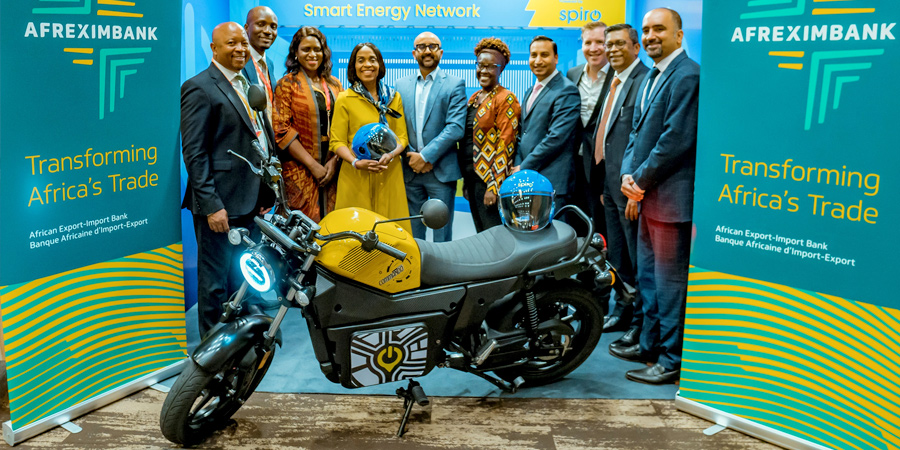
Electric mobility company Spiro has secured $50 million in debt financing to support its expansion across Africa, reinforcing investor confidence in the continent’s emerging battery swapping ecosystem.

The company, which began operations in Togo under the M Auto brand, obtained the financing from Afreximbank, Nithio and the Africa Go Green Fund. The transaction follows a $100 million fundraising round completed in 2025, signaling sustained capital flows into Africa’s electric mobility sector.

Spiro’s business model centers on battery swapping for electric motorcycles, a structure designed to reduce upfront costs for riders while addressing infrastructure limitations. Customers purchase the motorcycle, but the company retains ownership of the batteries. Riders can exchange depleted batteries for fully charged units at dedicated swap stations in a matter of minutes, minimizing downtime and eliminating the need for home charging.

The battery swapping model is capital intensive, requiring significant investment in charging infrastructure, battery inventory and station deployment. The newly raised funds will be used to expand Spiro’s swap station network, scale operations across new markets and advance technology development, including automated battery swapping systems and deeper integration of renewable energy sources.

Electric mobility startup Spiro raises US$50m to accelerate African expansion

Spiro currently operates in six African countries, including Togo, and reports more than 80,000 electric motorcycles on the road. The company says its fleet has collectively traveled over one billion kilometers without direct emissions, underscoring its positioning within Africa’s clean transport transition.

Chief Executive Officer Kaushik Burman described the financing as a step toward building a scalable energy network tailored to African conditions. The company’s strategy aligns with broader regional efforts to reduce reliance on imported fossil fuels, lower urban air pollution and create new industrial value chains around green technology.

Lenders backing the deal view the transaction as evidence of sector maturation. Electric two wheelers have gained traction in several African markets, particularly where motorcycles are widely used for commercial transport, delivery services and ride hailing. The battery swapping approach is seen as particularly suited to high usage environments, where charging downtime can directly affect income generation.

Beyond environmental benefits, the expansion could stimulate local manufacturing and assembly activities. Spiro has already initiated assembly projects in parts of East and West Africa, including Togo. Scaling production and infrastructure deployment may contribute to job creation and industrial capability development within host countries.

electric mobility

Investor interest in electric mobility across Africa has grown as global climate finance flows increase and governments adopt cleaner transport policies. However, long term success will depend on operational efficiency, grid reliability, regulatory support and sustained consumer adoption.

With fresh capital secured, Spiro is positioning itself to consolidate its footprint in a rapidly evolving market. The company’s next phase will likely focus on deepening infrastructure density, improving battery technology and forging partnerships that anchor electric mobility within Africa’s broader energy transition framework.

Electricity Company Of Ghana TO GO CASHLESS.

Author

  • Daniel Ablordey

    Daniel Ablordey is a Business Analytics student at the University of Ghana Business School and an emerging strategist at the intersection of data, markets, and narrative. With a keen analytical mind and a passion for African business and economic trends, he is building a career focused on translating complex data-driven insights into accessible, decision-relevant stories that matter.

    As a writer and editor with Insight Ghana, African Business Insight, and The African Journal, Daniel delivers sharp, high-impact analysis on current affairs, business developments, and emerging trends across the continent. His work is defined by precision, clarity, and a deep commitment to responsible journalism — ensuring that every story he tells is not only accurate but meaningful to the audiences it serves.

    Beyond his editorial work, Daniel serves as an Ecobank Youth Ambassador, where he actively promotes financial inclusion, digital banking, and financial literacy among young Ghanaians. His leadership experience spans academic, professional, and faith-based institutions, where he has consistently driven initiatives centered on growth, structure, and long-term impact.

    Grounded in the principles of Pan-Africanism and service, Daniel brings a rare combination of analytical rigour and storytelling depth to his work. Whether unpacking market behavior, profiling emerging business leaders, or covering cultural shifts shaping the continent, he approaches every assignment with strategic intent and editorial integrity.

    His broader ambition is to contribute to Africa's transformation by shaping how data, business, and storytelling intersect — not just locally, but on a global stage.

Previous articleAmazon rolls out customizable personality styles for Alexa+
Next articleWorld Economic Forum chief resigns after scrutiny over Epstein links
Daniel Amenyo Ablordey
Daniel Ablordey is a Business Analytics student at the University of Ghana Business School and an emerging strategist at the intersection of data, markets, and narrative. With a keen analytical mind and a passion for African business and economic trends, he is building a career focused on translating complex data-driven insights into accessible, decision-relevant stories that matter.

As a writer and editor with Insight Ghana, African Business Insight, and The African Journal, Daniel delivers sharp, high-impact analysis on current affairs, business developments, and emerging trends across the continent. His work is defined by precision, clarity, and a deep commitment to responsible journalism — ensuring that every story he tells is not only accurate but meaningful to the audiences it serves.

Beyond his editorial work, Daniel serves as an Ecobank Youth Ambassador, where he actively promotes financial inclusion, digital banking, and financial literacy among young Ghanaians. His leadership experience spans academic, professional, and faith-based institutions, where he has consistently driven initiatives centered on growth, structure, and long-term impact.

Grounded in the principles of Pan-Africanism and service, Daniel brings a rare combination of analytical rigour and storytelling depth to his work. Whether unpacking market behavior, profiling emerging business leaders, or covering cultural shifts shaping the continent, he approaches every assignment with strategic intent and editorial integrity.

His broader ambition is to contribute to Africa's transformation by shaping how data, business, and storytelling intersect — not just locally, but on a global stage.