

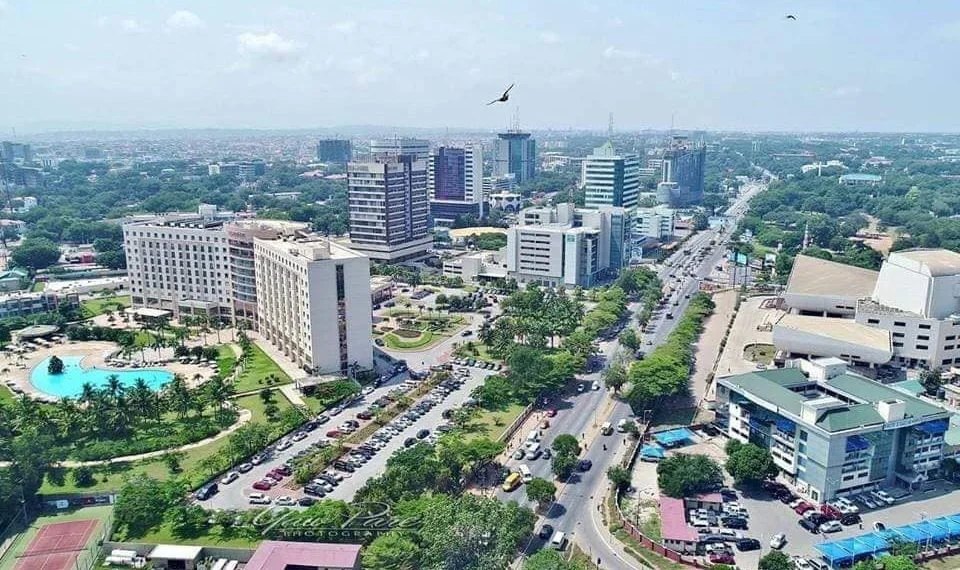
The Accra cost of living has become a defining economic issue in 2026, with the capital ranking as the eighth most expensive city in Africa, a position that signals persistent financial strain on households and businesses. According to Numbeo’s 2026 Cost of Living Index, Accra recorded a score of 36.6, placing it firmly in the upper tier of African cities where everyday expenses significantly outpace income growth.
This ranking reinforces a reality many residents already feel daily: the Accra cost of living remains elevated even as Ghana’s macroeconomic indicators show tentative signs of stabilisation. While inflation has moderated compared to crisis peaks, price levels, especially for essentials, have not adjusted downward in a meaningful way.
Accra Cost of Living and Household Pressure
The most pressing issue behind the Accra cost of living is the mismatch between prices and purchasing power. Although Accra is far cheaper than global cities in Europe or North America, its costs are steep relative to average local wages. This makes affordability, not absolute prices, the central problem for urban households.
The city’s purchasing power index of just 12.7 is among the weakest on the continent. This means that even modest price increases translate into severe welfare losses for residents. In contrast, cities in South Africa record purchasing power indices above 100, cushioning households against higher nominal costs.
For many families in Accra, this imbalance shows up in reduced food portions, delayed healthcare spending, and rising household debt, particularly among salaried workers whose incomes have not kept pace with inflation.
A breakdown of Numbeo’s data reveals that food prices are the primary driver of the Accra cost of living. The city’s groceries index of 42.4 ranks among the highest in Africa, exceeding several North and East African capitals with larger economies.
This reflects a combination of factors: heavy import dependence, currency depreciation, transport inefficiencies, and lingering supply chain disruptions. Even domestically produced food items are affected by fuel costs, storage limitations, and post-harvest losses, all of which push prices upward.
As a result, food inflation remains sticky, meaning households do not experience immediate relief even when headline inflation slows.
Restaurants, Rent, and Cost Structure in Accra
Beyond groceries, restaurant prices in Accra remain elevated, with a restaurant index of 39.1. Eating out, once considered discretionary spending, is increasingly unaffordable for middle-income earners, affecting sectors such as hospitality and tourism.
Interestingly, rent is not the main contributor to the Accra cost of living. The city’s rent index stands at 11.4, lower than cities such as Kigali, Addis Ababa, and Cape Town. This suggests that housing costs, while still burdensome, are relatively contained compared to food and daily consumption.
This cost structure indicates that even residents who own homes or live in rent-controlled arrangements are not insulated from broader price pressures.
What the Accra Cost of Living Means for Businesses
For businesses, a high Accra cost of living creates a complex operating environment. Employers face mounting pressure to increase wages, yet higher payroll costs are difficult to absorb amid weak consumer demand. This tension compresses margins, particularly for small and medium-sized enterprises.
At the same time, reduced purchasing power limits consumer spending, affecting sectors such as retail, food services, and transportation. Companies must balance price increases with the risk of losing customers whose real incomes are already stretched.
In the long term, persistent cost pressures may discourage talent retention and reduce Accra’s competitiveness as a regional business hub.
Within West Africa, Accra ranks second only to Abidjan in costliness. While Abidjan’s higher ranking is supported by stronger industrial output and domestic demand, Accra’s position is more closely linked to macroeconomic vulnerabilities, particularly currency weakness and inflation pass-through effects following Ghana’s debt crisis.
Across Africa, cities like Cairo and Alexandria remain cheaper due to food and energy subsidies, while Southern African cities offset higher costs with stronger purchasing power.
For policymakers, the Accra cost of living ranking underscores the urgency of addressing food supply chains, logistics costs, and productivity constraints. Without targeted interventions, macroeconomic recovery may fail to translate into tangible improvements in living standards.
Accra’s 2026 ranking presents a mixed outlook. The city is not among the world’s most expensive, but within Africa, and especially West Africa, it stands out as a high-cost urban centre with limited income buffers.
Reducing the Accra cost of living will require more than stabilising inflation. It will demand structural reforms that lower the price of essentials while boosting real incomes. Until then, households and businesses alike will continue to feel the squeeze, even in an era of economic recovery.
Ghana’s inflation decline to 5.4% signals a critical turning point