

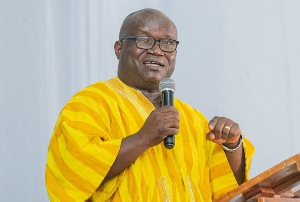
Dr. Ken Ashigbey, CEO of the Ghana Chamber of Mines, has publicly challenged comments made by the Chinese Ambassador to Ghana, H.E. Tong Defa, over the latter’s claims that Ghanaians, not Chinese nationals, are primarily to blame for illegal mining activities, locally known as galamsey.
In a sharp rebuttal on Joy FM on Friday, June 20, Dr. Ashigbey acknowledged the involvement of Ghanaians but called the Ambassador’s dismissal of Chinese complicity “misguided”.
“There are some Chinese individuals who are part of the illegality… They would not even dare think about some of the things they are doing in Ghana back in China,” Ashigbey said. “He cannot run away from that fact.”
Galamsey and foreign complicity
Ambassador Tong Defa, during a press briefing on June 19, questioned why galamsey is routinely associated with Chinese nationals.
“Actually, it is not Chinese. It didn’t originate from China… It is the Ghanaian people who throw the Chinese people over here,” he stated, while also suggesting that illegal small-scale mining may never be eradicated and should instead be managed through environmental regulation.
Dr. Ashigbey disagreed, citing the arrest and repatriation of hundreds of Chinese nationals over the past decade, and calling attention to the high-profile conviction of Aisha Huang — dubbed the galamsey queen — who was jailed for 4.5 years in 2023 and fined GH¢48,000 for illegal mining offenses committed between 2015 and 2017.

Data contradicts denial
According to Operation Vanguard data and the Ministry of Lands and Natural Resources, Chinese nationals have consistently topped the list of arrested foreign illegal miners. Ashigbey also affirmed that Ghanaian leaders, including the President, the Lands Minister, and the IGP, are determined to win the fight against galamsey.
“Let me disappoint him… we are bent on definitely winning the war against illegal mining and irresponsible mining,” he said.
Environmental toll and diplomatic tension
Illegal mining has resulted in the pollution of over 60% of Ghana’s water bodies, alongside widespread deforestation and land degradation. Environmental groups and civil society actors argue that downplaying foreign involvement undermines national efforts to tackle the crisis.
Critics believe that while local collaboration is a reality, the foreign networks funding and operating within the illegal mining ecosystem must also face accountability, not diplomatic protection.
Also Read: Illegal miners trapped in galamsey pit at Diaso; Search ongoing