Namibia to Offer Free University Education Starting 2026: President Announces “Fees Have Fallen”

    0
    162

    Namibia’s President Netumbo Nandi-Ndaitwah has announced that from 2026, university education at all public institutions will be free, eliminating tuition and registration fees for students.

    The announcement, made during her State of the Nation Address on Tuesday, April 23, 2025, marks a major shift in Namibia’s education policy aimed at empowering the country’s growing youth population.

    A New Chapter for Namibian Students

    Currently, Namibia offers free education at the primary and secondary school levels. However, many families still struggle with costs associated with university education.

    President Nandi-Ndaitwah emphasized that this new policy will apply to state-run universities and vocational colleges, significantly reducing the financial burden on young Namibians pursuing higher education.

    “Education is a key to unlocking the potential of our youth. From 2026, fees have fallen,” she said during the national address.

    The reform is expected to benefit thousands of students enrolled at two major state universities and seven public vocational training centers across the country.

    Why Free University Education Matters

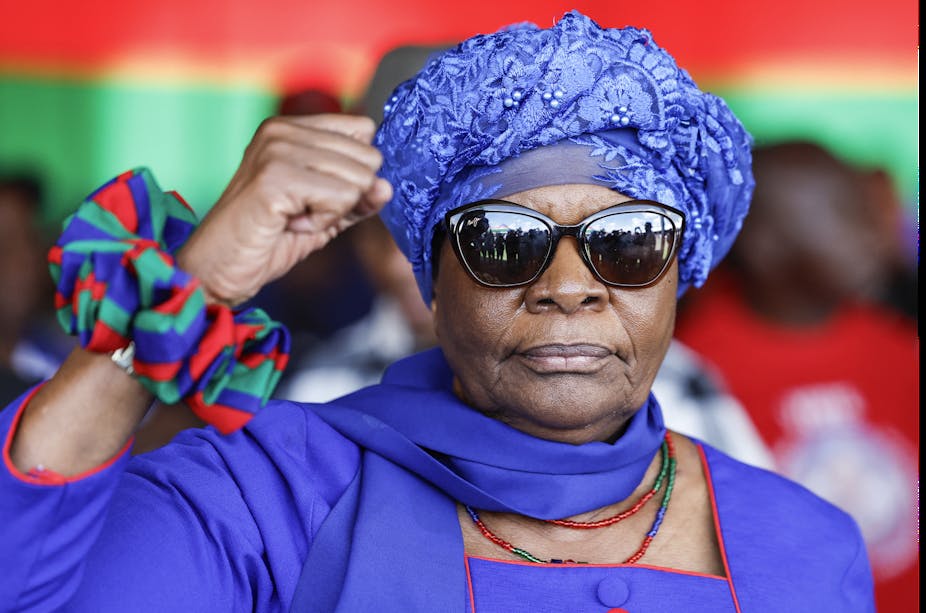
    Namibia’s President Netumbo Nandi-Ndaitwah announced free tertiary education
    Namibia’s President Netumbo Nandi-Ndaitwah

    Namibia’s population of around 3 million is predominantly youthful, with more than two-thirds under the age of 35.

    High youth unemployment and poverty levels have fueled calls for stronger government support in education.

    With free university education, the government hopes to equip the next generation with skills and knowledge that will drive economic development and reduce social inequality.

    Remaining Costs and Government Commitment

    Although tuition and registration fees will be scrapped, families will still need to cover personal expenses such as accommodation, transportation, learning materials, and other supplies.

    The government has pledged to work on complementary measures, including scholarships and loan programs, to further ease the financial burden on students.

    Global Context

    Namibia’s decision follows similar education reforms in countries like Germany and Norway, where free tertiary education is viewed as a public investment.

    Experts predict that Namibia’s move could inspire other African nations to consider major education reforms in the coming years.

    Conclusion

    Namibia’s bold step toward free university education is a landmark decision with the potential to transform the nation’s future. As preparations begin for 2026, hopes are high that the removal of financial barriers will open doors for more students to realize their dreams and contribute to national growth.

    Read Also: Namibia Enforces New Visa Requirements for U.S. and 30 Other Countries in Landmark Reciprocity Move

    Author

    • Daniel Ablordey

      Daniel Ablordey is a Business Analytics student at the University of Ghana Business School and an emerging strategist at the intersection of data, markets, and narrative. With a keen analytical mind and a passion for African business and economic trends, he is building a career focused on translating complex data-driven insights into accessible, decision-relevant stories that matter.As a writer and editor with Insight Ghana, African Business Insight, and The African Journal, Daniel delivers sharp, high-impact analysis on current affairs, business developments, and emerging trends across the continent. His work is defined by precision, clarity, and a deep commitment to responsible journalism — ensuring that every story he tells is not only accurate but meaningful to the audiences it serves.Beyond his editorial work, Daniel serves as an Ecobank Youth Ambassador, where he actively promotes financial inclusion, digital banking, and financial literacy among young Ghanaians. His leadership experience spans academic, professional, and faith-based institutions, where he has consistently driven initiatives centered on growth, structure, and long-term impact.Grounded in the principles of Pan-Africanism and service, Daniel brings a rare combination of analytical rigour and storytelling depth to his work. Whether unpacking market behavior, profiling emerging business leaders, or covering cultural shifts shaping the continent, he approaches every assignment with strategic intent and editorial integrity.His broader ambition is to contribute to Africa's transformation by shaping how data, business, and storytelling intersect — not just locally, but on a global stage.

    Previous articleNDC has prepared petitioners for the removal of EC boss – Nana B alleges
    Next articleMore Ghanaians Endorse Military Intervention Against Political Misconduct – Afrobarometer Reveals
    Daniel Amenyo Ablordey
    Daniel Ablordey is a Business Analytics student at the University of Ghana Business School and an emerging strategist at the intersection of data, markets, and narrative. With a keen analytical mind and a passion for African business and economic trends, he is building a career focused on translating complex data-driven insights into accessible, decision-relevant stories that matter.As a writer and editor with Insight Ghana, African Business Insight, and The African Journal, Daniel delivers sharp, high-impact analysis on current affairs, business developments, and emerging trends across the continent. His work is defined by precision, clarity, and a deep commitment to responsible journalism — ensuring that every story he tells is not only accurate but meaningful to the audiences it serves.Beyond his editorial work, Daniel serves as an Ecobank Youth Ambassador, where he actively promotes financial inclusion, digital banking, and financial literacy among young Ghanaians. His leadership experience spans academic, professional, and faith-based institutions, where he has consistently driven initiatives centered on growth, structure, and long-term impact.Grounded in the principles of Pan-Africanism and service, Daniel brings a rare combination of analytical rigour and storytelling depth to his work. Whether unpacking market behavior, profiling emerging business leaders, or covering cultural shifts shaping the continent, he approaches every assignment with strategic intent and editorial integrity.His broader ambition is to contribute to Africa's transformation by shaping how data, business, and storytelling intersect — not just locally, but on a global stage.