

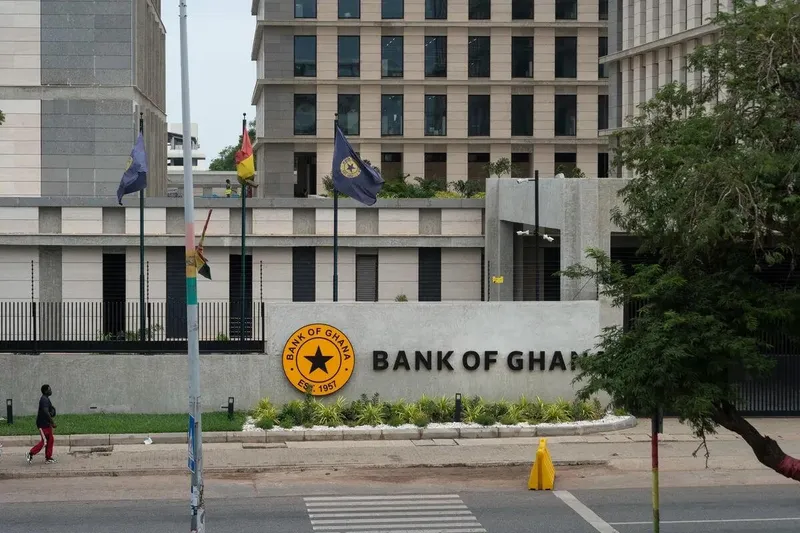
Ghana’s public debt stock has risen to GH¢759.3 billion as of the end of October 2026, representing 47.5 per cent of Gross Domestic Product (GDP), according to the latest economic and financial data released by the Bank of Ghana (BoG).
The figures highlight the continued increase in the country’s debt stock despite ongoing fiscal consolidation measures and government efforts to stabilise the economy following years of economic difficulties. Editorial Ethics & Independence
The central bank’s November 2026 Summary of Economic and Financial Data shows that the debt stock increased by GH¢23.5 billion between July and October, moving from GH¢735.8 billion to GH¢759.3 billion.
The latest figure also represents an increase of GH¢2.5 billion compared with the GH¢756.8 billion recorded at the end of September.
In dollar terms, Ghana’s total public debt stood at approximately US$65.3 billion at the end of October, compared with US$63.4 billion in July.
The latest figures were reported by 3News and Citi Newsroom following the release of the Bank of Ghana’s updated economic data.
Domestic debt accounts for the larger share
The data show that domestic debt continues to account for the larger portion of Ghana’s total public debt.
Domestic debt stood at GH¢427.9 billion at the end of October, representing approximately 56.4 per cent of the total debt stock and 26.8 per cent of GDP.
This compares with GH¢419.2 billion recorded in September, indicating an increase of GH¢8.7 billion within the month.
External debt, meanwhile, stood at US$28.5 billion, equivalent to GH¢331.4 billion and 20.7 per cent of GDP. Ownership & Funding
In cedi terms, external debt declined from GH¢337.6 billion in September to GH¢331.4 billion in October, although its dollar-denominated value remained significant.
The figures indicate that domestic borrowing and movements in the exchange rate continue to influence the overall debt position.
The composition of the debt stock is also important because domestic borrowing can affect liquidity within the banking sector, interest rates, credit availability and the government’s financing costs.
Debt stock has increased steadily throughout 2026
The Bank of Ghana’s figures show a general upward trend in the country’s public debt stock since the beginning of the year.

Ghana’s debt stood at GH¢663.4 billion in January before rising to GH¢674.1 billion in February and GH¢686.1 billion in March.
The figure increased further to GH¢695.9 billion in April and GH¢720.8 billion in May.
After reaching GH¢719.5 billion in June, the debt stock rose to GH¢735.8 billion in July, declined marginally to GH¢732.1 billion in August, and then climbed sharply to GH¢756.8 billion in September.
By October, the figure had reached GH¢759.3 billion. Corrections Policy
The debt to GDP ratio also increased from 46.1 per cent in July to 47.5 per cent in October, indicating that the debt stock grew relative to the size of the economy over the period.
Government faces balancing act over borrowing
The increase in public debt comes at a time when government is pursuing measures to strengthen revenue mobilisation, control expenditure and improve fiscal discipline.
The 2027 Budget presented by Finance Minister Dr Cassiel Ato Forson outlines plans to support economic growth, expand infrastructure investment, create jobs and improve the country’s financial position. Editorial Standards

However, the growing debt stock places renewed attention on how government finances its development programmes while managing interest payments and repayment obligations.
Borrowing can support infrastructure development, education, healthcare and other essential services when funds are invested productively.
But rising debt can also increase the proportion of public revenue allocated to interest payments, potentially limiting resources available for social services and development projects.
The challenge for policymakers will therefore be to ensure that borrowing supports investments capable of generating economic returns, strengthening productive capacity and improving revenue generation.
Debt sustainability remains a key economic concern
Ghana’s debt position remains an important indicator for investors, financial institutions, businesses and households assessing the country’s economic outlook.
Although the debt-to-GDP ratio provides an indication of debt relative to the size of the economy, it does not by itself determine whether a country can comfortably meet its obligations.
Other factors, including the cost of borrowing, maturity periods, currency composition, revenue performance, economic growth and the government’s ability to refinance debt, also influence sustainability. Newscard
The latest figures show that domestic debt represents the majority of Ghana’s public debt, while external obligations expose the country to exchange-rate movements and foreign financing conditions.
The government has previously emphasised its commitment to fiscal consolidation and debt management as part of efforts to restore macroeconomic stability.
The latest increase, however, underscores the need for continued monitoring of borrowing, expenditure and revenue performance.
As Ghana moves into 2027, the ability to maintain fiscal discipline while financing economic transformation will remain central to government policy.
The Bank of Ghana’s data provide an updated picture of the country’s debt position, but the broader economic significance will depend on how effectively government manages the obligations and translates public spending into sustainable growth, employment and improved living conditions.