

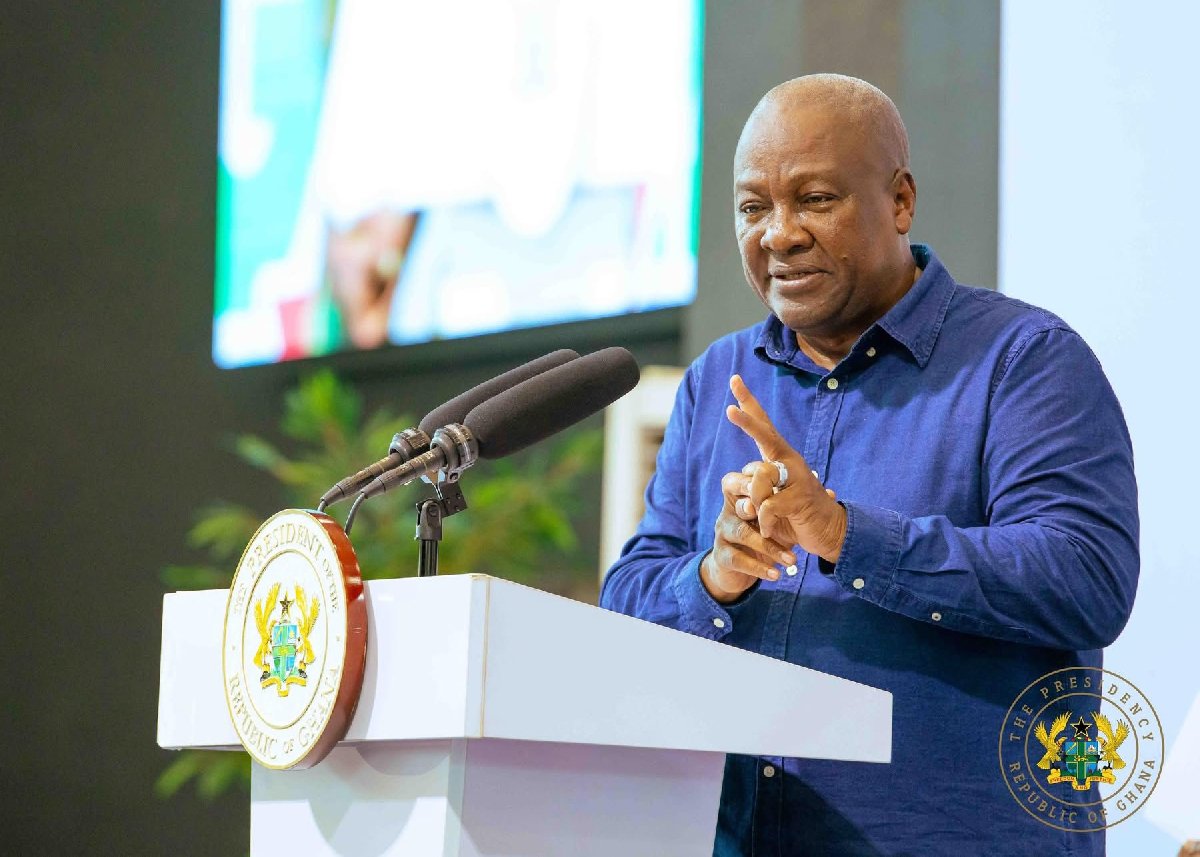
President John Dramani Mahama has called for increased investment in electricity transmission infrastructure across West Africa, projecting that cross border electricity trade could rise from approximately 7 per cent to nearly 30 per cent within the next five years. Corrections Policy
The President said greater electricity exchange among countries in the sub-region could help reduce energy costs, improve power supply reliability and accelerate industrialisation by allowing nations with surplus electricity to supply those experiencing shortages.
Speaking at the West Africa Integration and Investment Summit in Freetown, Sierra Leone, Mahama stressed that regional countries should move away from independently investing in every form of electricity generation when they could benefit from sharing existing energy resources.
According to reports, the President argued that stronger cooperation through the West African Power Pool (WAPP) could help countries access affordable electricity while making better use of their generation capacity.
He said the current level of electricity exchanged across the regional network remains relatively low, despite the existence of the regional power cooperation framework.
Mahama believes targeted investments in transmission lines, interconnection infrastructure and energy systems could significantly increase electricity trade within the next five years.
West African Power Pool remains underutilised
The West African Power Pool was established to facilitate electricity cooperation among countries in the Economic Community of West African States (ECOWAS), enabling member countries to exchange electricity and improve the efficiency of their energy systems.
However, Mahama said electricity exchange through the regional arrangement currently stands at about 7 per cent, a level he believes does not adequately reflect the region’s potential.

He argued that countries should not be required to independently construct hydroelectric dams, gas plants and other generation facilities when neighbouring states may have excess electricity available for sale. Ownership & Funding
“We do not all have to build hydro dams. We do not all have to build gas plants. We do not all have to build power plants. We can exchange electricity amongst ourselves at tariffs that are affordable,” he said.
The President maintained that regional energy cooperation could allow countries to take advantage of differences in generation capacity, resource availability and electricity demand.
Such arrangements could help reduce the pressure on governments to invest heavily in new power plants while creating opportunities for electricity producers to sell surplus power across borders.
Ghana could supply 2,000 megawatts to regional market
Mahama disclosed that Ghana could potentially supply approximately 2,000 megawatts of excess electricity to the West African regional market, supported by the country’s gas resources and investments in thermal power generation.
He said Ghana’s growing electricity generation capacity could create opportunities to export power to neighbouring countries, provided the necessary transmission infrastructure is available.
However, he identified inadequate connections between national electricity grids as a major obstacle preventing countries from fully benefiting from regional electricity trade. Newscard
The President questioned how Ghana could transmit excess electricity to the regional market if neighbouring countries were not adequately connected to its transmission network.
His comments underscore the importance of investing not only in electricity generation but also in transmission infrastructure capable of moving power efficiently across borders.
Without adequate interconnections, surplus electricity generated in one country may not be effectively delivered to another country experiencing demand pressures.
The development of regional transmission networks would therefore be essential to achieving the proposed increase in electricity exchange.
Affordable power critical to industrialisation
Mahama linked regional electricity cooperation directly to West Africa’s industrialisation ambitions, arguing that high electricity costs can undermine the competitiveness of businesses and manufacturing industries.

He said access to affordable and reliable electricity remains one of the fundamental requirements for industrial growth, particularly as countries seek to expand production, attract investment and create employment. Editorial Ethics & Independence
“You cannot industrialise when you do not have affordable power,” he stressed.
Industries operating across the region could potentially benefit from more competitive electricity pricing if countries are able to purchase power from suppliers with relatively lower production costs.
Improved regional electricity trade could also provide additional flexibility during periods of electricity shortages, generation disruptions or increased demand.
For Ghana, the ability to export surplus electricity could create additional revenue opportunities for power producers while strengthening the country’s position within the regional energy market.
However, the potential benefits would depend on the availability of reliable infrastructure, commercially sustainable electricity tariffs, effective agreements between participating countries and the ability of power systems to maintain stable operations.
Investment needed to achieve the five-year target
The President’s projection of increasing regional electricity exchange to nearly 30 per cent within five years will require significant investment and coordination among West African governments, energy regulators, utilities and infrastructure developers.
Transmission infrastructure, cross-border interconnection projects, improved system management and transparent electricity trading arrangements are expected to be central to achieving the target.
The initiative also aligns with Ghana’s broader energy sector objectives outlined in the 2027 Budget, which include modernising the transmission network, strengthening the north-south grid, supporting regional electricity trade and connecting new generation capacity to demand centres. Editorial Standards
The government has outlined plans to invest US$500 million between 2027 and 2030 in transmission system modernisation, with the aim of reducing transmission losses and improving the reliability of electricity supply.
The investments are expected to strengthen Ghana’s ability to support domestic demand while facilitating electricity exports to neighbouring markets.
Regional integration beyond electricity
Mahama’s remarks form part of a broader call for deeper economic integration across West Africa, where infrastructure connectivity, trade, transportation and energy cooperation remain important priorities.
He has argued that regional countries must accelerate efforts to implement projects that have the potential to improve economic cooperation and unlock investment opportunities. Privacy Policy & Terms
Increasing electricity trade could provide a practical example of regional integration delivering measurable economic benefits, particularly if countries can reduce energy costs, improve reliability and strengthen industrial production.
The proposed five-year target will, however, depend on whether governments can mobilise the required financing, overcome infrastructure limitations and establish effective regional electricity trading arrangements.
If achieved, the expansion of cross-border electricity trade could help transform West Africa’s energy market by enabling countries to share resources more efficiently and support a more competitive regional economy.