

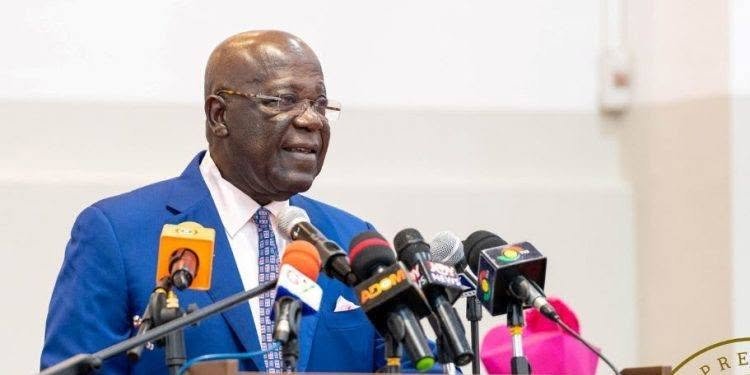
Renowned Ghanaian businessman and mining executive Sir Sam Jonah has raised fresh concerns over the environmental destruction caused by illegal small-scale mining, popularly known as galamsey, warning that Ghana is losing vital natural resources to activities that threaten livelihoods, public health and future economic development.
Speaking at the Methodist University Ghana International Conference 2026 on Thursday, October 15, Sir Sam delivered a strong message about the deteriorating condition of the country’s rivers, forests and farmlands. Corrections Policy
The conference was organised to commemorate the university’s 25th anniversary.
Describing the scale of the damage, he said rivers that once sustained earlier generations had become heavily polluted by mining activities.
“Rivers that fed our grandparents now run the colour of chocolate milk,” he lamented, using the striking description to illustrate the extent of pollution affecting Ghana’s water bodies.
According to report, Sir Sam argued that galamsey should not be treated solely as an environmental issue. He described it as an economic, health and moral problem, stressing that the pursuit of financial gain must not come at the expense of communities and future generations.

His comments add to growing public concern about illegal mining and its impact on the country’s natural environment.
Illegal mining can disturb riverbeds, remove vegetation, expose soil and introduce sediment and other pollutants into water bodies.
These effects can compromise water quality and place additional pressure on water treatment systems, particularly where communities depend on affected rivers for their water supply.
When rivers become heavily polluted, water treatment providers may face greater operational challenges and costs.
Communities can also experience disruptions to fishing, farming and other activities that depend on reliable access to clean water.
For farmers, the destruction of fertile land and the contamination of nearby water sources can undermine agricultural production and household incomes.
Forest degradation can also affect biodiversity, habitats and the ability of ecosystems to recover from environmental damage.
Sir Sam’s warning therefore highlights the interconnected nature of the galamsey crisis.
Damage to natural resources can have consequences that extend beyond mining sites, affecting businesses, households, public institutions and the broader economy.
Drawing on his experience in the mining industry, he also raised questions about the responsibilities of individuals and institutions that benefit from the extraction of natural resources.
His message centred on stewardship: the principle that economic activity should be conducted responsibly and should leave communities with lasting benefits rather than irreversible damage.
He argued that responsible stewardship must extend beyond the environment to the management of public funds and human talent.

The broader message was that development should be measured not only by immediate financial returns but also by the long-term value created for society. Editorial Standards
The challenge for Ghana is to address illegal mining while ensuring that legitimate economic opportunities remain available to communities that depend on mining for income.
Enforcement is important, but sustainable progress also requires effective regulation, transparent licensing, alternative livelihoods and consistent action against those who violate environmental laws.
Authorities must ensure that mining operations comply with the relevant rules, while investigations and prosecutions should be pursued fairly and consistently.
Reclamation of damaged land and the rehabilitation of polluted areas are also essential, although restoring severely degraded ecosystems can be difficult and costly.
Technology could support these efforts through satellite monitoring, improved tracking of mining concessions and timely reporting of activities in protected areas. Editorial Ethics & Independence
However, monitoring systems need to be backed by enforcement, institutional accountability and the political will to act on credible evidence.
Public education and community participation are equally important. Traditional leaders, local authorities, civil society organisations and residents can help protect water bodies by reporting suspected illegal activities and supporting responsible resource management.
Sir Sam Jonah’s remarks serve as a reminder that Ghana’s natural resources are essential to the country’s long-term prosperity.
Rivers, forests and farmlands support food production, livelihoods and public health, making their protection a national priority.
Ultimately, the fight against galamsey will require sustained action rather than occasional interventions.
Protecting the country’s water bodies and restoring damaged landscapes will be critical to ensuring that future generations inherit an environment capable of supporting their needs.