

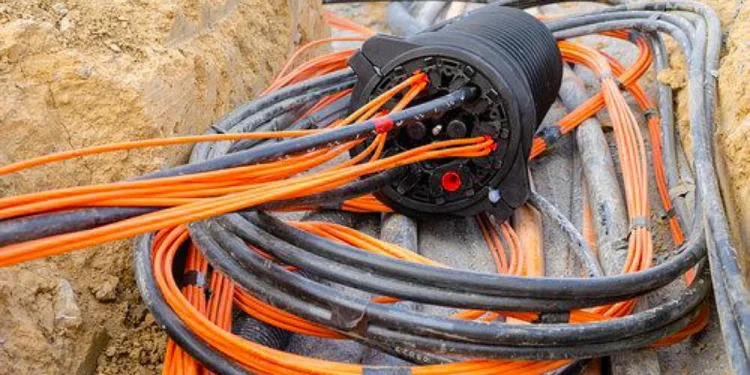
Telecel Ghana has experienced significant service disruptions after two fibre cuts along the Accra–Winneba and Winneba–Cape Coast routes affected an estimated 72,754 subscribers across parts of the Central Region. Editorial Standards
The incident, disclosed by Minister for Communications, Digital Technology and Innovation Samuel Nartey George, has affected approximately 181 Radio Access Network (RAN) sites serving communities across several parts of the region.
The disruption has impacted mobile connectivity and related telecommunications services for customers in a number of communities.
According to information released by the Communications Ministry, the affected areas include parts of Winneba and Agona Swedru, as well as communities along coastal and transit corridors. Areas listed include Winneba Campus, Old Town, Lowcost, the University of Education, Winneba North Campus, Radio Peace, Agona Swedru, Nyakrom, Kwanyako, Bobikuma, Agona Odoben and Mankrong.
Other affected locations include Apam, Mumford, Otuam, Gomoa Fetteh, Gomoa Nyanyano, Senya Beraku, Ajumako GT, Mankessim, Abeadze Dominase, Assin Fosu, Assin Manso, Twifo Praso and Ateiku.
The disruption also extends to communities around the Kasoa–Weija corridor, including Awutu Bereku, Bawjiase, Potsin, Jei Krodua and Tuba. Parts of Weija Extension, New Weija, West Hills Mall, Dark Bortianor and Aplaku Bortianor have also reported service challenges.
The Minister said the fibre damage was linked to road construction activities being undertaken along the affected routes.
Fibre-optic cables are critical components of modern telecommunications networks because they carry large volumes of data between network facilities and mobile sites.
When such cables are damaged, mobile network operators can lose connectivity to several RAN sites simultaneously.
This can result in interruptions or degradation of voice calls, mobile data and other network services for customers in affected areas.
Telecel engineers have been deployed to the affected locations to undertake restoration work.
A separate team is also engaging the road contractor involved in the excavation activities to prevent additional damage and further deterioration of services in surrounding communities.
The Ministry has also indicated that the National Communications Authority (NCA) is monitoring the restoration exercise as efforts continue to return affected services to normal.
Mr George apologised to affected subscribers for the inconvenience caused by the disruption and expressed confidence that Telecel’s technical teams would restore services as quickly as practicable.

The latest incident has once again drawn attention to the vulnerability of Ghana’s telecommunications infrastructure to accidental fibre damage, particularly during road construction and other excavation works. Corrections Policy
The problem is not limited to Telecel. The Communications Minister disclosed in September that Ghana had recorded 8,578 fibre cuts as of August 2026, with the number projected to approach 9,000 by the end of the year if the prevailing trend continued.
The government and mobile network operators were expected to spend about US$20 million in 2026 repairing damaged fibre infrastructure.
Road construction was identified as the largest contributor, accounting for about 49 per cent of recorded fibre cuts, while illegal mining accounted for another 25 per cent. Private development and other activities made up the remaining 26 per cent.
The financial consequences of repeated fibre damage extend beyond the immediate cost of repairs. Editorial Ethics & Independence
Operators must divert technical resources to emergency restoration, while prolonged outages can affect businesses, students, mobile-money users and households that increasingly depend on reliable telecommunications services.
The government has therefore been considering measures to improve coordination between telecommunications operators and road agencies before excavation begins.
Under the proposed framework, contractors would be required to engage relevant network operators and obtain information about the location of underground fibre infrastructure before commencing work.
Another proposed measure is the incorporation of dedicated fibre chambers into road construction projects.
Such infrastructure could make existing fibre networks easier to identify, protect and relocate when necessary.
The government has also indicated that enforceable penalties could be introduced for parties that fail to comply with the proposed coordination arrangements.
For Telecel subscribers affected by the latest cuts, however, the immediate priority remains restoration of reliable connectivity.
The scale of the disruption demonstrates how a relatively small number of infrastructure failures can affect tens of thousands of customers when critical fibre routes serve multiple network sites.
As engineers work to repair the damaged cables, the incident reinforces the need for stronger collaboration between telecommunications companies, road contractors and public authorities.
Preventing future fibre cuts will require better mapping of underground infrastructure, communication before excavation and strict adherence to safety procedures.
Such measures could reduce service interruptions while protecting the substantial investments operators make in expanding Ghana’s digital infrastructure. Editorial Standards
For now, affected Telecel customers are awaiting the completion of restoration works as technical teams continue efforts to reconnect the 181 impacted network sites and restore normal services across the affected communities.