

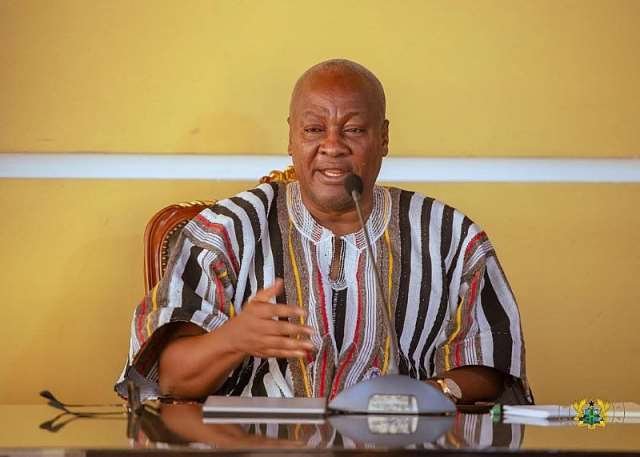
President John Dramani Mahama has reaffirmed his administration’s commitment to expanding access to quality healthcare in Ghana through free primary healthcare, improvements to the National Health Insurance Scheme (NHIS), investment in hospitals and support for health workers. Newscard
The President said the government was pursuing a broader strategy to make healthcare more accessible and affordable while reducing the financial burden on families, particularly those affected by serious and chronic illnesses.
He also highlighted the role of the Ghana Medical Trust Fund, popularly known as MahamaCare, in providing additional support for patients battling non-communicable diseases.
The assurance comes as the government continues implementing reforms intended to strengthen Ghana’s healthcare system and move the country closer to universal health coverage.
The reforms are designed to address barriers that prevent people, especially those in underserved communities, from obtaining timely medical attention.
President Mahama’s remarks followed his visit to the Global Mercy, a hospital ship operated by the international humanitarian organisation Mercy Ships, which was docked at Tema Port.
He expressed appreciation for the organisation’s contribution to healthcare delivery in Ghana and its work providing medical treatment to patients who might otherwise struggle to access specialised procedures.
The President also acknowledged the medical professionals, volunteers, donors and local partners supporting the mission.

The ship’s presence offers an opportunity for some patients to receive treatment while local health workers gain experience through collaboration with international medical teams.
However, he stressed that humanitarian assistance would complement rather than replace the government’s responsibility to provide sustainable healthcare services for the population.
A major part of the government’s strategy is the Free Primary Healthcare Programme, officially launched in April 2026.
The initiative is intended to improve access to essential medical services, particularly in communities where distance, cost and limited healthcare infrastructure have historically created difficulties for patients. Editorial Ethics & Independence
The programme focuses on primary-level facilities, including Community-based Health Planning and Services (CHPS) compounds, health centres and polyclinics.
It prioritises preventive care, health education, routine screening and the early detection of diseases before they develop into more serious conditions.
The Ministry of Health reported in September that the programme had expanded to 135 districts across Ghana’s 16 regions, with services being delivered through 4,447 health facilities.

These comprised 3,774 CHPS compounds, 632 health centres and 41 polyclinics.
The government has also distributed medical equipment, motorbikes, tricycles and outreach kits to support health workers delivering services in communities.
These resources are intended to improve access, particularly for residents of rural and hard-to-reach areas.
The expansion of free primary healthcare is being implemented alongside the NHIS, which remains an important mechanism for financing healthcare services.
The government has emphasised that the two initiatives serve complementary purposes rather than operating as replacements for one another.
While the free primary healthcare programme covers specified services at the primary level, the NHIS continues to play a central role in supporting eligible patients who require care at district, regional and teaching hospitals. Corrections Policy
Maintaining an active NHIS membership is therefore important for people who may need services beyond the primary healthcare level.
The government has also identified improved financing and timely payment of claims as important to ensuring that health facilities can continue providing services to insured patients.
Investment in hospitals and medical infrastructure forms another part of the administration’s healthcare agenda.
The 2026 national budget allocated GH¢600 million for the construction of three regional hospitals in the Savannah, Oti and Western North regions.
It also provided funding for upgrading selected hospitals and completing some projects under the Agenda 111 hospital initiative.
These investments are intended to improve the distribution of healthcare facilities and reduce the pressure on existing hospitals.
However, infrastructure development must be accompanied by adequate staffing, equipment, medicines and reliable funding to ensure that facilities can deliver quality care once completed.
The availability and distribution of health professionals remain equally important. Hospitals and clinics need sufficient numbers of doctors, nurses, midwives, pharmacists, laboratory personnel and other professionals to meet the needs of growing communities.
The government has indicated that it is pursuing measures to strengthen the health workforce, including recruitment and incentives intended to encourage health professionals to accept postings in underserved areas. Editorial Standards
Effective implementation will be important in addressing disparities between urban centres and rural communities.
Meanwhile, MahamaCare is intended to provide additional support for patients dealing with serious non-communicable diseases, including cancer, kidney disease, cardiovascular conditions, diabetes and stroke.
Such illnesses can require prolonged treatment and place substantial financial pressure on patients and their families.
The fund forms part of a wider approach that combines preventive services, health insurance and specialised financial support.
Its effectiveness will depend on adequate funding, transparent administration and clear arrangements for eligible patients to access assistance.
Ultimately, the success of the government’s healthcare reforms will depend not only on policy announcements and budget allocations but also on the quality, affordability and availability of services experienced by patients.
Expanding primary healthcare, strengthening the NHIS, improving hospital infrastructure and supporting health workers could help address longstanding barriers to treatment.
Sustained implementation, effective monitoring and accountability will be essential to ensuring that these measures translate into better healthcare outcomes for Ghanaians.