

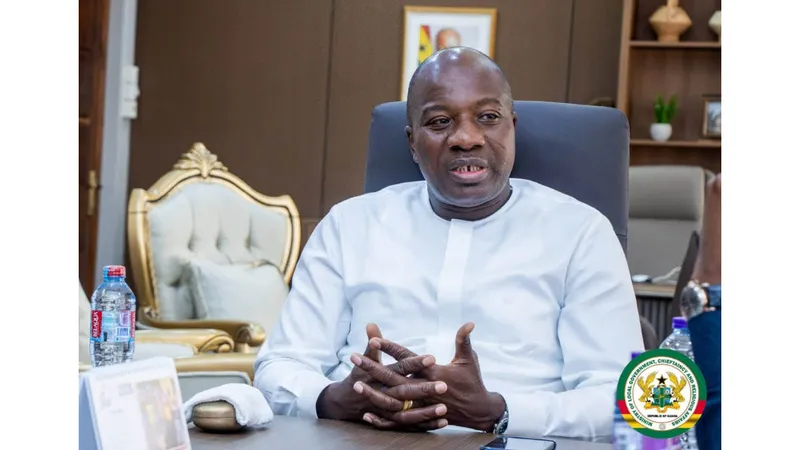
The government is planning to construct new landfill sites in the Greater Accra and Eastern regions as part of efforts to address Ghana’s growing waste-management challenges, Minister for Local Government, Chieftaincy and Religious Affairs Mahama Ayariga has announced.
The proposed facilities are expected to provide additional capacity for disposing of the increasing volume of waste generated across the country, particularly as existing facilities face mounting pressure.
The announcement comes as the government prepares to decommission the Kpone landfill, which the minister says has reached capacity. Editorial Ethics & Independence
Speaking on Eyewitness News on Monday, September 29, 2026, Mr Ayariga said expanding waste-management infrastructure had become necessary to accommodate the growing quantities of waste produced by households, businesses and other activities.
“We have plans to construct new landfill sites across the Greater Accra area and Eastern Region to accommodate the waste that is being generated,” he said.
“The Kpone landfill site, as you can see, is full. So we’re in the process of planning its decommissioning,” he added.
The proposed construction forms part of the government’s response to the increasing demand for safe and organised waste-disposal facilities.
In densely populated areas, rising waste volumes can place considerable pressure on collection services, transportation systems and final disposal sites.
When landfills reach their designed capacity, authorities must identify suitable alternatives to prevent disruptions to waste collection and reduce the risk of indiscriminate dumping.
Kpone Landfill Capacity Raises Concerns
The planned decommissioning of the Kpone landfill highlights the need for a coordinated transition to alternative disposal facilities.
Mr Ayariga explained that the shortage of available engineered landfill sites in some parts of Ghana had contributed to decisions about where collected waste could be transported.
He cited the transportation of waste from Agbogbloshie to another landfill site as an example of the difficulties authorities face when disposal infrastructure is limited.
Engineered landfills are designed to manage waste through controlled disposal systems and appropriate environmental safeguards. Their development requires careful site selection, suitable infrastructure and monitoring to limit potential effects on surrounding communities and the environment.
As the government plans new facilities, issues such as accessibility, transportation costs, environmental protection and the concerns of nearby residents will be important considerations.
The timing of the new projects will also matter. If replacement capacity is not available when the Kpone facility is decommissioned, waste collection and disposal services could face additional pressure. Editorial Standards
However, the minister’s announcement did not specify the exact locations, construction timelines, project costs or expected capacities of the proposed landfill sites.
Government Considers Waste-to-Energy Options
Alongside plans to expand landfill capacity, the government is exploring alternative technologies that could reduce dependence on conventional waste disposal.
Mr Ayariga identified incineration and waste-to-energy systems as possible options for improving the country’s long-term waste-management strategy.

“I agree with him that there are new ideas about how to manage waste such as incineration and the conversion of waste to energy through burning it and then using the heat to generate energy,” he said.
The minister said government officials were already engaging stakeholders to consider how such technologies could be introduced in Ghana.
“I have had those; even this morning I was in a meeting discussing how we should do that as a country,” he added.
Waste-to-energy facilities can convert suitable waste materials into heat or electricity, potentially reducing the amount sent to landfills while generating useful energy.
However, their success depends on factors including waste composition, operating costs, technical capacity and effective emissions controls.
Incineration must also be supported by appropriate pollution-control systems and safe management of the residues produced during the process.
The government will therefore need to assess the environmental, technical and financial implications of these options before deciding how they should fit into the country’s waste-management system.
A Broader Approach to Waste Management
The proposed projects could provide an opportunity to combine additional landfill capacity with measures that reduce the amount of waste requiring final disposal.
Improved recycling, waste separation and composting can help recover useful materials and reduce the burden on landfill facilities.
Public education and more effective collection systems can also encourage households and businesses to adopt better waste-disposal practices. Corrections Policy
Such measures would require cooperation among local authorities, private waste-management operators, businesses and residents.
The government’s consideration of waste-to-energy technology also reflects an interest in treating some waste as a potential resource rather than simply a disposal problem.
Nevertheless, these technologies would need to complement, rather than replace, effective waste reduction and recycling measures.
Mr Ayariga’s announcement signals plans to address immediate pressure on existing facilities while examining longer-term alternatives.
The next steps will involve translating the proposals into specific projects, identifying suitable locations, securing the necessary resources and establishing appropriate environmental safeguards. Newscard
As Ghana’s waste volumes continue to challenge existing infrastructure, the success of the planned interventions will depend on whether new facilities and alternative technologies can be implemented efficiently and sustainably.
For residents and businesses, effective execution could help improve waste disposal and sanitation, while reducing pressure on communities affected by inadequate waste-management infrastructure.