


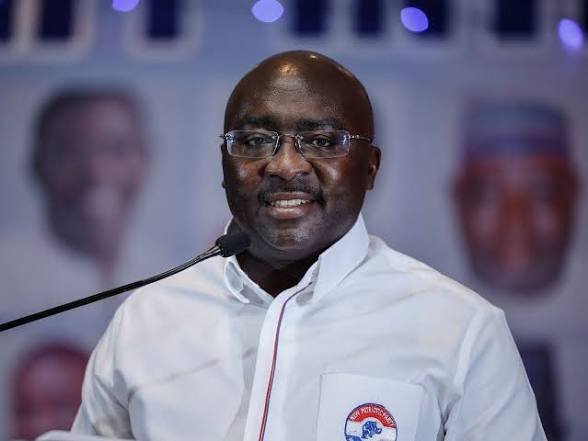
Flagbearer of the New Patriotic Party (NPP), Dr Mahamudu Bawumia, has condemned the arrest and remand of Salomey Bafor Awiti, a Techiman-based nurse and mother of three, in connection with an alleged case involving the publication of false news. Editorial Standards
Dr Bawumia said the circumstances surrounding the arrest raise concerns about the protection of fundamental rights and freedoms, particularly the right to free speech and the treatment of citizens involved in politically sensitive cases.
In a social media post on Friday, September 18, 2026, the former Vice President expressed concern that the nurse, who reportedly has a four-year-old child, was allegedly picked up in the middle of the night by national intelligence officers and subsequently remanded for two weeks.
“This is not the Ghana we want to build. I can assure Ghanaians that when given the opportunity, our intelligence agencies will not be reduced to chasing citizens for insulting the President or anyone else,” Dr Bawumia stated.
His comments followed public discussions surrounding the arrest of Salomey, who was allegedly linked to the anonymous “Ghana Jollof” social media account. The account has reportedly been associated with commentary and publications concerning political issues and public figures.
The circumstances of the case have also drawn attention to the involvement of another Ghanaian, Barbara Asantewaa Kodua, a London-based nurse who was later declared wanted after being identified as the alleged operator of the “Ghana Jollof” account.
The allegations against the individuals remain subject to investigation and due legal process. Being arrested, declared wanted or charged does not, by itself, establish criminal responsibility.
Bawumia Defends Free Speech
Dr Bawumia said he does not support the use of insults in political discourse and maintained that political actors and citizens should communicate with respect.
He stressed, however, that opposition to offensive language should not be used as a justification for infringing on constitutionally protected freedoms.
“I have always disavowed a politics of insults and will remind all in the political space of the need to be decorous. The ideas we need to transform our nation won’t come from insults,” he said.
He added that the government must be careful not to undermine democratic principles through actions that restrict legitimate expression.
“But I also remind the NDC government that any infringement on the right to free speech pushes our democracy backwards. Free speech, as unpalatable as it may be sometimes, is the foundation of our democracy,” he stated. Corrections Policy
Ghana’s constitutional framework protects freedom of expression, although the right is subject to lawful limitations, including provisions relating to public safety, national security, defamation and other offences established by law. The central issue in cases involving social media publications is often whether the conduct in question falls within a legally punishable offence or constitutes protected expression.
Concerns Over Selective Application of Laws
Dr Bawumia also criticised what he described as the selective application of laws, arguing that individuals accused of similar conduct should be treated equally regardless of their political affiliations or the identity of the person allegedly targeted.

“Even more worrying is the government’s continuous selective applications of our laws. Some citizens can insult and walk freely and others are jailed because the government doesn’t like the target of their insults,” he said.
His comments reflect a broader debate in Ghana over the use of criminal investigations, national security institutions and the courts in cases involving political speech and online commentary.
Supporters of strict enforcement may argue that social media users must be held accountable for false publications, threats or content that causes harm. Civil society groups and rights advocates, however, have often stressed that law-enforcement measures must be proportionate, transparent and consistent with constitutional safeguards.
The controversy also raises questions about the circumstances under which intelligence agencies become involved in cases involving alleged online offences. While national security institutions may have lawful responsibilities in certain investigations, concerns about nighttime arrests, access to legal representation, remand periods and the treatment of families can influence public confidence in the justice system. Newscard
Dr Bawumia’s statement is therefore both a condemnation of the reported treatment of Salomey and a broader call for restraint in the use of state power. He said a future administration under his leadership would not allow intelligence agencies to focus on pursuing citizens merely for insulting political leaders.
The case remains a matter for the appropriate investigative and judicial authorities. Further proceedings and official statements are expected to clarify the specific allegations, the evidence being relied upon and the legal basis for the arrest and remand.
Until those matters are determined, Salomey and any other individuals connected to the case remain entitled to due process and the presumption of innocence.