


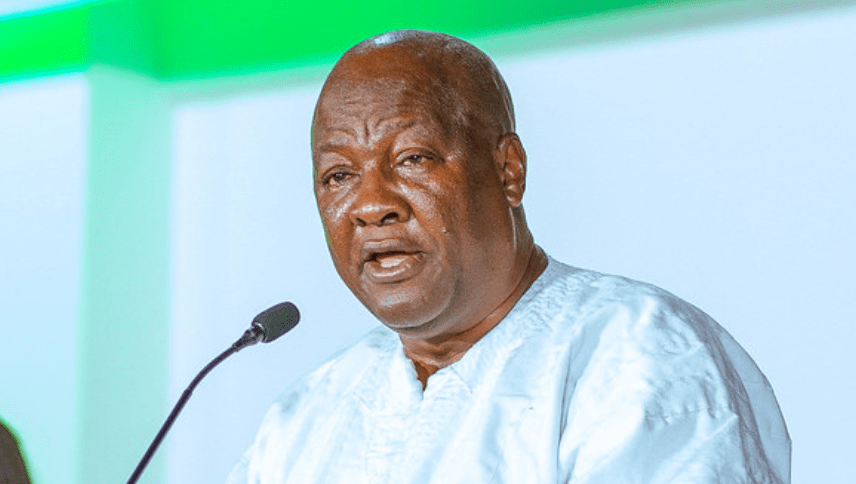
President John Dramani Mahama has directed security and regulatory agencies operating at Ghana’s ports to submit a comprehensive framework within two weeks to harmonise their activities and strengthen the country’s cargo-screening and enforcement systems.
The directive forms part of a broader government effort to improve coordination, close security gaps and enhance efficiency at the country’s major ports, particularly amid growing concerns over narcotics trafficking and the movement of illicit substances through Ghana’s maritime corridors.
President Mahama issued the directive during a high-level meeting at the Presidency on Thursday, September 17, 2026. The meeting brought together key stakeholders from the security, narcotics-control, customs, maritime and transportation sectors to review vulnerabilities in Ghana’s border-management system. Corrections Policy
The Presidency had earlier indicated that the meeting would examine intelligence-sharing arrangements, cargo-screening systems, inter-agency coordination and the use of technology to detect and disrupt narcotics trafficking through the country’s ports, airports and land borders.
A source familiar with the meeting told Insightghana that the President expressed concern about fragmented operations, overlapping responsibilities and weaknesses in coordination among agencies stationed at the ports.
According to the source, the two-week deadline is intended to ensure that the agencies develop a unified operational framework that clearly defines their responsibilities while reducing duplication and improving accountability.
“The President has given all security and regulatory agencies operating at the ports two weeks to submit a comprehensive framework that will ensure smooth, coordinated, and accountable operations,” the source said.
Joint Taskforce to Coordinate Port Operations
As part of the proposed reforms, the government is expected to establish a Joint Taskforce to coordinate and regulate operations at the ports.
The taskforce will reportedly focus on streamlining inspections, reducing unnecessary bureaucratic delays, improving information-sharing and ensuring that agencies comply with agreed security and operational procedures.
The initiative is intended to strike a balance between facilitating legitimate trade and strengthening national security. Ghana’s ports serve as important entry and exit points for goods, making efficient coordination essential to businesses, importers, exporters, shipping companies and state revenue agencies.
However, weak coordination among agencies can create operational gaps, delay cargo clearance and make it more difficult to identify suspicious consignments. A unified taskforce could therefore provide a central mechanism for coordinating inspections and responding to emerging threats.
NACOC to Return to Joint Container Inspections
In a significant policy shift, President Mahama has also ordered the restoration of the Narcotics Control Commission, commonly known as NACOC, to the joint container inspection regime at the ports.
NACOC’s return is expected to strengthen the role of Ghana’s lead anti-narcotics agency in the inspection of containers and the detection of controlled substances concealed in cargo.

The commission was removed from the joint inspection arrangement in 2018 following a Cabinet decision that reduced the number of agencies directly involved in port inspections. The reforms at the time were designed to simplify cargo clearance, improve the ease of doing business and reduce the number of institutions operating at the ports.
However, critics of the earlier arrangement argued that reducing the number of participating agencies could affect the country’s ability to conduct specialised security checks, particularly in relation to narcotics and other forms of contraband.
A senior government official who attended the meeting said NACOC’s restoration was necessary to ensure that the agency is directly involved in the inspection process. Editorial Standards
“NACOC will be restored to its rightful place in the joint inspection process. You cannot fight narcotics if the lead anti-narcotics agency is taken out of the port,” the official was quoted as saying.
Government Promises Resources for Agencies
President Mahama also reportedly assured the participating agencies that government would provide the equipment, logistics and personnel required to support their statutory responsibilities.

The assurance follows concerns over inadequate scanners, limited operational resources and staffing challenges that can affect the effectiveness of port-security operations.
“The era where agencies complain about lack of scanners, logistics and personnel to execute their mandate is over. Government will equip the relevant agencies, but they must also deliver results and work together,” the official quoted the President as saying.
The President’s position places responsibility on both government and the agencies. While the state is expected to provide the necessary tools, security and regulatory institutions will be required to improve collaboration, maintain professional standards and demonstrate measurable results.
Balancing Trade and National Security
Ghana’s ports, including the Tema and Takoradi ports, remain central to the country’s international trade and revenue mobilisation. They handle a substantial share of Ghana’s import and export cargo and play a critical role in the movement of goods across the subregion.
The ports have, however, faced recurring challenges involving congestion, overlapping institutional mandates, delays in cargo clearance and concerns over the possible movement of illicit substances. Editorial Ethics & Independence
The proposed Joint Taskforce and the restoration of NACOC to joint container inspections signal an attempt by government to combine trade facilitation with stronger security controls.
The effectiveness of the reforms will depend on how clearly agency responsibilities are defined, how quickly the proposed framework is implemented and whether the relevant institutions receive adequate resources.
It will also require sustained oversight to ensure that improved coordination translates into stronger inspections, faster legitimate cargo processing and greater accountability at Ghana’s ports.