

The Minister for Education, Haruna Iddrisu, has called for a united effort to tackle the growing cases of indiscipline in schools, stressing that educational institutions must remain safe environments for teaching and learning.
He said schools should adopt a zero-tolerance approach towards bullying, violence and criminal behaviour, noting that discipline is essential to shaping responsible citizens and promoting national development.
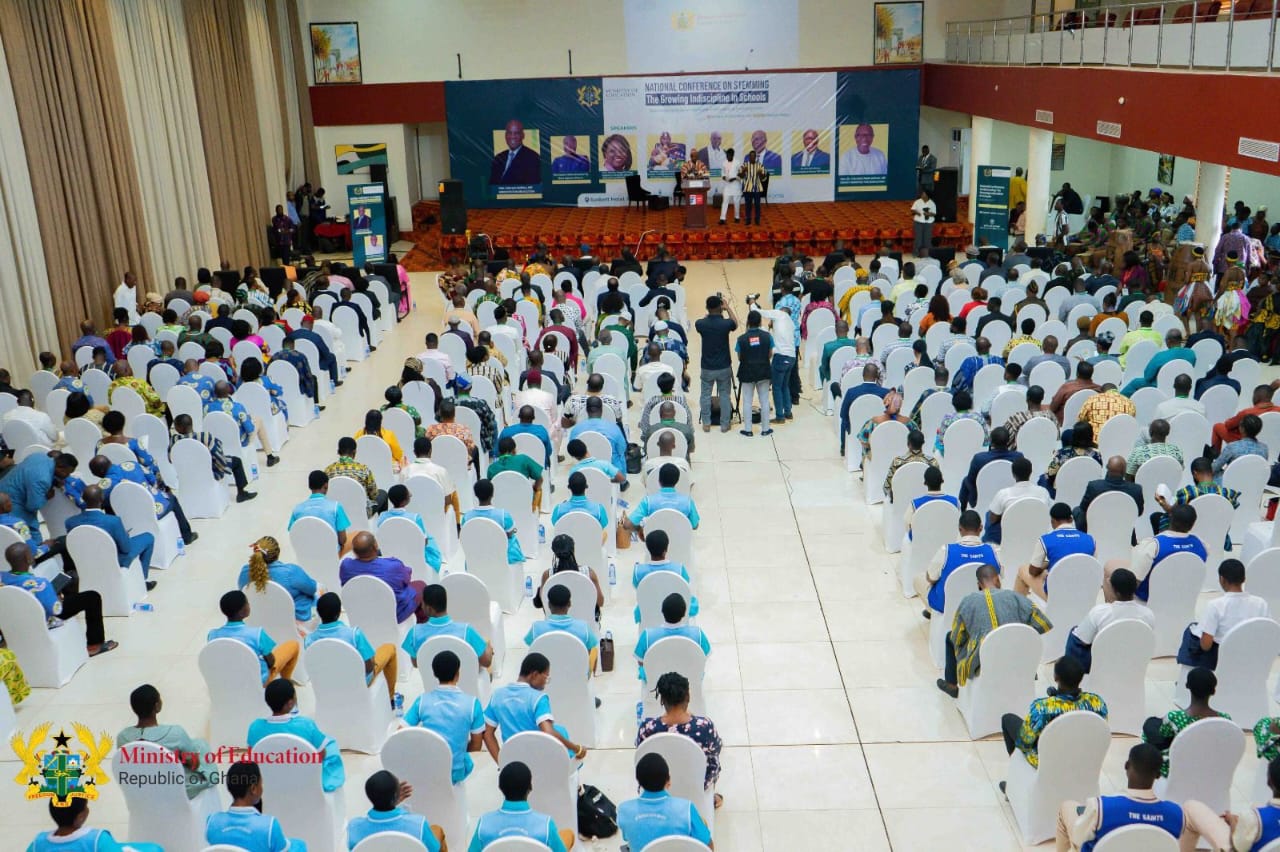
Mr. Iddrisu made the remarks at a national conference on “Stemming Growing Indiscipline in Schools in an Emerging World,” held in Sunyani in the Bono Region on July 29.

The conference brought together education officials, teachers, parents, traditional and religious leaders, policymakers and other stakeholders to explore practical ways of addressing indiscipline in schools.
The Education Minister expressed concern about reports of students bringing weapons to school, engaging in substance abuse and being involved in violent acts. He said the situation required a coordinated response from parents, schools and the wider community.
According to him, children are often exposed to different and sometimes conflicting values at home, in school and within their communities, making it necessary for all stakeholders to work together to promote acceptable behaviour.

Mr. Iddrisu said recommendations from the conference would contribute to the development of policies aimed at strengthening discipline across Ghana’s education system.
The Bono Regional Minister, Joseph Addae Akwaboa, also stressed that education should go beyond academic achievement to include character development, integrity, discipline and responsible citizenship.
He called for increased parental involvement, strong leadership in schools, effective guidance and counselling, mentorship and values-based education to help address indiscipline among students.

During a panel discussion, the Director-General of the Ghana Education Service (GES), Prof. Ernest Kofi Davis, said the implementation of disciplinary measures remained a challenge despite the introduction of child-friendly approaches, safeguarding policies and guidance and counselling systems following the abolition of corporal punishment in 2017.
He noted that the growing influence of technology, social media and changing social values made stronger cooperation among parents, schools and communities necessary to promote discipline and protect positive Ghanaian values.
A Kenyan education expert, Prof. Fatuma Nyaguthii Chege of Kenyatta University’s School of Education and Lifelong Learning, called for a community, wide approach to discipline.
She encouraged stakeholders to focus on building self-discipline through guidance, counselling and active parental involvement instead of depending mainly on punishment.
The conference continued with breakout sessions where participants discussed practical strategies for tackling indiscipline in schools.
Preliminary reports from the discussions are expected to be presented and reviewed as stakeholders work towards developing recommendations to strengthen discipline in educational institutions.
By: Prince Martey-Sogar