

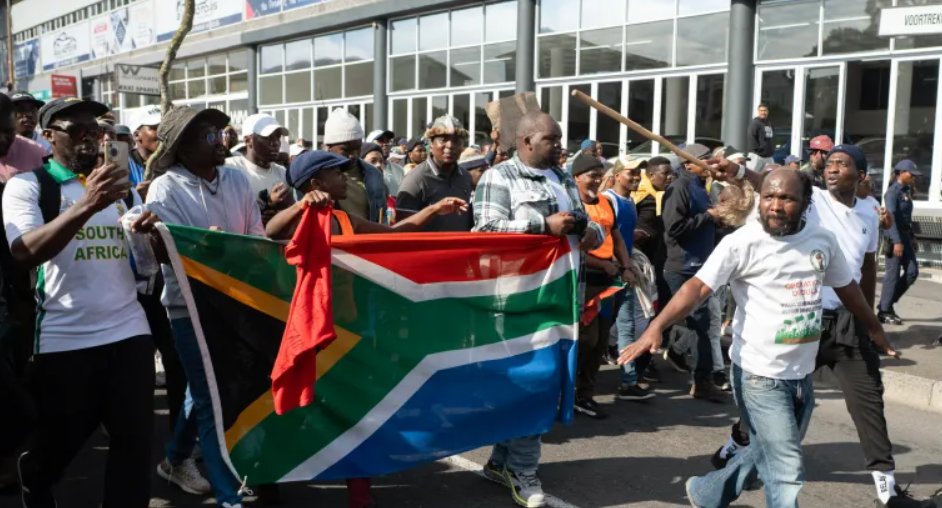
South Africa’s Minister of International Relations and Cooperation has stated that 74 percent of Ghanaians who were returned from the country had overstayed their visas, as tensions continue to build around immigration enforcement and deportation policies affecting African nationals.
The comments come amid renewed scrutiny of migration practices in South Africa and growing diplomatic sensitivity between African states over how undocumented migrants are treated. The minister maintained that the enforcement actions were carried out in line with immigration laws and were not targeted at any specific nationality, but were instead based on compliance violations.
According to the minister, the data indicates that a significant majority of affected Ghanaians remained in South Africa beyond the period permitted under their travel documents. He argued that overstaying visas is a violation of South Africa’s immigration framework and creates legal grounds for detention and removal.
The statement has added a new dimension to ongoing discussions around migration between West and Southern Africa, particularly as Ghana continues to engage with regional partners on labour mobility and diaspora relations.

The government of South Africa, through its immigration and border management agencies, has in recent years intensified enforcement operations targeting undocumented migrants, citing concerns over strained public services, labour market pressures, and national security considerations.
The latest figures cited by the minister are likely to fuel debate in Ghana and across the region, where migration for employment opportunities remains a major socio economic factor. Many young Ghanaians travel to South Africa in search of work in sectors such as retail, hospitality, and informal trade.
However, migration experts note that visa overstays are often linked not only to deliberate violations but also to complex administrative and economic realities, including difficulty in renewing permits, lack of awareness of immigration rules, and limited access to legal pathways for regularisation.
The issue has also raised questions about bilateral cooperation on migration management between Ghana and South Africa. Both countries are key members of the African Union, which promotes freer movement of people across the continent under its Agenda 2063 framework. However, implementation of migration protocols varies significantly between member states.
Diplomatic observers say the remarks by South Africa’s foreign affairs ministry could prompt discussions between the two governments on improving documentation systems, streamlining visa processes, and enhancing awareness campaigns for travellers.
In Ghana, the Ministry of Foreign Affairs and Regional Integration has previously encouraged citizens to comply with host country immigration laws and has often provided consular assistance to nationals facing deportation or detention abroad.
The broader issue of irregular migration remains a persistent challenge across Africa, driven by unemployment, economic inequality, and aspirations for better living conditions. South Africa, as one of the continent’s largest economies, remains a major destination for migrants from several African countries.

Human rights groups have in the past raised concerns about the treatment of migrants during enforcement operations, calling for greater transparency, due process, and humane handling of deportation cases. South African authorities, however, maintain that immigration laws are enforced uniformly and that due process is followed in removal procedures.
The latest assertion that 74 percent of returned Ghanaians overstayed their visas is likely to become a focal point in public discourse, particularly as it touches on both legal compliance and broader migration policy questions.
Analysts say the situation highlights the need for stronger regional coordination on migration data sharing, visa regulation, and labour mobility frameworks to reduce tensions and ensure safer, more structured migration pathways.
As discussions continue, both countries are expected to maintain diplomatic engagement on the issue, balancing enforcement priorities with the need to preserve long standing bilateral relations and regional cooperation.
South Africa weighs compensation for Ghanaian traders affected by xenophobic attacks