

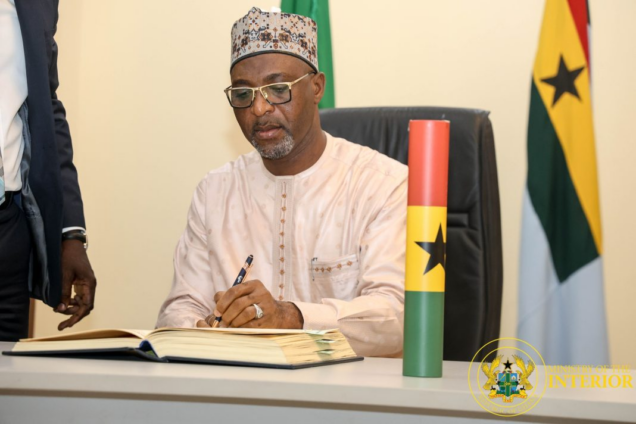
The Government of Ghana has officially confirmed Wednesday, 27th May 2026 as a statutory public holiday to mark Eid-Ul-Adha, one of the most important Islamic celebrations observed by Muslims across the country.
The confirmation aligns with Ghana’s official 2026 public holiday calendar published by state institutions, which lists Eid-Ul-Adha as a national holiday observed nationwide. The date falls on Wednesday, 27 May 2026, and is marked as a public holiday across the country.
Eid-Ul-Adha, also known as the Festival of Sacrifice, is celebrated by Muslims worldwide to commemorate the willingness of Prophet Ibrahim to obey God’s command. The occasion is traditionally marked with special prayers, animal sacrifice, and sharing of meat with family, friends, and the less privileged.

In Ghana, the celebration is recognised as one of the key Islamic holidays alongside Eid-Ul-Fitr, reflecting the country’s religious diversity and commitment to interfaith harmony. The Ministry of the Interior’s official holiday listings confirm that Eid-Ul-Adha remains a statutory public holiday, although its date varies annually based on the Islamic lunar calendar.
The declaration means that workers in both public and private sectors will observe the day as a non working holiday, allowing Muslim communities across the country to fully participate in prayers and festivities. Major congregational prayers are expected to take place in mosques and open fields in cities such as Accra, Kumasi, Tamale and other districts with large Muslim populations.
Eid-Ul-Adha also has a significant economic impact in Ghana. Markets typically experience increased demand for livestock such as goats, sheep and cattle, which are central to the ritual sacrifice. Traders, transport operators and food vendors often record increased activity during the festive period as families prepare for celebrations.

Beyond the economic aspect, the festival is seen as a time of unity and generosity. Religious leaders across the country are expected to use the occasion to preach messages of sacrifice, compassion, and social responsibility, encouraging Muslims to support vulnerable members of society through charitable giving.
Ghana’s practice of officially recognising major religious festivals, including both Christian and Islamic holidays, continues to reinforce its reputation as a stable multi faith democracy. The inclusion of Eid-Ul-Adha in the national calendar ensures equal recognition of religious observances and promotes national cohesion.
The 27th May 2026 holiday will therefore serve not only as a day of rest but also as a moment of spiritual reflection and community celebration for Muslims across Ghana, while strengthening the country’s tradition of religious inclusivity.
Government declares March 20 and March 23 public holidays to mark Eid Ul Fitr and Shaqq Day