

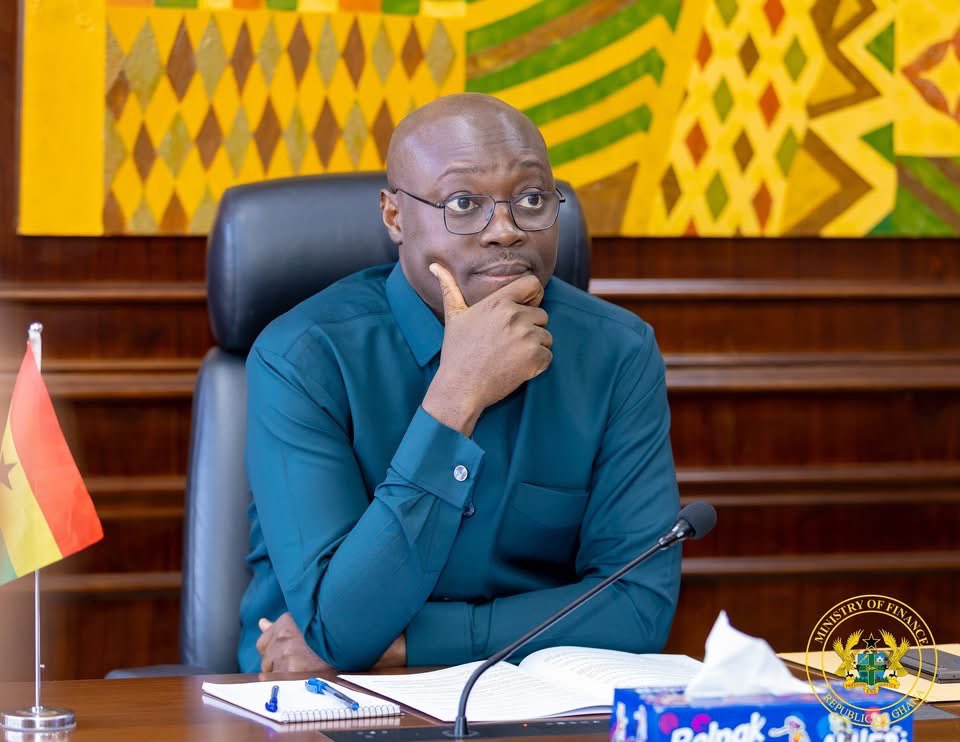
Minister of Finance, Hon. Dr. Cassiel Ato Forson has reiterated government’s commitment to strengthening economic sustainability, stressing that ongoing fiscal and structural policy measures are designed to restore long term stability, rebuild investor confidence and place the economy on a more resilient growth path.
Speaking on the direction of economic management, the Finance Minister emphasised that the government’s current strategy is focused not only on short term recovery but also on ensuring that reforms deliver durable macroeconomic stability. His remarks come at a time when Ghana is navigating a sensitive but improving economic environment following years of fiscal pressure, debt challenges and inflationary shocks.
The renewed policy direction is closely linked to Ghana’s recent progress in stabilising key economic indicators. Over the past months, inflation has shown signs of moderation, the local currency has experienced relative stability compared to earlier volatility, and investor sentiment has gradually improved. These developments are seen as critical to rebuilding trust in the economy after a period of uncertainty that affected both domestic and international markets.
Ato Forson has positioned fiscal discipline at the centre of government’s economic agenda. This includes efforts to rationalise public expenditure, improve revenue mobilisation, and ensure that borrowing is aligned with productive investments. According to policy direction outlined by government communications, the goal is to prevent a return to unsustainable debt levels while maintaining growth momentum.

Recent economic updates from official institutions, including the Ghana Statistical Service, have shown improved economic performance in certain sectors, reflecting increased industrial activity, stronger services output and a rebound in consumer demand. These gains are being closely monitored by policymakers as they assess the effectiveness of ongoing reforms.
Investor confidence remains a central theme in government’s messaging. Authorities argue that predictable policy direction, combined with improved macroeconomic indicators, will encourage both foreign direct investment and portfolio inflows. The Finance Minister’s remarks align with broader efforts to position Ghana as a stable investment destination within the West African sub region.
The government’s economic strategy also includes strengthening public financial management systems to reduce inefficiencies and leakages. This involves tighter oversight of public spending, enhanced digitalisation of revenue collection systems, and reforms aimed at improving transparency in fiscal reporting. These measures are intended to ensure that public funds are used more efficiently and directed toward priority sectors such as infrastructure, health, and education.
Another key component of the sustainability agenda is debt management. Ghana has faced significant debt restructuring challenges in recent years, and policymakers are now focused on ensuring that future borrowing is sustainable and tied to growth enhancing projects. The emphasis is on avoiding excessive short term borrowing while expanding concessional financing and domestic revenue sources.

Market observers note that Ghana’s recent economic trajectory shows early signs of stabilisation, but caution that maintaining momentum will require consistent policy execution. External factors such as global interest rate movements, commodity price fluctuations, and geopolitical tensions could still influence the country’s economic outlook.
Ato Forson has consistently highlighted the importance of maintaining policy credibility as a foundation for sustainable growth. His statements reflect a broader government position that economic recovery must be anchored in discipline, structural reforms and long term planning rather than short term interventions.
As Ghana continues to implement its economic roadmap, attention will remain on how effectively these policies translate into job creation, private sector expansion and improved living standards for citizens. The balance between fiscal consolidation and growth stimulation is expected to remain at the centre of economic policy discussions in the coming months.