


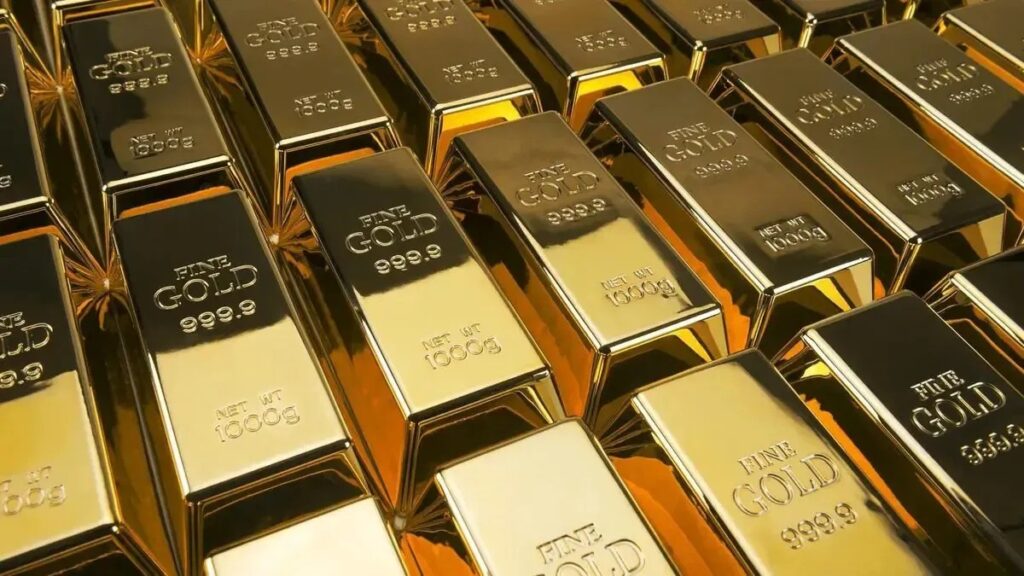
Ghana gold reserves have come under intense scrutiny after official Bank of Ghana data revealed that the country lost nearly 19 tonnes of gold within just three months at the end of 2025. The sharp fall, from 37.1 tonnes in September to 18.6 tonnes by December, is not merely a statistical adjustment. It is a development with far-reaching implications for economic confidence, currency stability, and the cost of living faced by households and businesses.
Economists argue that such a dramatic decline in Ghana gold reserves demands transparent explanation, particularly at a time when gold is globally regarded as a financial anchor amid geopolitical tension, high interest rates, and fragile emerging-market currencies.
What caused the sudden fall in Ghana gold reserves?
According to Development Economist Dr. Frank Bannor, the speed and scale of the decline are highly unusual. Gold reserves typically change gradually unless driven by deliberate policy decisions such as outright sales, collateralisation for borrowing, or liquidity swaps. Yet, no public disclosure has clarified which of these options, if any, explains the disappearance of nearly half of Ghana gold reserves in one quarter.
This lack of clarity is especially striking given that Ghana’s gold holdings had been rising steadily for most of 2025. The reserves peaked in September before collapsing in the final quarter, effectively wiping out all gains accumulated during the year and pushing reserves below levels inherited from the previous administration.
Gold is not just another asset on the central bank’s balance sheet. For countries like Ghana, Ghana gold reserves serve three strategic purposes: strengthening foreign exchange buffers, supporting investor confidence, and acting as insurance during global financial shocks.
While Ghana’s Gross International Reserves rose to US$13.83 billion by December 2025, gold plays a unique role that cash and securities cannot fully replace. Unlike foreign currency assets, gold is not tied to the creditworthiness of another government or institution. A rapid drawdown of Ghana gold reserves, therefore, raises concerns about how resilient the country’s external buffers truly are.
Impact on the cedi, inflation, and price stability
Although the Bank of Ghana maintains that macroeconomic fundamentals remain sound, a weakened gold position can complicate currency management. Markets closely watch Ghana gold reserves as a signal of long-term financial strength. Any perception that reserves are being depleted without explanation can increase pressure on the cedi, especially during periods of external volatility.
For households, this matters because exchange-rate instability often translates into higher prices for imported goods such as fuel, food, medicines, and household essentials. Even modest currency pressures can erode purchasing power, particularly for lower-income families already adjusting to elevated living costs.
For businesses, especially import-dependent firms, uncertainty around Ghana gold reserves can influence financing costs and investment decisions. A perceived weakening of reserve buffers may push lenders to price higher risk premiums into loans, raising borrowing costs for companies.
Foreign investors, meanwhile, factor reserve transparency into sovereign risk assessments. Questions surrounding the management of Ghana gold reserves could dampen portfolio inflows, limit access to cheaper capital, and slow private-sector expansion at a time when growth recovery remains fragile.
Transparency and confidence at stake
Dr. Bannor’s call for accountability reflects a broader concern: economic recovery depends not only on numbers but on trust. Central banks rely heavily on credibility to anchor inflation expectations and stabilise markets. Silence or vague assurances around Ghana gold reserves risk undermining that credibility.
Clear communication, detailing whether the gold was sold, pledged, swapped, or temporarily reclassified, would help reassure markets and the public that reserve management decisions were strategic rather than reactive.
As Ghana navigates fiscal consolidation, debt restructuring, and inflation management, Ghana gold reserves remain a cornerstone of macroeconomic stability. A near-50% decline within three months is not a routine adjustment; it is a structural signal that warrants explanation.
Without transparency, concerns may persist, affecting currency confidence, business sentiment, and household expectations. In an environment where economic recovery remains fragile, clarity on Ghana gold reserves is not optional; it is essential.
Ghana gold refining agreement signals economic gains and job creation