

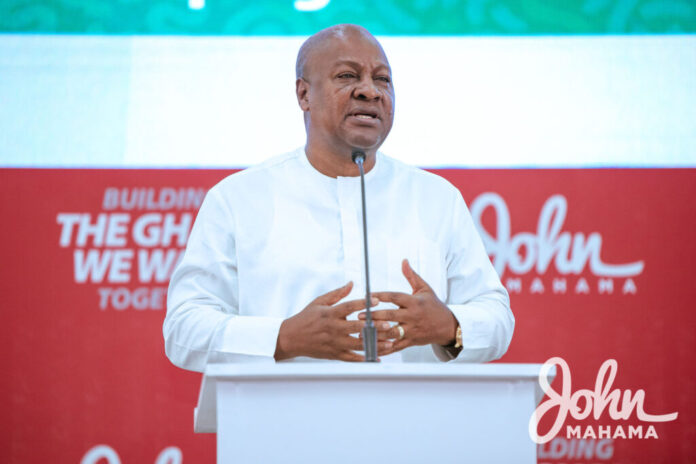
President Mahama’s first year in office has been characterised by cautious reform rather than dramatic policy shifts. From a macroeconomic perspective, the administration deserves credit for openly acknowledging Ghana’s fiscal distress and pursuing expenditure discipline. This approach has helped calm investor sentiment and stabilise expectations, particularly among international partners and financial institutions. However, when assessed through the lens of President Mahama’s first year performance, the lived realities of households and businesses tell a more complex and increasingly uneasy story.
Stability alone does not pay bills, create jobs, or expand productive capacity. For many Ghanaians, economic recovery remains theoretical rather than tangible.
Rising Living Costs Are Squeezing Households
One of the clearest stress points in President Mahama’s first year performance is the surge in utility tariffs and essential service costs. For households, higher electricity and water bills have reduced disposable income, forcing families to cut back on education, healthcare, and nutrition. These pressures disproportionately affect low- and middle-income earners, undermining social stability.
For small and medium-sized enterprises, rising energy costs translate directly into thinner margins, reduced production, and in some cases, layoffs. When operational costs rise faster than consumer demand, businesses either pass costs onto customers or scale down, both outcomes slow economic recovery.
Youth Unemployment as an Economic and Security Risk
Perhaps the most alarming weakness in President Mahama’s first year performance is the lack of progress on youth employment. Job creation has not kept pace with population growth, leaving thousands of educated young people idle or underemployed.
This is not merely a social issue; it is an economic and security concern. Persistent unemployment reduces consumer spending, weakens the tax base, and fuels migration pressures. Over time, it also heightens the risk of social unrest, crime, and political disillusionment. Businesses suffer when purchasing power collapses, and the state bears the long-term cost of missed productivity.
Governance Reform Risks Becoming Symbolic
On governance and constitutional reform, the administration has emphasised consultation and consensus-building. While this tone is welcome, President Mahama’s first year performance is increasingly judged by execution rather than intent.
The slow progress of high-profile anti-corruption efforts, particularly Operation Recover All Loot, has raised concerns among citizens and investors alike. Effective institutions matter to businesses because corruption raises transaction costs, distorts competition, and discourages long-term investment. Without visible prosecutions and asset recoveries, reform narratives lose credibility.
Infrastructure Imbalances Undermine Business Growth
Infrastructure remains another weak spot in President Mahama’s first year performance. While the administration has spoken about prioritisation over political symbolism, delivery has lagged. More troubling is the reported concentration of road projects in Greater Accra and the Eastern Region, leaving the majority of regions underserved.
For businesses outside these corridors, poor infrastructure increases transport costs, delays supply chains, and discourages expansion. For households, it limits access to markets, healthcare, and education. Uneven development ultimately fragments national growth and deepens regional inequality.
Foreign Policy Gains Offset by Strategic Contradictions
Internationally, President Mahama’s first year performance has been steadier. Ghana’s renewed engagement with multilateral institutions and investors has improved credibility and policy predictability, an important signal for foreign direct investment.
However, Ghana’s reported stance on the Western Sahara raises concerns. Foreign policy inconsistency affects investor confidence, particularly for firms sensitive to geopolitical risk and reputational exposure. Strategic clarity matters in an increasingly values-driven global economy.
Resource Control and Economic Independence
A defining test of President Mahama’s first year performance lies in resource governance. Ghana’s continued dependence on foreign control of extractive assets limits value retention and job creation. Without stronger domestic ownership, businesses remain locked out of high-value supply chains, and households see little benefit from natural wealth.
Economic liberation requires policies that move Ghana up the value chain, expand local participation, and ensure revenues translate into public services and employment.
Outcomes Will Define the Presidency
Ultimately, President Mahama’s first year performance will not be judged by diplomatic tone or policy statements but by measurable outcomes. Households need relief from rising costs, businesses need predictable infrastructure and governance, and the youth need jobs, not promises.
If decisive action does not follow, this first year risks being remembered as a period of cautious stability that failed to convert opportunity into inclusive growth.
Ghana economic reset, 20 transformative reforms and achievements that defined 2025