

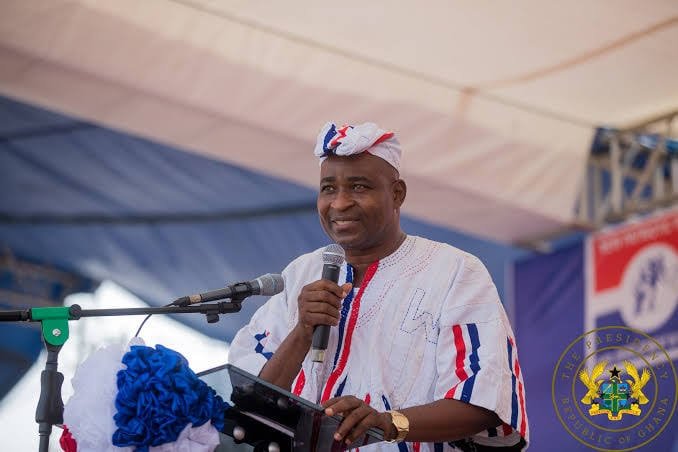
The Accra High Court has dismissed an application by former New Patriotic Party (NPP) Ashanti Regional Chairman Bernard Antwi Boasiako, popularly known as Chairman Wontumi, seeking bail while he challenges his 20 years prison sentence for mining-related offences.
In a ruling delivered on Monday, November 16, 2026, the court held that the grounds presented in support of his appeal were not sufficiently arguable and had no reasonable likelihood of success to justify his temporary release. Corrections Policy
The decision means Wontumi will remain in prison as he pursues his appeal against the conviction and sentence imposed in July this year.
The ruling is another significant development in the high profile illegal mining case involving Wontumi and Akonta Mining Company Limited, which centred on activities at a mining concession in Samreboi in the Western Region.
According to reports, the court rejected the application after considering the arguments presented by the defence and the prosecution. The decision does not, however, amount to a final determination of the substantive appeal challenging his conviction.
Defence argued that Wontumi deserved temporary release
Wontumi’s legal team, led by former Attorney-General Samuel Atta Akyea, had asked the court to grant him bail pending the determination of his appeal at the Court of Appeal.

The defence maintained that the conviction was affected by serious errors of law and that the appeal raised substantial issues that deserved consideration by the appellate court.
His lawyers relied on 19 grounds of appeal, challenging aspects of the trial judge’s interpretation of the Minerals and Mining Act, 2006 (Act 703). Editorial Ethics & Independence
One of their central arguments concerned the legal distinction between Akonta Mining Company Limited and its director.
They contended that the company was a separate legal entity and questioned the trial court’s decision to hold Wontumi personally liable for offences connected to the company’s mining concession.
The defence also challenged the interpretation of the arrangements involving Henry Okum, a prosecution witness who undertook mining activities on the Samreboi concession.
The lawyers maintained that the permission granted to him was for reclamation work and did not amount to an unlawful assignment of mineral rights.
They further argued that Wontumi was not a flight risk, pointing to his compliance with bail conditions during the trial. His legal team also noted that his passport remained in the custody of the Economic and Organised Crime Office (EOCO).
The lawyers said his temporary release would assist him in participating in the preparation and prosecution of his appeal.
State opposed the bail application
The prosecution, represented by Deputy Attorney-General Dr Justice Srem-Sai, strongly opposed the application and urged the court to refuse the request.

The State argued that Wontumi had failed to establish the exceptional circumstances required to justify bail after conviction and sentencing.
It also disputed the defence’s assessment of the appeal, maintaining that the grounds presented did not demonstrate a reasonable prospect of success.
Another concern raised by the prosecution was the possibility that Wontumi could abscond if released. The State pointed to two other criminal cases involving him, arguing that potential additional prison sentences could create an incentive for him to avoid further prosecution.
The Deputy Attorney-General therefore maintained that the applicant should remain in custody while the appeal process continued. Ownership & Funding
The competing arguments placed two important considerations before the court, whether the appeal raised sufficiently substantial legal questions and whether the circumstances justified releasing a convicted person before the appeal had been determined.
Background to the 20-year prison sentence
Wontumi was sentenced by the Accra High Court on July 20, 2026, following his conviction in the Samreboi illegal mining case.

Presided over by Justice Audrey Kocuvie-Tay, the court found him guilty on two counts assigning mineral rights without the required ministerial approval and purposefully facilitating an unlicensed mining operation.
The charges arose from activities on Akonta Mining’s concession at Samreboi in the Western Region. Editorial Standards
The prosecution’s case centred on the company’s arrangement that allowed Henry Okum to undertake activities on the concession.
The defence maintained that the arrangement was intended for land reclamation, but the trial court concluded that the evidence established that mining activities had been permitted without the necessary approvals.
The judge also considered Wontumi’s level of control over the company’s operations when determining his personal responsibility.
Reports stated that the court imposed 20 years imprisonment with hard labour on each of the two counts, with the sentences ordered to run concurrently.
This means the effective custodial sentence is 20 years rather than 40 years. Wontumi was also fined 10,000 penalty units on each count.
Akonta Mining Company Limited was separately convicted on two corresponding counts and fined 15,000 penalty units on each count.
Wontumi had already challenged the conviction
Following the July judgment, Wontumi and Akonta Mining filed an appeal seeking to overturn the convictions and secure their acquittal and discharge.
A source reported on July 29 that the appeal challenged the trial court’s interpretation of the Minerals and Mining Act, its treatment of the reclamation arrangement and its decision to hold Wontumi personally liable despite the company’s separate legal status. Privacy Policy & Terms
The legal team also questioned the weight placed on the testimony of the prosecution’s witness and argued that the evidence did not sufficiently establish the offences.
The subsequent application for bail was a separate request intended to secure Wontumi’s temporary release while the appellate process continued.
The court’s dismissal of that application does not automatically dispose of the appeal itself. The substantive challenge to the conviction and sentence remains a separate legal process.
What happens next?
The immediate consequence of Monday’s ruling is that Wontumi remains in prison while his appeal proceeds through the judicial system.

The decision also keeps public attention on the legal implications of the Samreboi case, particularly the enforcement of mining regulations and the responsibility of individuals and companies operating mineral concessions.
For the NPP, the development concerns a prominent party figure whose conviction and continued incarceration have attracted considerable political attention. Newscard
However, the central issue remains a legal one: whether the appellate court will uphold or overturn the findings made by the High Court.
Until the substantive appeal is determined, the July conviction and sentence remain in force. The latest ruling therefore represents a setback for Wontumi’s attempt to secure temporary freedom, but it should not be confused with the final outcome of his appeal.