

The Ghana Catholic Bishops’ Conference has renewed pressure on President John Dramani Mahama to declare a targeted state of emergency in communities severely affected by illegal mining, popularly known as galamsey, warning that existing government interventions have failed to produce the expected results. Corrections Policy
The demand was contained in a communiqué issued at the conclusion of the Conference’s Annual Plenary Assembly, held from November 3 to 14, 2026, at the Divine Providence Pastoral Centre in Jamasi, Ashanti Region.
The statement was released on Friday, November 13, at St. Paul Cathedral in the Konongo-Mampong Diocese and signed by the Conference’s President, Most Rev. Matthew Kwasi Gyamfi.
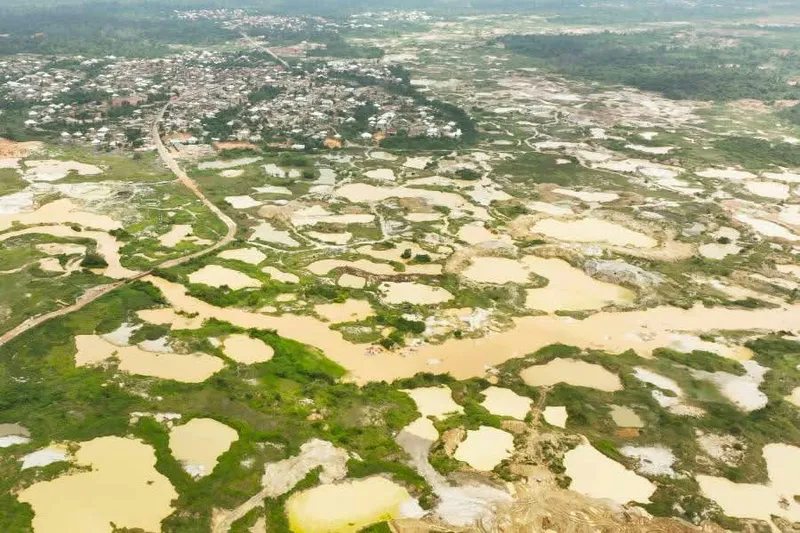
The bishops expressed concern about the continuing destruction of Ghana’s natural resources, particularly the pollution of rivers and other water bodies, the degradation of agricultural lands, the destruction of forest reserves and the growing risks to public health.
They argued that the scale of the environmental damage requires more decisive action from government, insisting that the time has come to adopt exceptional measures in the areas experiencing the worst effects of illegal mining.
According to the communiqué, the interventions introduced by the Mahama administration have so far not achieved the desired or expected outcome.
The bishops therefore called for a targeted state of emergency in the locations most severely affected by illegal and irresponsible mining.
The proposal is intended to concentrate government attention and enforcement resources on communities where mining activities are causing significant environmental destruction.
Rather than treating the demand as a blanket measure covering the entire country, the Conference specifically wants emergency action directed at the hardest-hit areas.
Bishops raise alarm over environmental destruction
The Conference described the galamsey crisis as a serious threat to the country’s environmental future and the well-being of generations to come.

It maintained that protecting the environment cannot be separated from safeguarding human dignity, social justice and the livelihoods of communities that depend on farming, fishing and access to clean water.
The bishops also called on the President to demonstrate stronger leadership and determination in addressing the crisis, arguing that the responsibility to protect citizens includes preventing further destruction of the natural resources on which communities depend.
Their concerns reflect warnings previously made by the Conference about the health and economic consequences of illegal mining.
In October 2026, Most Rev. Matthew Gyamfi told Citi News that galamsey was not simply an environmental problem but a danger to public health and the country’s food and water systems.
He warned that pollutants associated with illegal mining could enter water bodies and the food chain, exposing communities to serious health risks. Editorial Ethics & Independence
He also argued that the government must maintain its commitment to the fight rather than allow the problem to become normalised.
The October remarks reinforced the bishops’ position that stronger action was necessary to protect Ghanaians from the consequences of illegal mining.
Demand for accountability and coordinated action
Beyond calling for an emergency declaration, the bishops urged regulatory institutions, security agencies, traditional authorities, religious leaders and ordinary citizens to work together to confront illegal mining.
They stressed that the fight must go beyond arresting miners at illegal sites and dismantling equipment. Authorities must also investigate and confront the networks that finance, facilitate and protect unlawful mining operations.
The Conference called for accountability across the board, emphasising that individuals who enable or benefit from illegal mining should not escape responsibility because of their political, social or economic influence. Newscard
It also highlighted the need to provide sustainable livelihood alternatives for people who depend on illegal mining for income.

According to the bishops, efforts to end galamsey must consider the economic conditions that make some communities vulnerable to the activity.
This means strengthening alternative employment opportunities, supporting affected farmers and encouraging responsible economic activities that do not destroy water bodies and agricultural land.
Previous calls and government’s position
The latest demand is not the first time the Ghana Catholic Bishops’ Conference has advocated a state of emergency to address illegal mining.
In a report that the bishops had urged President Mahama to declare a state of emergency in the most affected mining areas and around endangered water bodies.
At the time, the Conference argued that extraordinary interventions could help secure devastated lands, dismantle entrenched criminal networks and address alleged administrative complicity.
It also proposed broader reforms, including stronger mining laws, specialised courts, a properly resourced enforcement task force and nationwide land reclamation initiatives.
President Mahama, however, had expressed reluctance to invoke emergency powers, arguing that government agencies already possessed legal authority to arrest offenders, confiscate equipment and enforce environmental protection laws.
A report stated that the President said he would declare a state of emergency if the National Security Council advised him to do so. He maintained that the security authorities believed the fight could be won using existing powers.
The renewed call from the bishops therefore places the effectiveness of current anti-galamsey measures back under public scrutiny. [3News, September 16 and October 3, 2025]
A wider national challenge
The bishops’ latest communiqué also addressed other national concerns, including drug trafficking, substance abuse, indiscipline in educational institutions and continuing communal conflicts in Bawku and Kalba-Gbinyiri.
On illegal mining, however, their message was particularly urgent, environmental protection requires more than promises and temporary enforcement operations.
For communities affected by polluted rivers, damaged farms and destroyed forests, the consequences extend beyond the mining sites themselves. Editorial Standards
They threaten access to livelihoods, food production, clean water and long-term economic security.
The call for a targeted state of emergency now places renewed pressure on the government to explain how it intends to intensify enforcement, hold influential offenders accountable and restore damaged environments.
Whether the government accepts the bishops’ proposal or continues with its existing strategy, the central challenge remains the same: translating anti-galamsey commitments into measurable and lasting results.
The Conference’s position is that protecting Ghana’s environment must be treated as a national responsibility, with stronger cooperation between state institutions and the communities most affected by illegal mining.