

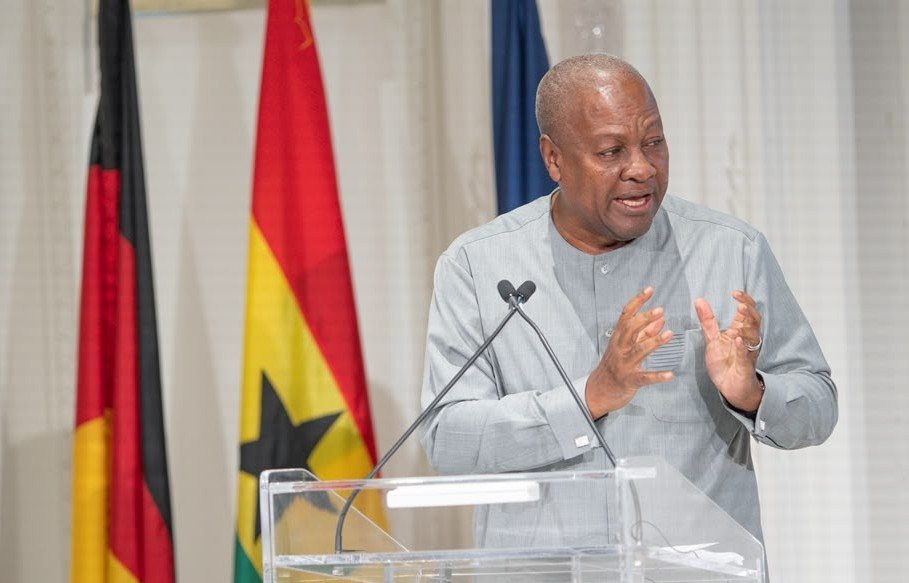
President John Dramani Mahama is expected to officially launch Ghana’s upgraded Heritage Series Cedi banknotes on Thursday, November’s 12, 2026, marking a major step in the Bank of Ghana’s efforts to modernise the country’s currency and strengthen its security features.
The launch ceremony is scheduled to take place at 10:00 a.m. at the Bank Square in Accra, with the President expected to serve as the Special Guest of Honour. Editorial Ethics & Independence
The introduction of the new banknotes will bring updated designs, improved durability and enhanced security measures aimed at protecting the Ghana cedi against counterfeiting.
The initiative, led by the Bank of Ghana (BoG), forms part of a broader currency modernisation programme intended to ensure that Ghana’s banknotes remain suitable for the changing needs of the economy.
The new series will be introduced under the theme, “The Cedi, Our Future: Secure, Designed to Last,” reflecting the central bank’s intention to combine stronger currency protection with a renewed celebration of Ghana’s national identity and cultural heritage.
Governor of the Bank of Ghana, Dr Johnson Pandit Asiama, has explained that the existing banknote designs have remained in circulation for more than two decades.

During this period, developments in technology, currency handling and security standards have made periodic upgrades necessary.
According to the Governor, the new series is designed to address these developments while improving the overall quality and lifespan of banknotes used by individuals, businesses and financial institutions.
The Heritage Series will cover the existing eight denominations: GH¢1, GH¢2, GH¢5, GH¢10, GH¢20, GH¢50, GH¢100 and GH¢200.
The central bank has indicated that the exercise will not introduce a new higher value denomination or change the value of the Ghanaian currency.
Instead, the focus is on improving the physical and security characteristics of the notes while retaining the familiar denomination structure used by the public.
One of the key objectives of the redesign is to strengthen protection against counterfeit currency.
Counterfeiting remains a concern for monetary authorities because fake banknotes can undermine public confidence, expose businesses to financial losses and create difficulties for cash transactions.
The upgraded banknotes are expected to incorporate modern security features that will make it more difficult for counterfeiters to reproduce them.
The Bank of Ghana is also expected to provide public education to help traders, commercial banks and ordinary currency users understand how to identify genuine notes.

Another important feature of the Heritage Series is improved durability. Banknotes frequently pass through the hands of traders, transport operators, retailers and consumers, exposing them to physical damage and deterioration.
By introducing notes designed to withstand prolonged circulation, the central bank hopes to reduce the frequency of replacement and improve the efficiency of currency management.
The initiative also carries an important cultural dimension. The new designs are intended to celebrate Ghana’s history, national heroes and cultural identity, giving the cedi a role beyond its function as a medium of exchange.
Through the Heritage Series, the Bank of Ghana seeks to use the country’s currency as a platform for recognising historical contributions and reflecting the nation’s aspirations for the future.
The approach highlights the relationship between national identity and currency design, particularly in a country where banknotes are used daily by millions of people across different communities and economic sectors. Corrections Policy
The central bank has also given assurances that the introduction of the new banknotes will not invalidate the existing Ghana cedi notes currently in circulation.
Old and new banknotes will continue to serve as legal tender and are expected to circulate alongside each other until further notice.
This clarification is particularly important because previous currency changes in Ghana have sometimes generated uncertainty among consumers and traders.
The Bank of Ghana has therefore urged the public not to rush to withdraw or exchange their existing cash simply because a redesigned series is being introduced.
The November 12 ceremony will mark the official unveiling of the Heritage Series rather than its immediate entry into circulation.
Reports indicate that commercial banks could begin distributing the upgraded notes in the first week of December 2026, following preparations to update ATMs, cash sorting equipment and other currency-handling systems.
The interval is also expected to provide an opportunity for public education about the new banknotes and their security features before they become widely available.
Accessibility has also featured in discussions surrounding the redesigned currency.
The Bank of Ghana has indicated that the notes will retain different sizes across denominations to help visually impaired people distinguish between them.

Enhanced tactile features are also expected to improve accessibility for people with visual difficulties.
The central bank has further indicated that it is exploring digital solutions that could help users identify the value and authenticity of banknotes through mobile technology.
Meanwhile, the Bank of Ghana has appealed to Ghanaians to adopt better habits when handling physical currency.
The public has been advised against crumpling, writing on, stapling, spraying or using banknotes for decorative purposes, including money bouquets at social events. Editorial Standards
According to the central bank, these practices contribute to the deterioration of banknotes, increase replacement costs and place additional pressure on currency management.
The launch also comes at a significant moment for Ghana’s economy, as government continues efforts to strengthen confidence in the financial system and improve the country’s economic outlook.
Although the redesign is not expected to change the purchasing power of the cedi, the introduction of stronger security features and more durable notes could support the efficient functioning of cash transactions across the economy.
For businesses, financial institutions and consumers, the success of the exercise will depend partly on how effectively the new notes are introduced, how accessible they are and how well the public understands their features.
As President Mahama prepares to lead the unveiling, attention will turn to the Bank of Ghana for further details about the designs, security improvements and distribution arrangements.
The Heritage Series represents more than a visual update to Ghana’s currency.
It is an attempt to modernise an important part of the country’s financial infrastructure while using the cedi to tell a story about its history, identity and future.