

The United Nations Children’s Fund (UNICEF) has raised concerns over Ghana’s low birth certificate coverage, revealing that only approximately 61 per cent of children in the country possess birth certificates, leaving nearly four out of every 10 children without documented proof of their legal identity. Editorial Standards
The revelation has renewed calls for stronger birth registration systems, particularly in rural and underserved communities where limited access to registration facilities and digital services continues to prevent many families from securing official documentation for their children.
UNICEF Representative to Ghana, Andy Brooks, warned that the situation could have serious implications for national development planning, children’s rights and access to essential social services.

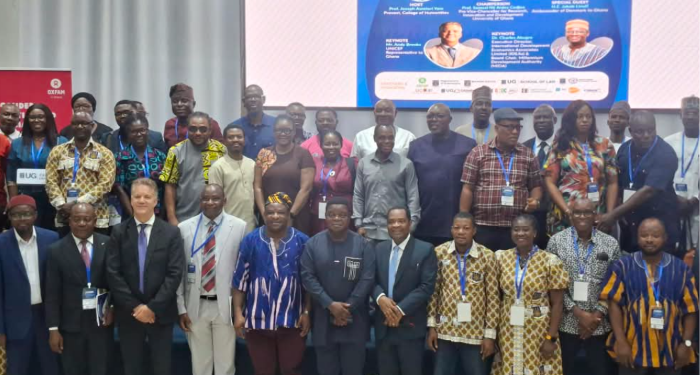
According to a report by the Ghana News Agency (GNA), Brooks made the disclosure on November 4, 2026, during the Eighth International Research Conference of the College of Humanities at the University of Ghana in Accra.
The conference was held under the theme, “Inclusion as a Global Imperative: Confronting Inequality and Advancing Equity, Justice and Innovation in a Fragmenting World.”
Addressing participants, the UNICEF representative explained that birth registration was essential to ensuring that every child was officially recognised and included in national development statistics.
He cautioned that children without birth certificates often remain invisible in official records, making it difficult for government institutions and development partners to determine the actual number of children requiring healthcare, education and social protection services.
Brooks stressed that when children are not properly documented, policymakers may struggle to allocate resources accurately, potentially leaving vulnerable communities without the support they need.
He illustrated the situation by recounting a recent visit to Boapasi in the Eastern Region, where he observed that only a handful of children among hundreds gathered in the community had birth certificates.
The experience, he said, demonstrated the scale of the registration challenge and the importance of taking practical measures to ensure that children in remote communities are not excluded from the country’s civil registration system.
He emphasised that every child must be counted because reliable population information is necessary for planning public services and addressing inequalities.
Limited Digital Connectivity Affecting Birth Registration
The UNICEF representative identified weak telecommunications connectivity and inadequate access to digital registration services in remote communities as some of the factors contributing to the problem.

In several underserved areas, families may encounter difficulties accessing registration facilities or completing the necessary procedures because of geographical barriers and limited technological infrastructure.
Poor connectivity can also affect the ability of registration officers to capture and transmit information electronically, slowing down the process and making it harder to extend services to communities far from urban centres.
Brooks therefore called for targeted interventions to address these challenges, particularly through improved digital infrastructure and more accessible registration services. Corrections Policy
Expanding community level registration facilities and strengthening collaboration between healthcare institutions and the Births and Deaths Registry could also help ensure that more children are documented shortly after birth.
University of Ghana Calls for Stronger Research and Data Systems
The concerns raised by UNICEF received support from Professor Samuel Arday Codjoe, Pro Vice-Chancellor for Research, Innovation and Development at the University of Ghana and chairperson of the conference.

Professor Codjoe emphasised the importance of using research and reliable data to understand the factors influencing birth registration and develop policies that respond to the needs of different communities. Editorial Ethics & Independence
He referenced previous research based on Ghana Demographic and Health Survey data, which identified differences in birth registration patterns associated with factors including gender, ethnicity, marital status and religion.
He also discussed findings from a postgraduate study supervised at the University of Ghana, which suggested that children born to Muslim mothers were significantly more likely to be registered than those born to Christian mothers.
The findings, he explained, highlighted the need for further research into the social, cultural and behavioural factors influencing parents’ decisions and ability to register their children.
Professor Codjoe encouraged researchers to revisit the subject using information from the latest demographic and health survey to establish whether the patterns identified in earlier studies had changed.
He reaffirmed the university’s commitment to supporting research that informs public policy and contributes to addressing social inequalities.
Why Birth Certificates Matter for Ghanaian Children
Birth registration is the official recording of a child’s birth by the state and provides the foundation for establishing legal identity.
A birth certificate serves as an important document for confirming a child’s name, date of birth, place of birth and parental information.
It can also help children establish their identity when accessing education, healthcare, social protection programmes and other essential services. Newscard
As they grow older, birth documentation may be required when applying for passports and other official identification documents.
Beyond individual benefits, accurate birth registration provides governments with reliable information about population growth, geographical distribution and the needs of different age groups.
UNICEF has consistently advocated for universal birth registration as part of efforts to protect children’s rights and ensure that no child is excluded from national development.
Ghana’s Efforts to Close the Registration Gap
Ghana’s Births and Deaths Registry has introduced digital registration initiatives and public awareness programmes to improve coverage across the country.
However, significant gaps remain, particularly in rural and hard-to-reach communities where access to registration services is limited.
UNICEF’s 2026 advocacy activities have also highlighted the importance of registering children within their first year of life and integrating registration services into existing healthcare and community systems.

The organisation has called for stronger collaboration between government agencies, local authorities, healthcare providers and community leaders to make the process more accessible.
Closing the gap will require sustained investment in registration infrastructure, adequate resources for frontline officers and public education to encourage parents and caregivers to register every child.
Ultimately, UNICEF’s latest warning presents an important challenge for Ghana: ensuring that every child receives legal recognition from birth.
Improving registration coverage will not only protect children’s identities but also strengthen national planning and help ensure that public resources reach the communities and families that need them most.