

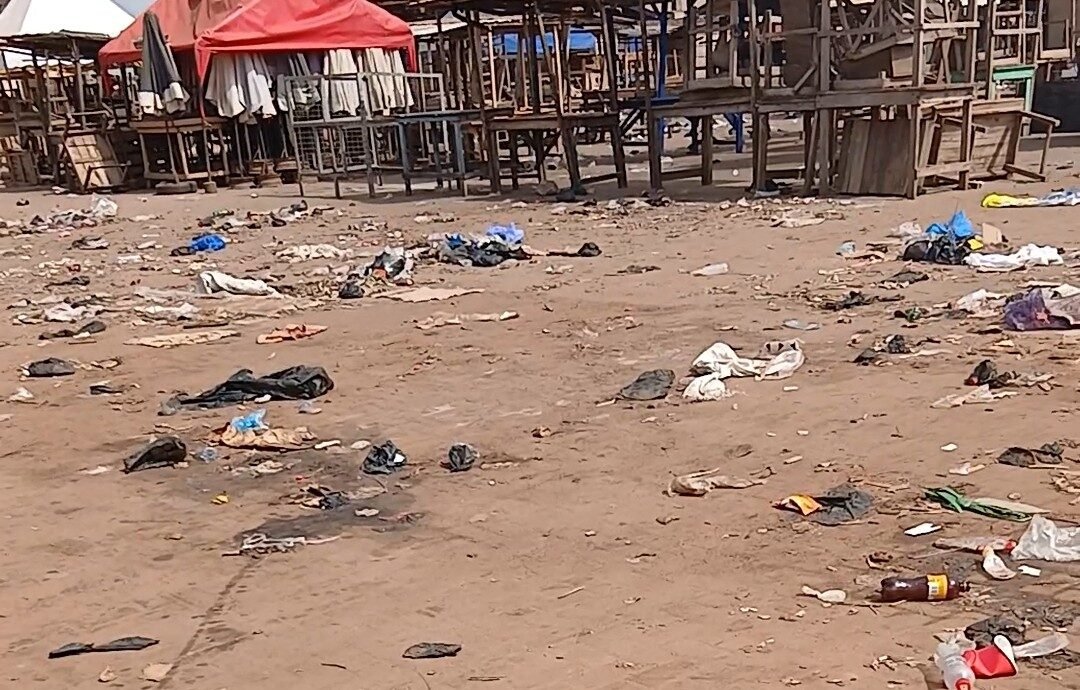
About 27 market sweepers at Kasseh Market in the Ada East District of the Greater Accra Region have embarked on an indefinite strike over three months of unpaid salaries, raising concerns about sanitation and working conditions at one of the area’s important trading centres.
The workers began the industrial action on Monday, November 2, 2026, demanding that their outstanding wages be paid before they resume their duties. Corrections Policy
Their decision has already affected cleaning activities at the market, with refuse accumulating in several sections of the facility.
The development comes amid growing frustration among the workers, who say delays in receiving their salaries have become a recurring problem despite their continued efforts to maintain cleanliness at the market.
According to a report, some of the affected workers, who spoke on condition of anonymity for fear of victimisation, said they had experienced prolonged periods without payment.
They disclosed that they had worked for approximately two years under the previous administration without receiving their salaries.
The workers further alleged that after the current administration assumed office, they continued working for another 10 months without payment.
The sweepers also recalled promises made during the 2024 general election campaign by some National Democratic Congress (NDC) leaders to increase their monthly remuneration from GH¢250 to GH¢700.
According to the workers, the proposed increase encouraged them to remain committed to their responsibilities despite the difficulties associated with delayed payments.
However, they said the promised GH¢700 monthly remuneration had not materialised.
When they subsequently approached the relevant authorities to demand their outstanding wages, they were allegedly informed that there was no formal agreement covering the period for which they were seeking payment.

The workers explained that the leadership of the Ada East District Assembly later invited them to a meeting and encouraged them to return to work.
During the engagement, their monthly remuneration was reportedly increased from GH¢250 to GH¢350.
Despite the adjustment, the sweepers said they had not received their salaries for the past three months and had not been given any formal explanation for the latest delay.
The situation eventually prompted them to suspend their cleaning activities, insisting that they could no longer continue providing services without receiving payment.
One of the workers appealed to the authorities to honour their financial obligations, saying that many of the sweepers were ageing individuals with children and families depending on their earnings.
The worker indicated that although the initial GH¢700 promise remained unfulfilled, the employees were prepared to accept the revised GH¢350 monthly amount, provided the payments were made consistently. Editorial Ethics & Independence
The workers also raised concerns about what they described as intimidation whenever they spoke to journalists about their working conditions.
Some alleged that they received telephone calls and threats after engaging the media, with accusations that they were attempting to embarrass the political administration.
These allegations have added another dimension to the dispute, as the workers maintain that their concerns are primarily about receiving payment for services already rendered.
Meanwhile, the industrial action has begun creating visible sanitation challenges at Kasseh Market.
During a visit to the facility on Wednesday, November 4, the Ghana News Agency observed heaps of refuse accumulating following market activities on Tuesday.
The waste reportedly included used plastic bags, leftover food, discarded packaging materials and other forms of rubbish.

Several sections of the market were left littered, creating an unpleasant environment for traders, customers and other visitors.
The situation has raised concerns about the possible health and environmental consequences if the sanitation challenges are not addressed promptly.
Markets generate substantial amounts of waste through daily commercial activities, particularly from food vendors, fish sellers, vegetable traders and other businesses.
Without regular collection and disposal, accumulated refuse can attract pests, produce unpleasant smells and create conditions that may contribute to public health risks.
The situation is particularly concerning because Kasseh Market serves traders and customers who depend on the facility for their daily economic activities. Editorial Standards
The District Chief Executive for Ada East, Kenneth Kabu Kofi Kanor, was contacted by the Ghana News Agency for a response but declined to comment on the matter.

His response leaves questions about the Assembly’s position on the outstanding payments, the reasons behind the delays and the steps being considered to resolve the dispute.
The immediate priority is to establish a clear payment arrangement that addresses the workers outstanding salaries while ensuring that essential sanitation services at the market are restored.
The Assembly and the affected workers will also need to engage in constructive discussions to prevent similar disputes from recurring.
Transparent payment schedules, clear employment arrangements and regular communication could help improve accountability and strengthen confidence between the workers and the authorities. Privacy Policy & Terms
For the sweepers, the demand remains straightforward payment for the work they have performed and an assurance that future salaries will be paid consistently.
Until an agreement is reached and the outstanding wages are settled, the indefinite strike threatens to prolong the sanitation difficulties at Kasseh Market, leaving traders and customers to deal with the consequences of the disruption.