

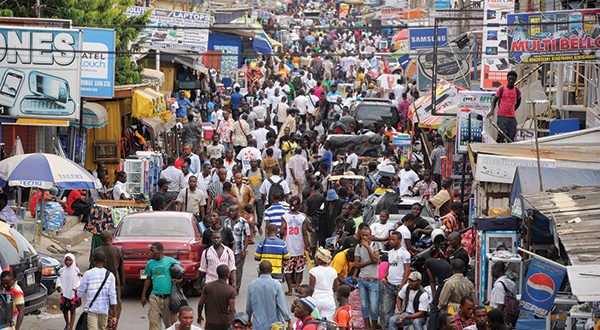
Ghana’s urban population has reached an estimated 19.8 million, representing 58.7 per cent of the country’s total population, as rapid urbanisation continues to increase pressure on housing and essential public services.
The latest figures from the Ghana Statistical Service (GSS), published in its Ghana in Numbers 2025 report, also show that the country’s housing deficit stood at approximately 1.8 million units in 2021. Editorial Ethics & Independence
Although the shortfall has declined from an estimated 2.8 million units in 2010, the remaining gap highlights the difficulty of providing adequate and affordable accommodation for a growing population.
The findings, reported, underlining the growing importance of urban planning, housing development and investment in public infrastructure as more Ghanaians settle in towns and cities.
Urban population continues to grow
According to the GSS, Ghana’s urban population has increased steadily over the past decade and a half.

In 2010, approximately 12.55 million people lived in urban communities, compared with 12.11 million in rural areas. This marked a significant turning point, as Ghana became more urban than rural for the first time.
The trend continued in 2021, when the urban population increased to 17.47 million, while the rural population stood at 13.36 million.
By 2025, the urban population had reached an estimated 19.8 million, reflecting the continued movement of people towards cities and expanding settlements.
The figure is a projection based on the 2021 Population and Housing Census and demographic assumptions, rather than a fresh population census conducted in 2025. Editorial Standards
The growing concentration of people in urban areas has important implications for the country’s development.
Cities such as Accra, Kumasi and Takoradi continue to attract people seeking employment, education, healthcare and business opportunities.
However, when urban growth is not matched by adequate infrastructure and housing supply, it can create pressure on existing facilities and increase the cost of living.
Housing deficit remains a major challenge
Despite improvements in the country’s housing situation over the years, the estimated deficit of 1.8 million units remains a significant concern.
The GSS figures indicate that Ghana’s housing shortfall declined from approximately 2.8 million units in 2010 to 1.8 million in 2021.
The 2021 Population and Housing Census recorded approximately 10 million dwelling units across the country. Corrections Policy
However, the availability of housing does not necessarily mean that every household can access suitable accommodation.
The housing deficit represents the estimated difference between the number of housing units required and those available.
It should not be confused with the number of people who are homeless, nor does it fully measure affordability or the physical condition of existing homes.
In January 2026, Works and Housing Minister Kenneth Gilbert Adjei also highlighted the country’s housing challenge, estimating the deficit at more than 1.8 million units.
He warned that affordability constraints continued to prevent many low- and middle-income earners from accessing decent accommodation.
A source reported the minister’s concerns, particularly the relationship between rapid urbanisation, rising housing demand and the limited supply of affordable homes.
Informal settlements and inadequate services raise concerns
The GSS report also draws attention to the living conditions of people in urban communities.

An estimated 30.8 per cent of Ghana’s urban population lives in slums or informal settlements, reflecting the difficulties some households face in securing adequate accommodation.
Informal settlements often develop where the supply of affordable housing fails to meet demand. Residents may experience overcrowding, inadequate sanitation, poor drainage and limited access to reliable public services.
The situation also creates challenges for local authorities responsible for waste collection, road maintenance, water supply and the provision of public facilities. Privacy Policy & Terms
The findings suggest that addressing Ghana’s housing deficit requires more than simply constructing additional buildings.
Housing development must also consider affordability, access to basic amenities, proper settlement planning and the safety of residential communities.
Access to electricity and water improves
Despite the challenges, Ghana has recorded progress in some areas of access to essential household services.
According to the GSS data, household access to electricity increased from 43.8 per cent in 2000 to 86.3 per cent in 2021.

Access to improved drinking water also recorded significant progress, rising from 60.7 per cent to 92 per cent over the same period.
These improvements demonstrate the expansion of basic infrastructure across the country. However, the report indicates that challenges remain, particularly in sanitation. Newscard
Almost one in three households still lacks access to an improved toilet facility, highlighting the need for further investment in sanitation infrastructure and public health services.
As urban communities expand, maintaining improvements in electricity and water access while addressing sanitation gaps will remain important for sustainable development.
Need for stronger urban planning and affordable housing
The latest statistics place renewed attention on the need for coordinated policies to manage Ghana’s growing urban population.
Government institutions, metropolitan and municipal assemblies, property developers and financial institutions all have roles to play in addressing the housing challenge.
Expanding affordable housing schemes, improving access to housing finance, strengthening land-use planning and investing in essential infrastructure could help reduce pressure on major cities.
There is also a need to ensure that housing policies serve low- and middle-income households rather than focusing exclusively on developments that are beyond the reach of many ordinary workers.
The GSS figures provide an important basis for understanding the country’s changing population and development needs.
They also offer policymakers and investors information that can guide decisions on housing, transportation, sanitation, healthcare and other essential services.
With nearly six out of every ten Ghanaians now living in urban areas, the challenge is no longer simply managing urban growth but ensuring that expanding communities remain affordable, properly planned and capable of supporting decent living conditions.