

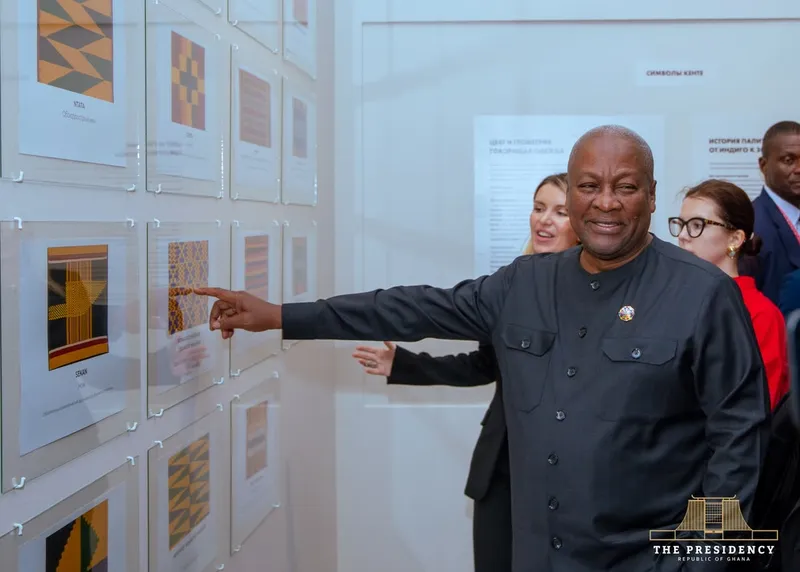
President John Dramani Mahama has assured Ghanaians that he pays attention to criticism and complaints shared on social media, particularly TikTok, saying he sometimes uses information from online posts to demand explanations from ministers about developments in their respective sectors. Editorial Ethics & Independence
The President made the remarks during an engagement with members of the Ghanaian community in Moscow, Russia, where he discussed the importance of public feedback in improving governance and responding to concerns about government performance.
Speaking about criticism directed at his administration, Mahama said he was not offended when citizens accused him of leading the country in the wrong direction.
Instead, he described criticism as an important source of information that could help him become a better leader.
“I don’t mind if people tell me I am leading the country in the wrong direction because I am trying to do my best. Criticism helps me to do better,” he said.
His comments were reported, and highlight the growing role of social media as a platform through which citizens communicate their concerns directly to public officials.
Mahama Says Social Media Complaints Reach His Ministers
The President explained that he sometimes encounters videos and complaints about public services and government activities while following media discussions.
According to him, such reports can prompt him to contact the relevant minister and request an explanation about what is happening.
He indicated that public criticism should not automatically be dismissed as political opposition, particularly when it draws attention to genuine problems affecting communities.
Mahama said these interactions help him assess the performance of his appointees and remind them to respond to issues raised by citizens.
He also encouraged social media users not to assume that their posts are ignored simply because they are published online. Editorial Standards
“So all your TikTok and things, don’t think I don’t see them; I see them,” he stated.
The President’s remarks suggest that social media has become an additional channel through which information about local challenges can reach the highest levels of government.
President Cites Bridge Problem in Ashanti Region
To demonstrate how online complaints can influence government attention, Mahama referred to a bridge-related problem in the Ashanti Region that had reportedly been affected by illegal mining activities and flooding.
He said he came across information about the situation on social media and forwarded the concern to the minister responsible for the sector.
According to the President, the minister subsequently visited the location and reported that a blocked water channel was contributing to the problem. An excavator was then deployed to clear the obstruction and allow water to flow.
Mahama used the example to explain how information shared by ordinary citizens can help government officials identify problems that may not immediately appear in formal reports.
He described new media as an advantage because it gives public officials access to information in real time. Corrections Policy
However, the example also highlights the importance of verifying information shared online before decisions are made.
Videos and posts can draw attention to urgent problems, but proper inspections and technical assessments remain necessary before authorities determine the appropriate response.
Mahama’s Position on TikTok and Online Criticism
The President’s latest comments follow an earlier discussion in September 2026 about the growing influence of TikTok and the question of how Ghana should address harmful online content.
Speaking on the sidelines of the 81st United Nations General Assembly in New York on September 25, Mahama said he personally did not mind being insulted, describing himself as having “crocodile skin” because of his experience in politics.

In comments reported, he distinguished between criticism directed at him personally and the wider national debate over how social media platforms should be regulated.
He raised concerns about anonymous accounts, abusive content and the rapid spread of information through social media algorithms. At the same time, he questioned whether some arrests involving online insults were justified.
The President said he was sometimes concerned when individuals were arrested over remarks allegedly directed at him, adding that he did not always know about such arrests until he heard about them through the media.
He proposed that the Ghana Journalists Association and the Media Foundation for West Africa bring relevant stakeholders together to discuss the future of digital media regulation.
The proposed discussions, he suggested, should consider the role of the police, the protection of free expression and the need to address genuinely harmful online content.
Public Accountability and Freedom of Expression
Mahama’s remarks come at a time when social media has become an increasingly influential space for political debate, public complaints and demands for accountability.
Platforms such as TikTok, Facebook and X allow citizens to document problems in their communities, question government decisions and share experiences with a much wider audience.
For public institutions, these platforms can provide useful information about challenges involving roads, healthcare, education, sanitation and other essential services.
However, the growing influence of digital platforms also creates challenges involving misinformation, personal attacks, privacy and the publication of unverified claims. Privacy Policy & Terms
The President’s comments therefore bring two important issues into focus: the responsibility of public officials to listen to citizens and the need to protect freedom of expression while addressing harmful conduct through fair and lawful processes.
He urged Ghanaians to speak up when they identify warning signs in the country’s governance, stressing that accountability should not be determined by political affiliation.
Ultimately, Mahama’s assurance that he sees citizens’ TikTok posts sends a message that online criticism can form part of the national conversation about governance.
The greater test, however, will be how consistently concerns raised by citizens translate into practical action and measurable improvements in their communities.