

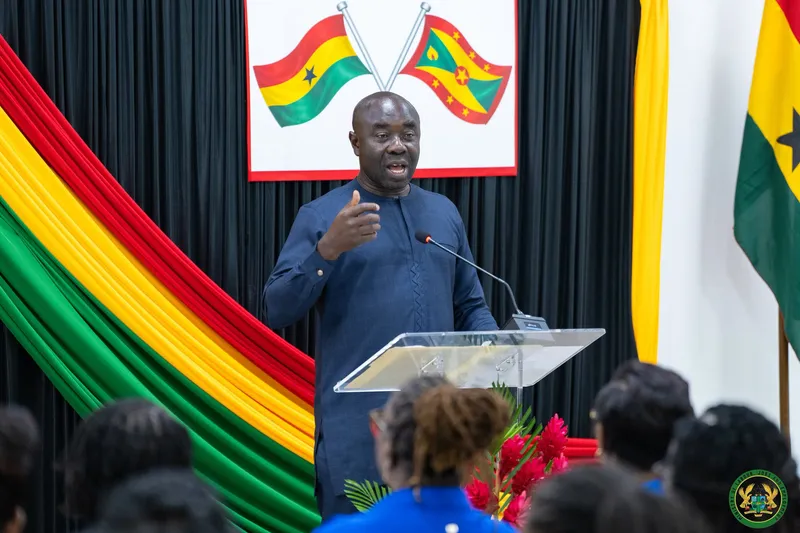
Ghana has signed a labour cooperation agreement with Russia to facilitate the recruitment of Ghanaian workers for industrial and manufacturing jobs, creating a new pathway for employment opportunities abroad as the government seeks to address unemployment and strengthen international economic partnerships. Newscard
The agreement was signed on October 29, 2026, by Labour Minister Emmanuel Agyekum and a representative of Russia’s Alabuga Special Economic Zone, an industrial and manufacturing hub in the Republic of Tatarstan.
The arrangement is intended to establish an organised recruitment process through which eligible Ghanaians can be considered for employment opportunities in Russia.
According to reports, the Ghanaian Ministry responsible for labour will coordinate recruitment, verify job offers and provide pre-departure orientation to workers before they travel.
The agreement comes as the government explores international partnerships that could expand employment opportunities for young people while promoting skills development and cooperation between Ghanaian and foreign businesses.
However, the signing of the agreement does not mean that every applicant will automatically receive a job.
Actual placements will depend on available vacancies, eligibility requirements, employer selection and the implementation arrangements established by both sides.
Alabuga industrial zone seeks workers
The Alabuga Special Economic Zone is a major industrial centre in Tatarstan, Russia, hosting companies operating across manufacturing and other industrial activities.
A source reported that the zone has 48 companies and requires more than 75,000 workers to support its operations.
This demand presents a potential opportunity for Ghanaian applicants interested in industrial employment, particularly those whose qualifications and experience match the requirements of participating employers.
Manufacturing jobs can cover a broad range of activities, including production, equipment operation, technical maintenance, logistics and other industrial support functions. Editorial Standards
The specific positions available to Ghanaian applicants, however, will depend on the vacancies formally offered under the agreement.
For prospective workers, understanding the nature of each position will be essential.
Job titles, required qualifications, working hours, salary arrangements and workplace conditions should be clearly established before an applicant accepts an offer.
The government will also need to communicate the recruitment process transparently so that interested Ghanaians can determine whether they qualify and how to apply through the appropriate channels.
Labour Ministry to coordinate recruitment
Under the agreement, Ghana’s Labour Ministry will play a central role in organising recruitment and verifying job offers.

This responsibility is important because overseas employment can expose applicants to risks when recruitment arrangements are unclear or when intermediaries make promises that are not supported by legitimate employers.
By coordinating the process, the ministry is expected to help establish a more structured route for applicants and improve access to information about the jobs being offered. Editorial Ethics & Independence
The planned pre-departure orientation is another important component. Workers preparing to relocate for employment need information about their contractual obligations, workplace expectations, accommodation arrangements, local laws and the support available if difficulties arise.
Prospective employees should also receive clear information about their wages, deductions, working hours, leave entitlements, health and safety provisions and the procedures for resolving workplace disputes.
Although the agreement identifies worker protection as a priority, its effectiveness will depend on how these safeguards are implemented and monitored in practice.
Ghanaians interested in the programme should rely on official announcements from the Labour Ministry and avoid paying unverified intermediaries who promise guaranteed placements.
Cooperation extends beyond employment
Labour Minister Emmanuel Agyekum said the partnership would extend beyond recruitment to include business-to-business cooperation, education, research, religion and cultural exchange.
He explained that Ghanaian businesses were expected to participate in upcoming forums in Tatarstan, where they could explore commercial partnerships with Russian companies.
Such engagement could create opportunities for businesses to identify suppliers, exchange technical knowledge and explore potential investment relationships. Corrections Policy
The two countries are also considering academic cooperation that could allow Ghanaian professors and lecturers to undertake research with universities in Russia.
Research partnerships can support knowledge exchange, strengthen institutional relationships and provide opportunities for academic collaboration across different fields.
The wider scope of the agreement suggests that Ghana and Russia are seeking to develop a relationship that goes beyond the movement of workers to include business, education and cultural engagement.
Potential benefits for Ghanaian youth
International labour mobility can provide workers with opportunities to earn incomes, develop practical skills and gain experience in different industrial environments.
For Ghana, structured overseas recruitment could provide an additional employment pathway for qualified applicants while helping participating employers meet their staffing needs.
Workers who gain relevant experience may also acquire technical knowledge that can be useful in future employment.
The broader economic benefit, however, will depend on the quality of the jobs, the protection of workers’ rights and whether the arrangement offers sustainable opportunities.
The government must also ensure that international recruitment complements efforts to create jobs within Ghana.
Overseas employment can expand individual opportunities, but it cannot replace the need for domestic investment, industrial growth and skills development.
Implementation will determine success
The agreement marks a step towards formalising labour cooperation between Ghana and Russia, but practical details will determine how many people benefit.

Applicants will need reliable information about available positions, application procedures, eligibility criteria and the documentation required before travelling.
Authorities will also need clear mechanisms for addressing complaints and verifying that participating employers honour their contractual commitments. Privacy Policy & Terms
A source reported that the Labour Ministry will coordinate the recruitment process and provide pre-departure orientation.
For interested Ghanaians, the key next step is to watch for official recruitment guidance rather than assume that the agreement itself constitutes an open application or confirmed job offer.
If implemented transparently, the partnership could expand access to industrial employment and strengthen Ghana–Russia cooperation.
Its ultimate success will depend on whether the opportunities translate into safe, fairly compensated jobs that deliver meaningful benefits to Ghanaian workers.