

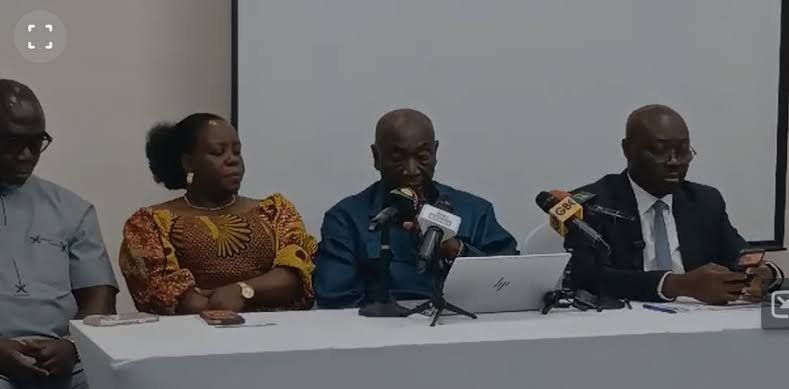
Public sector workers are set to receive a 9% increase in total remuneration in 2027 following an agreement between the government and Organised Labour, providing a new salary adjustment for employees amid continuing concerns about the cost of living. Editorial Standards
The agreement was reached on Wednesday, October 28, 2026, after discussions involving the Public Services Joint Standing Negotiating Committee.
According to a reports, the adjustment will take effect from January 1, 2027, and comprises an 8-percentage-point increase in base pay and a 1-percentage-point allocation for conditions of service.
The settlement provides a resolution to negotiations that had remained inconclusive in previous meetings, leaving public sector employees waiting for clarity on their expected earnings for the coming year.
The agreement is expected to influence the salaries of workers covered by Ghana’s Single Spine Salary Structure, which provides the framework for determining basic pay across much of the public sector. However, the final implementation remains subject to the applicable legislative process.
How the 2027 salary adjustment will work
Under the new arrangement, the 9% increase in total remuneration is divided between base pay and conditions of service.
Base pay forms the foundation of an employee’s salary and is used in determining earnings under the Single Spine Salary Structure.
An adjustment to base pay can therefore affect the basic earnings of eligible employees, although the actual amount received by each worker will depend on their existing salary level and applicable employment arrangements. Corrections Policy
The additional percentage allocated to conditions of service is intended to address employment-related provisions beyond the base-pay component.
The precise application of this allocation will depend on the terms of the agreement and the relevant implementation arrangements.
It is important to distinguish the 9% total remuneration adjustment from a simple 9% increase in every component of an employee’s monthly take-home pay.
Individual outcomes may differ depending on salary structures, allowances, deductions and the final terms governing implementation.
The agreement follows earlier uncertainty over the proposed adjustment.
A source reported that government and Organised Labour had failed to reach consensus during a meeting held the previous day, with negotiations expected to resume the following week.
The latest settlement marks progress in the discussions and gives workers a clearer indication of the remuneration framework planned for 2027.
Government and labour agree on 2028 pay increase
Beyond the immediate adjustment, the government and Organised Labour have also agreed to a 10% across-the-board pay increase for 2028, effective January 1 of that year.

According to reports, the 2028 adjustment will be calculated using the applicable wage bill as of December 31, 2027.
The provision offers an indication of the direction of public sector pay negotiations beyond the coming year.
It also gives government planners and labour representatives a framework to consider when preparing future salary and compensation arrangements. Editorial Ethics & Independence
Nevertheless, the practical effect of the 2028 agreement will depend on its implementation details, the applicable wage bill and the economic conditions prevailing at the time.
The two-year arrangement places emphasis on balancing workers’ demands for improved earnings with the government’s responsibility to manage public expenditure.
Cost of living remains a major concern
Salary negotiations in Ghana take place against the background of workers’ concerns about the cost of food, housing, transportation, utilities and other essential expenses.
Organised Labour has previously argued that falling inflation does not necessarily mean that prices have returned to earlier levels.
Inflation measures the rate at which prices rise when inflation slows, goods and services may continue becoming more expensive, but at a slower rate. Newscard
This distinction matters because workers’ purchasing power depends on how their earnings compare with the prices they face in everyday life.
In an earlier report on the negotiations, A source noted that labour representatives were seeking an adjustment that reflected continuing cost-of-living pressures.
The eventual 9% settlement represents the outcome of negotiations between the two sides, rather than a guarantee that every worker’s living costs will fall.
A salary increase can help employees meet their expenses, but its real value will depend on price movements, deductions and the extent to which the adjustment translates into disposable income.
Previous pay agreement provides context
The new settlement follows the 9% salary increase agreed by the government and Organised Labour for the 2026 fiscal year.

That earlier agreement was announced in November 2025 and applied to public sector workers under the Single Spine Salary Structure.
A source previously reported on the government’s salary negotiations and the competing considerations of workers’ welfare, economic recovery and fiscal constraints.
The 2027 agreement therefore continues an annual process through which government and labour representatives negotiate adjustments to public sector compensation.
Implementation will be the next priority
With an agreement now announced, attention will turn to the steps required to give effect to the new pay arrangements. These include completing the applicable legislative process and ensuring that the agreed adjustments are implemented accurately.
For workers, the key issues will be when the revised salaries appear in their pay, how the base-pay and conditions-of-service components are applied, and whether the final arrangements match the terms announced by the negotiating parties.
For government, implementing the agreement will require coordination between the relevant public institutions and careful management of the wage bill. Privacy Policy & Terms
The 9% remuneration increase for 2027 and the planned 10% adjustment for 2028 represent significant developments in Ghana’s public sector pay negotiations.
Their ultimate impact, however, will depend on effective implementation and how the adjustments perform against the country’s economic conditions.
For now, the agreement gives public sector workers a clearer picture of the planned salary adjustments for the next two years, while leaving implementation details and the formal approval process as important steps ahead.