

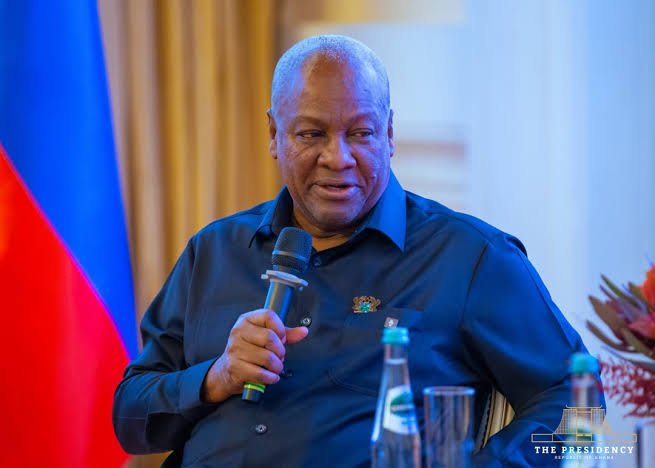
President John Dramani Mahama has expressed interest in strengthening Ghana’s energy partnership with Russia, with solar power and nuclear energy identified as potential areas for cooperation as the government explores ways to support industrialisation and improve long-term energy security. Editorial Ethics & Independence
The President’s position comes ahead of a planned bilateral meeting with Russian President Vladimir Putin on the sidelines of the third Russia–Africa Summit in Moscow.
The discussions are expected to provide an opportunity for both countries to explore investment prospects and expand economic cooperation.
According to reports, Mahama is seeking closer collaboration with Russia in the energy sector, particularly in developing alternative sources of electricity.
His comments reflect the government’s interest in diversifying Ghana’s energy mix and ensuring a dependable supply to support economic growth.
Ghana’s energy needs are expected to increase as the country pursues industrialisation, expands manufacturing and seeks to process more of its natural resources locally.
Mahama highlights solar and nuclear energy
Speaking during his engagements in Russia, Mahama identified solar power and nuclear energy as areas where Ghana could explore cooperation with Russian institutions and businesses.

The President indicated that Russia’s technological capabilities could create opportunities for investment and technical collaboration.
He expressed optimism that his meeting with Putin would help strengthen economic relations and open new areas of cooperation between the two countries.
In remarks reported by the Information Services Department on October 27, Mahama specifically highlighted nuclear energy as a possible addition to Ghana’s existing electricity-generation sources.
“We are looking at alternative energy sources. That is why we are looking at nuclear, adding nuclear energy to the mix,” he said, noting Russia’s experience in the sector. Corrections Policy
His comments suggest that the government is considering a broader range of energy options rather than relying exclusively on traditional sources.
However, the discussions do not in themselves confirm that Ghana and Russia have signed an agreement to construct a nuclear power plant or establish a specific solar project.
Industrialisation driving demand for electricity
Mahama’s interest in alternative energy sources is closely linked to his administration’s ambition to transform Ghana’s economy by creating more jobs and encouraging local production.

Ghana is a major producer of gold, bauxite and manganese. Much of the country’s long-term industrial potential depends on its ability to move beyond exporting raw materials and increase domestic processing and refining.
These activities require substantial amounts of electricity. Mineral-processing facilities, manufacturing plants and other industrial operations need reliable power to operate efficiently and maintain competitive production costs.
Speaking at the Russian University of Transport in Moscow, Mahama said his ambition was to turn economic progress into employment and opportunities, particularly for young people.
“My dream is to translate the macroeconomic success into jobs and opportunities for the young people,” he said, according to reports on his address. Editorial Standards
The remarks underline the connection between energy policy and the government’s wider economic objectives.
If Ghana can provide dependable and competitively priced electricity, local businesses may be better positioned to expand production, attract investment and create jobs.
Why solar and nuclear energy matter
Solar power could help Ghana diversify its electricity supply by making greater use of the country’s abundant sunlight.

Depending on project design and location, solar installations can support households, businesses and industrial facilities while reducing reliance on conventional generation during periods of strong sunshine.
However, solar power is variable, meaning output changes with weather conditions and the time of day.
Expanding solar capacity therefore requires appropriate grid infrastructure, energy storage or other complementary sources to maintain a stable electricity supply.
Nuclear energy presents a different set of opportunities and challenges. Nuclear power plants can generate large amounts of electricity continuously, potentially supporting industries that require a stable supply around the clock.
Nevertheless, nuclear projects involve significant capital costs, lengthy development periods, demanding safety requirements and specialised technical expertise.
Any decision to pursue such a project would require careful assessment of financing, environmental safeguards, waste management, regulatory capacity and long-term operational costs.
For Ghana, the question is not simply whether these technologies are available, but whether they can be developed under arrangements that are financially sustainable and beneficial to consumers.
Russia–Ghana relations and investment prospects
Mahama arrived in Moscow on October 26 to participate in the third Russia–Africa Summit, hosted by Putin.
A source reported that the visit includes high-level diplomatic engagements and opportunities to discuss stronger cooperation between Ghana and Russia.
In a report the President was expected to hold bilateral talks with Putin and engage Russian businesses and state institutions to explore potential investment opportunities.
The energy sector could become an important part of those discussions. Newscard
Potential cooperation may involve technology, investment, training and technical expertise, although the details and terms of any future arrangements would need to be established through formal negotiations.
Ghana would also need to ensure that any partnership aligns with its energy strategy, regulatory requirements and national development priorities.
Transparent procurement, sound financing arrangements and clear public accountability would be important in assessing major infrastructure commitments.
Implementation will determine the benefits
The proposed areas of cooperation offer opportunities, but the practical benefits will depend on what emerges from the discussions and whether viable projects are developed.
Ghana’s energy planners will need to compare the costs, delivery timelines and reliability of different technologies while considering the implications for electricity tariffs, public finances and private investment.
The government will also need to strengthen the systems required to integrate additional renewable generation into the national grid and ensure that any future nuclear programme meets international safety standards.
Ultimately, Mahama’s interest in Russian cooperation reflects Ghana’s search for reliable energy sources to support industrial growth and job creation.
If translated into well-planned and financially sustainable projects, partnerships in solar and nuclear energy could contribute to diversifying the country’s electricity supply.
For now, the President’s statements signal an intention to explore opportunities with Russia rather than confirmation of a completed energy deal.
The outcome of bilateral discussions and any subsequent agreements will determine how far the proposed cooperation advances Ghana’s long-term energy ambitions.