

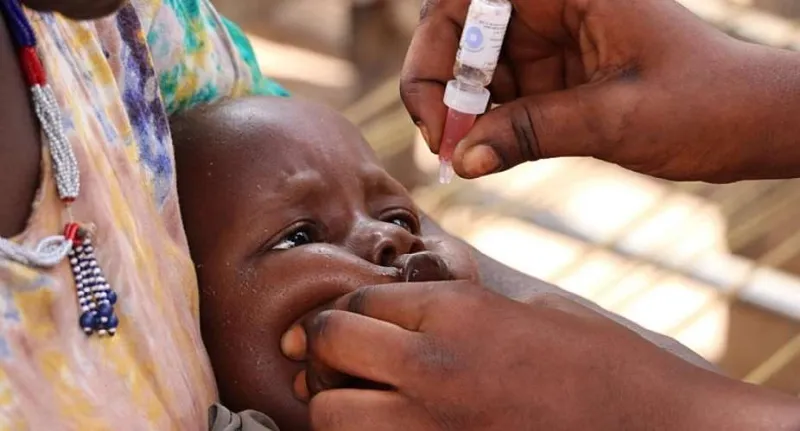
The Ghana Health Service (GHS) has credited its sustained immunisation efforts, disease surveillance and community mobilisation strategies for helping the country maintain an absence of endemic polio cases, while reaffirming the need for continued vigilance to protect children from the disease. Editorial Ethics & Independence
In a statement issued on October 24, 2026, to mark World Polio Day, the GHS said Ghana had successfully closed its type 2 poliovirus outbreak in August 2026.
The announcement was made by the Director-General of the Service, Dr Samuel Kaba Akoriyea, who said the achievement reflected years of investment in vaccination and the country’s ability to respond quickly to public health threats.

The statement said routine immunisation, supplementary vaccination campaigns, outbreak response activities and community mobilisation had played important roles in keeping endemic polio transmission at bay.
“These strategies have ensured the absence of endemic polio cases in the country,” the Service said, while warning that continued vigilance remains essential because poliovirus can spread across borders.
The announcement coincides with the global observance of World Polio Day, celebrated on October 24 under the theme “One Day, One Focus: Ending Polio for Good.”
The annual event draws attention to the international effort to eradicate poliomyelitis, a highly infectious disease that can cause permanent paralysis and, in severe cases, death.
The GHS said Ghana’s type 2 poliovirus outbreak closure was confirmed through rigorous Outbreak Response Assessments (OBRA), which examined surveillance, laboratory and epidemiological data. The assessments concluded that transmission had been interrupted.
Ghana was among five African countries whose type 2 poliovirus outbreaks were declared closed in August 2026. The other countries were Burundi, Guinea-Bissau, the Republic of Congo and Uganda, according to the World Health Organisation (WHO) Regional Office for Africa.
The GHS described the milestone as evidence of the country’s strong surveillance, immunisation and rapid response systems.

It also acknowledged the contribution of the Ministry of Health and international partners, including WHO, UNICEF, GAVI, Rotary International and the United States Centers for Disease Control and Prevention. Editorial Standards
The Service highlighted the importance of routine childhood immunisation in sustaining progress. Ghana introduced the Inactivated Polio Vaccine (IPV) in 2018 and added a second dose in 2024.
According to the GHS, the country has consistently maintained immunisation coverage above 95 per cent, helping protect children against paralysis caused by polioviruses.
However, health authorities have cautioned that the absence of endemic transmission does not mean the country is free from all risks associated with polio. Ghana has previously experienced outbreaks involving circulating vaccine-derived poliovirus type 2 (cVDPV2), including an outbreak that began in 2019.
Wild poliovirus and vaccine-derived poliovirus are distinct. Wild poliovirus is the naturally occurring virus, while vaccine-derived poliovirus can emerge in settings where weakened vaccine virus circulates for extended periods, particularly among populations with low immunity.
Both can cause paralysis and require effective public health responses.
Ghana’s experience demonstrates why immunisation coverage must remain high across all communities. Children who miss routine vaccinations may be more vulnerable to infection, while gaps in coverage can allow poliovirus to circulate if it is introduced.
Surveillance is another central component of the national strategy. Health workers monitor cases of acute flaccid paralysis, a sudden onset of weakness or paralysis that can be associated with polio, and collect samples for laboratory investigation.
Environmental surveillance, including the testing of wastewater, can also help identify poliovirus circulation before cases of paralysis are detected.
The WHO has emphasised that strong surveillance remains necessary to identify imported viruses and emerging outbreaks quickly.

In Ghana, environmental surveillance has supported early detection of poliovirus, enabling health authorities to organise vaccination campaigns before wider transmission occurs.
The GHS has urged parents and caregivers to ensure that every eligible child receives the recommended polio vaccines. It also called on communities, health workers and local leaders to support immunisation activities and public education.
The Service said polio prevention requires collective action, particularly as international travel and population movement can increase the possibility of viruses crossing borders.
Health authorities must therefore maintain the capacity to detect and respond to threats even when local transmission has been interrupted.
As Ghana marks World Polio Day, the GHS has reaffirmed its commitment to protecting children and supporting global efforts to eradicate the disease. Corrections Policy

The Service stressed that maintaining high vaccination coverage, strengthening surveillance and ensuring timely outbreak response will remain essential to securing a polio-free future.
The milestone represents significant progress, but health officials say the goal of ending polio for good will depend on sustained investment and ensuring that no child is left unprotected.