

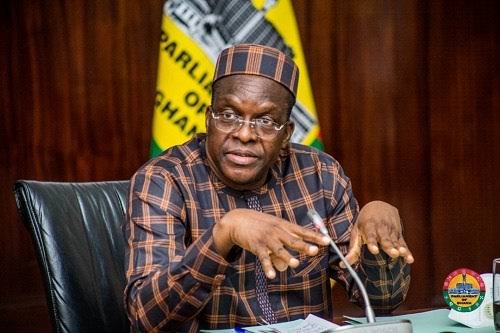
Speaker of Parliament Alban Sumana Kingsford Bagbin has reaffirmed his commitment to ensuring the Human Sexual Rights and Ghanaian Family Values Bill becomes law, declaring that the legislation will remain a priority for Parliament under his leadership. Corrections Policy
Speaking at the IPR Ghana 2026 National PR Conference and Excellence Awards in Koforidua on Thursday, October 22, Bagbin said lawmakers would return to the bill for a second consideration to correct errors identified in the version previously passed. He insisted that the legislation would be passed after the necessary parliamentary procedures had been completed.
The bill, commonly referred to as the anti-LGBTQ+ bill, has become one of Ghana’s most contentious legislative issues, attracting strong support from some religious and traditional groups while drawing criticism from human rights advocates and other civil society organisations.
According to a reports, Bagbin explained that the initial passage had been rushed in his absence, prompting him to call for Parliament to revisit the legislation and address mistakes associated with last-minute amendments.
He said the bill should be treated as a matter of national consensus rather than a partisan political contest, arguing that its significance to the country required lawmakers to approach it collectively.

“When the law was rushed through at the last minute at my back, I came out and said no way, this bill must go through as a consensus bill,” Bagbin said, according to the report. He added that Parliament had identified errors that needed to be corrected before the next stage of consideration.
The Speaker maintained that the next parliamentary meeting would provide an opportunity to review the amendments and proceed with the bill.
His comments signal that the legislation is expected to remain on the parliamentary agenda despite procedural disagreements and the debate surrounding its provisions.
The latest development follows earlier concerns raised by Bagbin about the process through which the bill was passed. Parliament approved the Human Sexual Rights and Family Values Bill, 2025, on May 29, 2026. Editorial Standards
However, the Speaker subsequently called for reconsideration, citing concerns about compliance with parliamentary standing orders and the need to ensure the final text accurately reflected amendments agreed upon by lawmakers.
In June, the Ghana News Agency reported that Bagbin had urged Parliament to revisit the bill in the interest of procedural integrity, bipartisan cooperation and legislative certainty. He stressed that the legitimacy of legislation depended not only on its objectives but also on whether the correct process had been followed.
The proposed reconsideration is therefore intended to address procedural concerns and correct identified mistakes rather than abandon the bill altogether.
Parliament must still complete the relevant steps before the legislation can proceed through the remaining stages of the lawmaking process.
The bill seeks to strengthen restrictions relating to LGBTQ+ activities in Ghana, including provisions concerning advocacy, promotion and support. Supporters argue that the legislation reflects Ghanaian cultural and family values.
Opponents, including human rights organisations, have raised concerns about its potential implications for fundamental rights, freedom of expression, association and access to services.
These competing positions have made the bill a major issue in Ghana’s public debate, with its future carrying implications for domestic policy, constitutional questions and the country’s international relationships.
The legislative process has also attracted attention from international partners and organisations concerned about the treatment of LGBTQ+ people and the protection of civil liberties.
Debate has included questions about how the proposed restrictions would affect journalists, lawyers, healthcare professionals and civil society groups working on related issues.
As Parliament prepares to reconsider the legislation, the accuracy of the revised text and the handling of the amendments will be important. Lawmakers will need to follow the applicable parliamentary procedures while addressing the concerns raised during earlier deliberations.
Bagbin also praised Samuel Nartey George, Minister for Communication, Digital Technology and Innovations, for his role in the debate surrounding the bill, describing his contribution as significant. Editorial Ethics & Independence

Despite the strong views on both sides, the Speaker’s latest remarks make clear that he intends to see the legislative process continue.
However, his assurance that the bill will become law should be distinguished from its formal legal status parliamentary passage alone does not necessarily mean a bill has completed every requirement to become an enforceable law.
The next steps will depend on Parliament’s reconsideration and the completion of the constitutional procedures governing legislation.
Until those steps are finalised, the bill’s status and ultimate legal effect should be assessed against official parliamentary records and any subsequent action by the relevant constitutional authorities.
Bagbin’s statement is likely to intensify public discussion as lawmakers prepare to revisit the bill. The debate will continue to test Parliament’s ability to balance political consensus, procedural requirements and the far-reaching social and legal questions raised by the proposed legislation.