

For generations, fish smoking has supported livelihoods in Ghana’s coastal communities, preserving fish for markets and households across the country. Editorial Ethics & Independence
But behind this essential trade lies a growing occupational health concern prolonged exposure to smoke may be damaging the eyesight and respiratory health of the women who depend on the industry for survival.
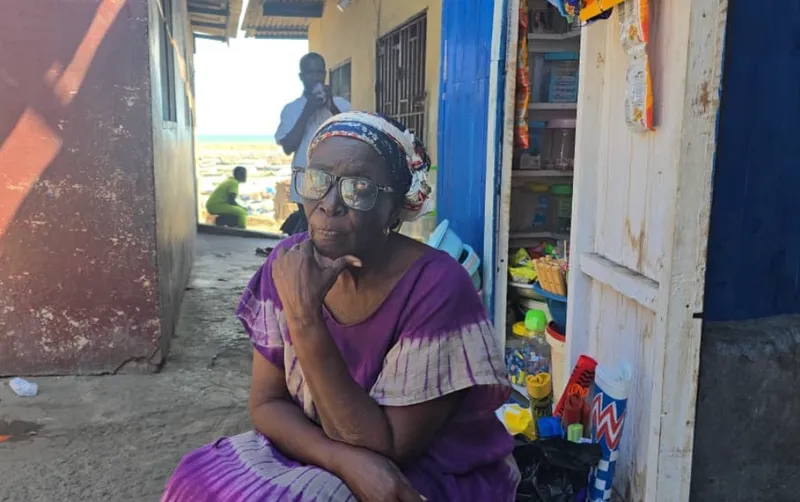
The experience of 70 year old Naomi Dowuo, a fish smoker from James Town in Accra, illustrates the potential consequences. After spending more than two decades working beside open kilns for as long as six hours a day, she lost the sight in her right eye.
She told a source that she had sought medical treatment after persistent eye pain became unbearable, but her vision could not be restored. Although surgery might offer some improvement, she has been unable to afford it.
Dowuo’s experience highlights the human cost of an occupation that remains vital to Ghana’s food supply and coastal economy. It also raises questions about how much protection is available to the thousands of women who continue to work in smoke-filled environments.
According to a reports, prolonged exposure to smoke, heat and chemicals used during fish processing can contribute to serious eye complications.
Health experts say the risks deserve greater attention, particularly because many workers may not recognise the connection between their working conditions and declining vision.
How smoke affects the eyes
Fish smoking traditionally involves burning wood or charcoal to preserve fish and develop its distinctive flavour. However, combustion releases fine particles and other pollutants that can irritate the eyes and affect the respiratory system.

Dr Samuel Sessah, an optometrist and occupational health expert quoted and explained that fish smokers face exposure to air pollutants, heat and chemicals associated with fish treatment. Repeated exposure over many years may increase the risk of lasting damage to vision.
Potential eye conditions include dry eye disease, cataracts, pterygium and glaucoma.
Pterygium is a growth that develops on the white part of the eye and can be associated with prolonged exposure to environmental irritants and sunlight.
Glaucoma can damage the optic nerve and lead to irreversible vision loss if not detected and managed appropriately. Corrections Policy
Research published in 2025 examining commercial fish smokers in Abuesi, in Ghana’s Western Region, also found a substantial burden of eye and respiratory complaints among participants.
The study reported eye discomfort, vision impairment and cataracts, reinforcing concerns about the occupational health risks associated with prolonged smoke exposure.
These findings identify an association and should not be interpreted as proving that smoke alone caused every condition recorded.
A livelihood with limited alternatives
Fish smoking remains an important source of income for women in coastal communities, where families rely on fish processing to preserve catches and supply markets.
In many cases, the trade passes from mothers to daughters, meaning younger women may enter the same working environment without adequate information about its health risks.
Leaving the occupation is not always a realistic option. For many workers, fish processing provides income for food, school expenses, healthcare and other household needs. Editorial Standards
Continuing to work despite eye irritation or coughing may therefore reflect financial necessity rather than a lack of concern for personal health.
The cost of treatment creates another challenge. As Dowuo’s experience illustrates, serious eye conditions can leave workers facing expensive medical procedures while their ability to earn a living becomes increasingly uncertain.
Cleaner technology offers a possible solution
The Fisheries Commission has promoted improved fish-smoking technologies, including the Ahotor and FAO Thiaroye Processing Technique (FTT) ovens, which are designed to improve processing efficiency and reduce exposure to harmful smoke.
However, affordability remains a significant obstacle. The Fisheries Commission’s Chief Executive, Professor Benjamin Betey Campion, told a source that the cost of improved ovens has limited adoption. Newscard
The report put the price of an Ahotor oven at around GH¢10,000, a considerable expense for many small-scale processors.
Researchers and public health advocates have recommended cleaner technologies, better ventilation and targeted health education.
Making improved ovens more affordable through financial support, community programmes or locally developed alternatives could help more women adopt safer methods.
Protecting workers must become a priority
Health education is also essential. Fish smokers should have access to regular eye examinations, information about warning signs and practical guidance on reducing smoke exposure.

Protective eyewear can help shield the eyes from some environmental hazards, although it does not eliminate exposure to airborne pollutants.
Government agencies, health professionals, research institutions and industry partners all have a role in improving working conditions.
Support must go beyond awareness campaigns to include affordable technology, accessible healthcare and practical measures that women can maintain without losing their livelihoods.
Ghana’s fish smoking industry will remain important to food preservation and the coastal economy. But its contribution should not come at the expense of workers’ long-term health.
For women such as Naomi Dowuo, the damage has already been life changing. Preventing similar experiences will require sustained investment in safer processing methods and stronger protection for the people whose work keeps Ghana’s fish markets supplied.