

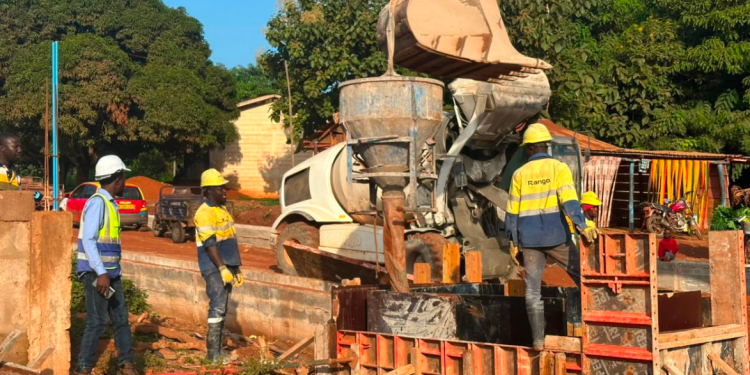
Construction work on the Jinijini-Sampa Road project in the Berekum West District of the Bono Region has slowed following the reported theft of gravel from sections of the road, prompting the contractor to appeal to residents to help protect materials intended for the project. Editorial Standards
Rango Construction Limited, the company executing the road works, says the theft is creating difficulties for its construction team and could further affect progress if the situation is not addressed.
The project forms part of the government’s Big Push infrastructure programme, which seeks to improve road networks and strengthen connectivity across Ghana.
The company’s Public Relations Officer, Felix Agyei, raised the concern during a ceremony at Jinijini, where the Berekum West District Assembly distributed working tools, equipment and other assistance to 57 persons with disabilities.

Mr Agyei appealed to residents in communities along the road corridor to remain vigilant and cooperate with efforts to prevent the theft of construction materials. He stressed that the availability and proper management of materials were necessary to ensure work proceeded according to plan.
Although the contractor has identified gravel theft as a challenge, details about the quantity of material taken, its estimated value and the number of incidents have not been disclosed in the reports. There is also no confirmed information on arrests or whether a formal investigation has been initiated.
The reported theft nevertheless highlights a practical challenge facing infrastructure projects. Road construction depends on the steady availability of materials and the coordination of equipment, workers and transport. When materials go missing, contractors may need to arrange replacements, reorganise work schedules and redirect resources, potentially affecting progress.
For communities waiting for better road access, any avoidable disruption can delay the benefits expected from the project. The contractor’s appeal therefore places responsibility on all stakeholders to help protect materials and safeguard public infrastructure investments.
The Jinijini-Sampa Road is expected to improve transportation along the corridor, making it easier for people and goods to move between beneficiary communities. Better road conditions could also support commercial activity by improving access to markets and reducing some of the difficulties associated with travelling on poorly maintained routes.
Agriculture and trading are important to many communities in the wider area. Improved transport infrastructure can help farmers move produce to buyers, assist traders in distributing goods and make journeys more predictable for residents.
However, these benefits depend on the successful completion and maintenance of the road.
The project’s importance extends beyond daily commuting. Reliable roads can support access to schools, health facilities and other essential services, while potentially reducing travel times and vehicle operating costs. For businesses, improved connectivity can make the movement of goods more efficient and strengthen links between local production centres and markets.
Mr Agyei expressed optimism that the Jinijini-Sampa Road project would be completed by the end of 2028, according to the report. The contractor has urged residents to help protect materials and other resources deployed to the construction site to avoid unnecessary setbacks. Corrections Policy
The project is part of the government’s broader infrastructure agenda, under which road development is intended to improve connectivity and support economic activity. Its successful delivery will depend on construction progress, effective supervision, coordination among stakeholders and the protection of materials supplied for the work.

The contractor has also commended stakeholders, including the Member of Parliament, for their involvement in facilitating the demolition of structures affected by the project. Such cooperation can help address obstacles that arise during construction and enable work to proceed more smoothly.
Preventing further theft will require practical cooperation between the contractor, local authorities and residents. Community members can report suspicious activities around the construction site and provide credible information to the appropriate authorities.
Any allegations against individuals must be investigated fairly, with responsibility established through due process.
The ceremony at which Mr Agyei spoke also highlighted the district’s efforts to support persons with disabilities.
The District Assembly provided assistance to 57 beneficiaries, including cash support for some recipients and items such as fufu pounding machines and deep freezers for others. Educational and health-related assistance was also reported.
As work continues, the reported theft of gravel remains a concern for a road project expected to improve transport and economic opportunities in the area. Editorial Ethics & Independence
Protecting construction materials and preventing further losses could help limit disruption and support the contractor’s efforts to meet the stated completion target.
For residents and road users, the priority is the delivery of a reliable road that serves communities over the long term.
Stronger community cooperation and effective protection of construction resources will be important to ensuring that avoidable theft does not further slow the project.