

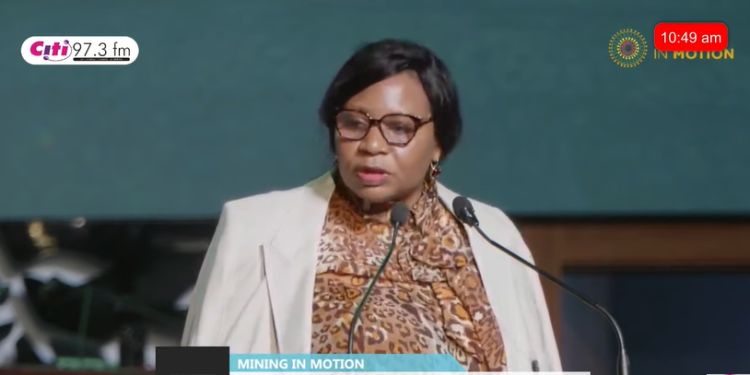
African Union (AU) Commissioner for Economic Development, Trade, Tourism, Industry and Minerals, Francisca Tatchououp Belobe, has urged African countries to prioritise the development of domestic investors and African-owned businesses rather than focusing solely on attracting foreign capital. Editorial Ethics & Independence
Speaking at the Mining in Motion Conference in Accra on Monday, October 19, 2026, Ms Belobe said Africa must strengthen its own investment capacity to ensure that more economic value generated from the continent’s natural resources remains within its economies.
According to reports, the commissioner stressed that the continent’s mineral development agenda must extend beyond attracting international companies to building African enterprises capable of processing raw materials, creating employment and supporting industrial growth.
“Our goal must not only be to attract investors into Africa. It has to be to develop African investors, African industries and African enterprises capable of creating and retaining value on our continent,” she said.
Her remarks highlight a longstanding economic challenge facing many African countries: although the continent possesses substantial mineral, agricultural and energy resources, domestic businesses often have limited access to the capital, technology and infrastructure required to compete in high-value industries.
The commissioner’s position suggests that foreign investment should remain part of Africa’s development strategy, but it must be complemented by deliberate efforts to strengthen local businesses, build industrial capacity and increase African participation in major economic projects.
Why Africa needs stronger domestic investors
Foreign direct investment can bring funding, advanced technology, technical expertise and access to international markets.
However, the extent to which these benefits support national development depends partly on how investment projects connect with local businesses, workers and suppliers.
When domestic companies lack the financial capacity to participate in major industries, much of the value created can remain concentrated among larger international firms.
Strengthening African-owned enterprises could help change this pattern by enabling local businesses to participate in processing, manufacturing, transportation, engineering and other activities linked to major investments.
Ms Belobe argued that Africa must build enterprises capable of competing internationally while creating and retaining economic value within the continent.

This requires governments to look beyond the amount of foreign capital attracted and consider whether investments are helping local industries grow.
Developing domestic investors does not necessarily mean discouraging foreign companies. Instead, it involves creating partnerships in which international capital complements local entrepreneurship, technical expertise and industrial ambitions. Corrections Policy
African businesses need access to affordable financing, reliable infrastructure, appropriate technology and predictable regulatory systems.
Without these conditions, even promising local enterprises may struggle to expand or compete with well-financed international companies.
AfCFTA offers opportunities for regional investment
The commissioner identified the African Continental Free Trade Area (AfCFTA) as an important platform for expanding markets and developing integrated regional industries.

The agreement aims to facilitate trade between African countries and create opportunities for businesses to reach customers beyond their domestic markets.
For local investors, access to a larger regional market could make it easier to expand production, attract financing and develop competitive products.
Ms Belobe said African countries should move away from isolated national initiatives and work towards complementary regional value chains.
This would allow countries to build on their different resources, industrial capabilities and infrastructure rather than attempting to develop every stage of production independently.
For example, countries with significant mineral deposits could collaborate with neighbouring states that have established manufacturing capabilities, transport networks or energy infrastructure. Editorial Standards
Such cooperation could support regional processing industries and create additional opportunities for African-owned companies.
However, the benefits will depend on governments aligning investment frameworks, industrial policies and local-content strategies.
Differences in regulations, infrastructure quality and access to finance could otherwise limit the effectiveness of regional cooperation.
Mineral processing must create local value
The commissioner’s comments form part of a broader African push to move beyond exporting raw materials and increase local processing.

Africa possesses significant deposits of gold, bauxite, lithium, cobalt, manganese and other minerals used in manufacturing and clean-energy technologies.
Yet the continent has historically captured a limited share of the higher-value activities associated with processing these resources into industrial products.
In a related report, Ghana’s Minerals Commission Chief Executive, Isaac Tandoh, called for international mining partnerships that promote technology transfer, local processing and the development of domestic capabilities.
The report highlighted the importance of ensuring that foreign expertise strengthens African institutions and workers rather than remaining concentrated outside the continent.
The same principle applies to domestic investment. African entrepreneurs need opportunities to participate in mineral processing and manufacturing, supported by financing arrangements and partnerships that allow them to acquire the necessary expertise. Newscard
Nevertheless, establishing refineries, smelters and manufacturing facilities requires substantial capital, dependable electricity, skilled labour and access to buyers.
Governments must therefore ensure that local-investor development is supported by practical industrial policies rather than financial incentives alone.
Ghana’s investment strategy reflects the wider debate
Ghana has also been seeking international investment to support local processing and manufacturing.
According to a report Vice President Professor Naana Jane Opoku-Agyemang had encouraged Chinese investors to support the country’s industrialisation agenda by investing in the processing of agricultural commodities and other raw materials.

The initiative reflects the importance of attracting foreign partners while ensuring that investment contributes to employment, manufacturing capacity and greater domestic value addition.
For Ghanaian businesses, stronger links with international investors could provide opportunities to access technology, financing and export markets. Privacy Policy & Terms
However, the benefits will depend on whether local companies can participate meaningfully in supply chains and develop the capacity to compete over the long term.
Governments can support this process by improving access to credit, investing in technical education, strengthening business development programmes and ensuring that public procurement and industrial policies create fair opportunities for capable domestic enterprises.
Turning investment into lasting economic growth
Ms Belobe’s message is that Africa’s development strategy must place greater emphasis on building its own productive capacity.
Attracting foreign capital remains important, particularly for infrastructure and industries requiring substantial investment. But capital inflows alone cannot guarantee broad-based prosperity if local businesses lack the capacity to participate in the resulting economic activity.
The challenge for African governments is to create an environment in which domestic investors can grow, international partners can contribute expertise and financing, and regional markets can support competitive industries.
Ultimately, developing African-owned enterprises could help countries retain more value from their natural resources, create skilled employment and reduce dependence on external financing and imported finished products.
The commissioner’s call therefore places local entrepreneurship at the centre of Africa’s industrial ambitions. The success of that vision will depend on whether governments turn policy commitments into practical opportunities for African businesses to invest, innovate and compete.