

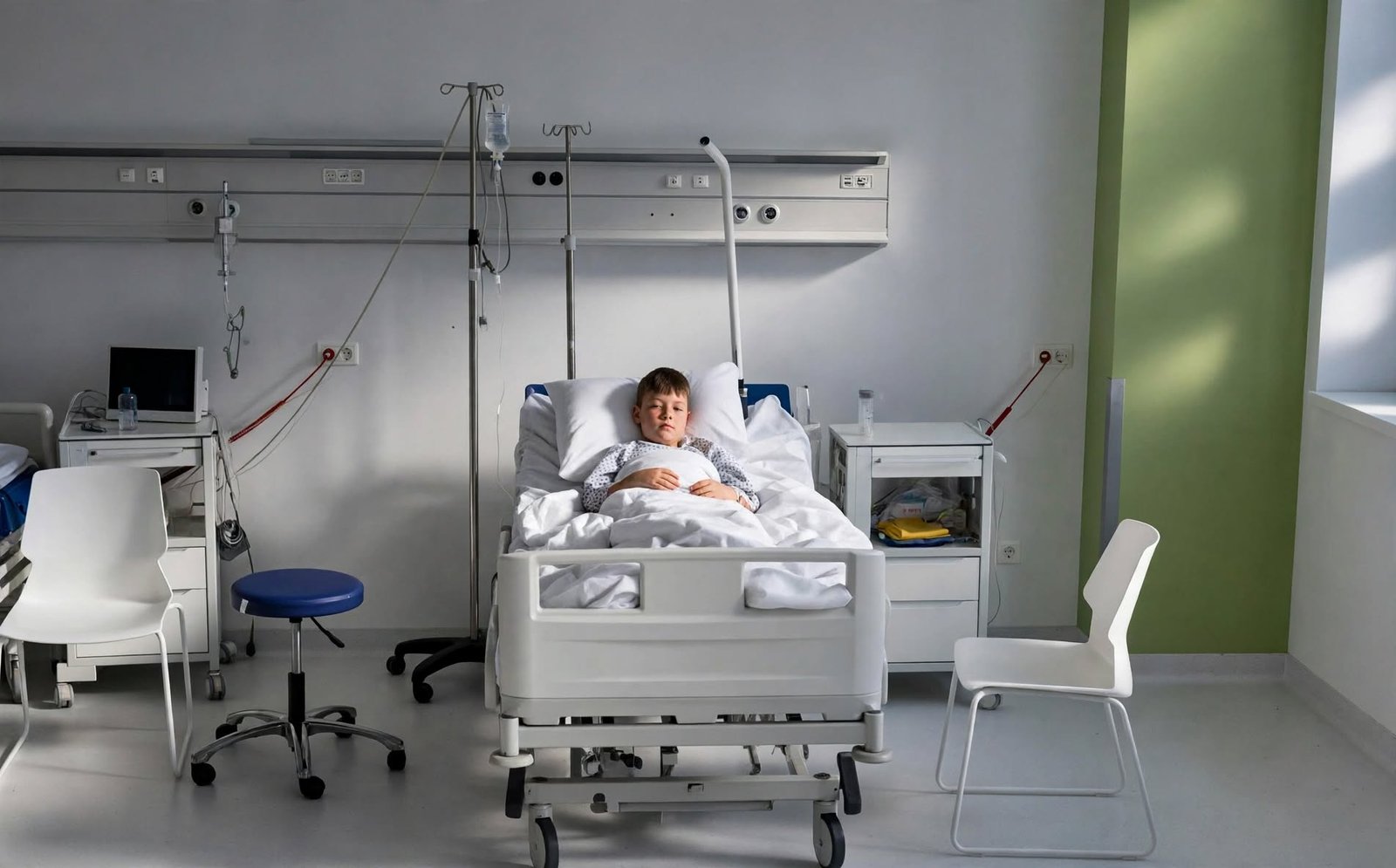
Parents have been urged to pay closer attention to persistent or unusual health changes in children, as early signs of cancer can easily be mistaken for common childhood conditions such as tiredness, allergies or physical unfitness.
Although childhood cancer is relatively rare, it remains the leading cause of disease-related deaths among children under 15 in the United Kingdom. However, fewer than one-third of parents reportedly feel confident identifying its symptoms.
According to Cancer Research UK, approximately 1,900 children aged between zero and 14 are diagnosed with cancer annually.

The experience of 13-year-old Amelia Carroll, who is now in remission, highlights the importance of recognising potential warning signs early. She was diagnosed with acute myeloid leukaemia (AML) last year after initially experiencing symptoms her family did not consider serious.
Her mother, Gemma, said Amelia had been unusually tired and became breathless after mild physical activity. The family initially attributed these changes to a lack of fitness and exhaustion after school.
However, the situation became more concerning when Amelia began developing unexplained bruises. Within 10 days, doctors had confirmed her leukaemia diagnosis.

Symptoms parents should not ignore
Paediatric oncologist Professor Bob Phillips has encouraged parents to seek medical advice when several symptoms persist, worsen or become increasingly noticeable.
Warning signs that require medical attention include extreme tiredness, unusual paleness, unexplained bruising and lumps or swellings that continue to grow or fail to disappear.
According to experts, childhood cancers can progress rapidly, making it important for parents and healthcare professionals to take persistent symptoms seriously.
The Children’s and Young People’s Cancer Association, known as CCLG, is supporting a national awareness campaign aimed at improving early recognition and reducing delays in diagnosis.

The campaign promotes a “rule of three” for healthcare professionals. It encourages consideration of a referral when a child has three persistent symptoms, has visited a doctor three times, or has experienced unexplained symptoms for three weeks.
Despite the concerns surrounding delayed diagnosis, survival rates for childhood cancer have improved considerably over the decades. About eight in 10 children diagnosed with cancer in the UK survive for five to 10 years or longer.
For Amelia, the first visible sign was a red bruise that appeared unexpectedly, her mother recalled.
Three days later, she developed painful, raised bruises across the shins of both legs. During a routine visit to an optician, staff also noticed burst blood vessels but could not determine their cause.

Gemma said doctors subsequently established the type of leukaemia Amelia had within 10 days, leading to her admission to hospital for treatment.
Recalling the difficult conversation following the diagnosis, she said: “On the day that they confirmed what she had, I sat her down and she said to me ‘have I got cancer?’ and I said yes you have. She asked me if she was going to die.”
She added: “I said no, they’re doing everything they can, they’ve got a plan in place and the treatment is going to do everything it can to beat the cancer.”
Amelia is now in remission and continues to undergo blood tests and bone marrow examinations every three months. She has also returned to school.

Professor Phillips said childhood cancer survival rates in the UK exceed 80 per cent, but faster diagnosis could help reduce the intensity of treatment required by some patients.
Mother campaigns to preserve son’s legacy
Professor Phillips said around half of children diagnosed with cancer in the UK receive their diagnosis within two weeks of first seeking medical attention. However, some families face considerably longer waiting periods.
“It’s pretty quick but we want the other half to not have the wait of 16, 18, 20, 25 weeks from those first symptoms to get a diagnosis,” he said.

The challenge of timely diagnosis extends beyond childhood cancer. Data from Cancer Research UK indicates that more than 400,000 new cancer cases are recorded annually across the UK, while the British Medical Journal (BMJ) has reported that only 54 per cent of patients receive a diagnosis within the National Health Service’s 28-day target.
An additional 2,300 teenagers and young adults aged between 15 and 24 are diagnosed with cancer each year.
For Lynsey Swinscoe, the importance of early detection became painfully clear when her son, Jake, died from soft tissue cancer at the age of 13..

Jake was diagnosed with stage three fusion-positive alveolar rhabdomyosarcoma in July 2023. Before the diagnosis, his symptoms, including a blocked nose and watery eyes, were initially attributed to hay fever. His tendency to fall asleep after school was also considered ordinary end-of-term tiredness.
His mother said the family became concerned when swelling developed across the bridge of his nose, prompting them to seek medical attention.
“It was only when he started to get a swelling across the bridge of his nose that we thought right, we need to take him to the GP,” Lynsey said.
She added: “But at that point we didn’t really think the fatigue and hayfever symptoms were related.”

Medical examinations revealed a mass in Jake’s nose and nasal cavity, leading to his diagnosis of soft tissue sarcoma. He subsequently underwent nine rounds of chemotherapy and proton beam radiation.
However, after experiencing seizures and becoming seriously unwell from chemotherapy, Jake decided not to continue with further treatment.
He died peacefully at home on April 26, 2024, just two weeks before his 14th birthday.
Reflecting on her son’s final days and the conversations they shared, Lynsey said Jake was not afraid of death but worried that people might eventually forget him.

“I think the main thing with Jake is he was not scared to die. We had lots of conversations about dying and what it might feel like to die and the only thing that he was sort of scared about was, ‘are all the people going to remember me? Is everyone just going to forget who I am?’”
Lynsey said her decision to speak publicly about Jake’s experience was driven by a desire to keep his memory alive while helping other families recognise possible signs of childhood cancer.
“That’s why I’m doing this, to make sure that people know who Jake is, to make sure people know how incredible he was. And so with that comes the raising awareness, which I think, that’s his legacy,” she said.

The campaign continues to encourage parents to seek medical advice when symptoms in their children persist, worsen or appear without an obvious explanation, helping to improve the chances of timely diagnosis and treatment.
By: Prince Martey-Sogar.